

Picture this: you’re standing next to your favorite pothos with a bag of worm castings in one hand and a measuring cup in the other, wondering whether a spoonful is plenty or barely a rounding error. Good news: it’s easier than it looks. Using worm castings for indoor plants takes about two minutes, a little restraint, and no special equipment.
Still, the same three questions come up again and again. How much should you use? How often should you use it? And does it really go on top of the soil? This guide answers each one in plain language, so you can feed your plants with confidence and get back to simply enjoying them.
Quick Summary
- Amount: Start with about 1/4 cup of worm castings for every 6 inches of pot width, then scale up or down from there.
- Timing: A comfortable rhythm is about every 3 months while your plant is actively growing, and lighter or skipped in winter when growth slows.
- Method: Sprinkle a thin layer on top of the soil, scratch it in gently, and water well.
- Go easy: More is not better. A light hand beats a heavy one every time.
- Keep it fresh: Raw, living castings straight from the worm beds, like our Black Gold worm castings, are simple to use and easy to measure.
How Much Worm Castings Should You Use for Indoor Plants?
A good starting point for worm castings for indoor plants is about 1/4 cup for every 6 inches of pot width. In other words, a 6-inch pot gets 1/4 cup, an 8-inch pot gets about 1/3 cup, and a 12-inch pot gets about 1/2 cup. We share the same rule of thumb in our guide What Are Worm Castings: A Deep Dive, and it works well because it grows with the size of the pot.
Here is a quick way to scale it:
- 4-inch pot: about 2 to 3 tablespoons
- 6-inch pot: about 1/4 cup
- 8-inch pot: about 1/3 cup
- 12-inch pot: about 1/2 cup
Think of these numbers as a friendly starting point rather than a strict rule. A fast-growing plant in bright light can handle the full amount, while a slow grower in a dim corner does just fine with a little less. Castings are gentle compared with many concentrated fertilizers. Even so, extension specialists point out that overfeeding houseplants can burn tender roots, as explained in this UConn Extension fact sheet on fertilizing houseplants. So when in doubt, start small. You can always add a bit more next time.
How Often Should You Apply Worm Castings to Houseplants?
When it comes to worm castings for indoor plants, about every 3 months is a comfortable rhythm during the growing season. That usually works out to one application in spring, one in summer, and a light one in early fall if your plant is still pushing out new leaves.
Why not more often? First, castings release their nutrients slowly, so a single application keeps working for a good while. Second, plants only use nutrients when they are actually growing. Iowa State University Extension notes that houseplants should be fertilized when they are actively growing, and that many of them rest during the short days of winter. Along the same lines, University of Illinois Extension says most houseplants do not need feeding more than once every 1 to 3 months between March and September. Our every-3-months pattern sits comfortably inside that window.
Of course, no two plants live the same life. A plant beside a sunny window grows faster than one in a dim hallway, so it helps to adjust the rhythm to your own space:
- Fast growers in bright light: The 3-month rhythm is a great fit.
- Slow growers or low light: Stretch the time between applications a little, and use a bit less each time.
- Winter: Skip it or go light, since most plants slow down when the days get short.
A simple trick is to set a phone reminder the day you feed a plant. Then you never have to wonder whether you did it last month or last year.
Can You Put Worm Castings on Top of the Soil?
Yes, and for potted plants it is the easiest way to use worm castings for indoor plants. This is called top dressing: you sprinkle a thin layer of castings over the soil surface, and every time you water, nutrients move down toward the roots. No repotting, no mess, no mixing bowl.
Here is the step-by-step version:
- Check the pot. Make sure it has drainage holes and that the soil is not sitting in water.
- Measure your castings. Use the pot-size guide above.
- Sprinkle evenly over the soil surface, keeping the castings about an inch away from the stem.
- Scratch them in gently with a fork or your fingers, just into the top half inch of soil.
- Water thoroughly until a little water drains out of the bottom.
- Set a reminder for about 3 months from now.
Why scratch them in? A thin layer blended into the surface keeps the castings from drying into a crust, and it puts them right where roots can reach them. It also keeps things tidy, which your living room will appreciate.
Which Houseplants Like Worm Castings Best?
Most leafy and flowering houseplants appreciate a boost. That said, some plants like to eat well while others prefer to live on a lean budget, and it helps to know the difference.
Plants that usually enjoy regular feeding
Pothos, philodendrons, monsteras, spider plants, ferns, and windowsill herbs tend to grow steadily in good light, so they make good candidates for the full 3-month rhythm. If you are growing a few herbs for the kitchen, a little castings on top keeps things simple and avoids any harsh stuff near your food.
Plants that prefer a lighter hand
Cacti, succulents, snake plants, and ZZ plants are used to getting by with very little. For these, a smaller amount, applied less often, is plenty. Think of it as a light dusting rather than a full serving.
Why Fresh Worm Castings Make a Difference
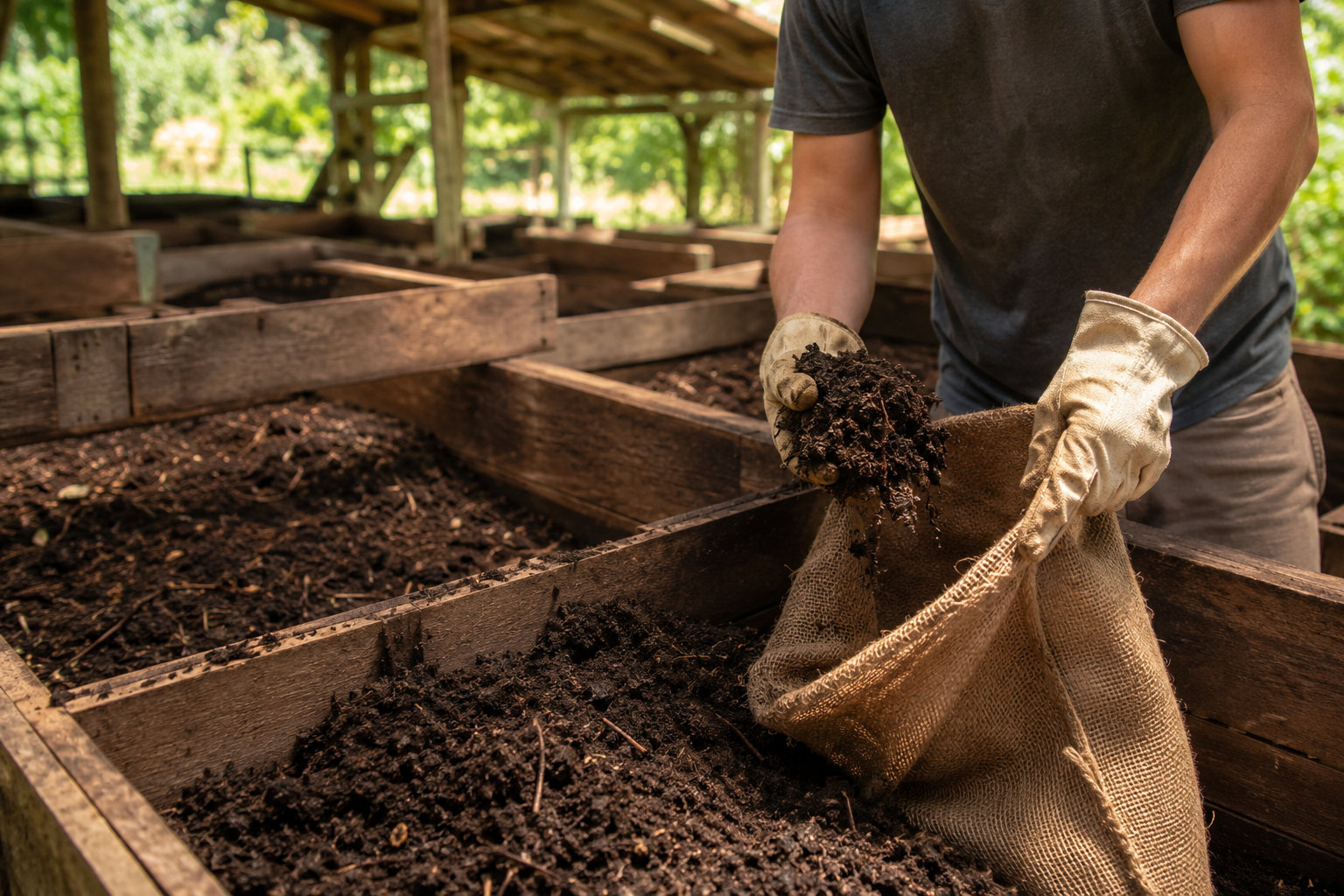
Not all worm castings for indoor plants are created equal, and this is where we are a little proud. Our Black Gold comes straight out of the worm beds at our farm, and we do not pasteurize it. It is raw, living compost, rich in beneficial microbes, and ready to sprinkle on your plants.
Here is a friendly way to picture it. Think of the difference between milk fresh from the farm and milk that has been through a processing plant. Both have their place, but one is simply closer to nature. Black Gold is the fresh-from-the-farm version of plant food.
If you want the full story, our post on how Black Gold helps plants grow covers what makes it special. And if you are curious about worm castings in general, Worm Castings: The Ultimate Guide is a great next read.
Black Gold comes in a 4-pound bag, which is a handy size for a windowsill full of plants, and in a 20-pound bag for bigger collections. Many plant lovers also have a garden, and the same castings work outside too. You can see the Black Gold worm castings here.
Common Mistakes (and Easy Fixes)
Good news: none of these are plant emergencies. Almost every mistake is easy to fix, and every plant parent has made at least one.
- Piling it on. It is tempting to give your favorite plant a double serving. Instead, stick to the pot-size guide and let the plant tell you if it wants more.
- Burying the stem. Keep castings about an inch away from the base of the plant so the stem stays dry and happy.
- Feeding a resting plant. In winter, most plants are taking a break. Wait until you see new growth in spring.
- Skipping the water. Castings do their best work when they are watered in, so do not forget this last step.
- Expecting a magic wand. Castings are plant food, not a miracle. If a plant looks unhappy, check light and watering first, then feed.
One more thing worth knowing: if you notice tiny flying insects hovering around a pot, it often means the soil is staying too wet. Let the top inch dry out between waterings, and consider placing a few Houseplant Sticky Stakes in the pot to catch the adults. They are poison-free, and they make a handy sidekick for any plant corner.
How Do You Know Your Plant Likes It?
Patience is the secret ingredient here. Plants do not change overnight, so give yours a few weeks. Good signs include fresh new leaves, deeper green color, and steady growth when the season is right. If nothing seems to change, that is okay too. Many plants simply grow quietly, and you can keep to your 3-month rhythm without worry.
Want to Make Your Own Black Gold at Home?
Many plant lovers also enjoy gardening, and a worm bin connects the two beautifully. Red wigglers turn kitchen scraps into castings, and you can keep the whole system right inside your home. In other words, you can grow your own plant food while your plants grow right beside it.
If that sounds fun, here are some good places to start:
- Browse our indoor compost bins to find a setup that fits your space.
- Want everything in one box? Our worm kits come with a bin, bedding, food, instructions, and the worms.
- Read The Ultimate Guide to Indoor Composting with Worms for a beginner-friendly walkthrough.
- Meet the stars of the show on our composting worms page.
- See how red wigglers and potted plants fit together in Growing Potted Plants with Red Wigglers.
- Pick up more ideas in Indoor Gardening Tips to Make Your Indoor Garden Thrive.
- Not sure which to choose? Compare them in Compost vs. Worm Castings.
Frequently Asked Questions About Worm Castings for Indoor Plants
Can I put worm castings on top of the soil of my houseplants?
Yes. Sprinkle a thin layer over the soil, keep it about an inch from the stem, scratch it in lightly, and water well. This top dressing method is the simplest way to feed potted plants.
How much worm castings should I use per plant?
A good starting point is about 1/4 cup for every 6 inches of pot width. For example, a 6-inch pot gets about 1/4 cup and a 12-inch pot gets about 1/2 cup. Adjust a little up or down based on how fast your plant is growing.
How often should I apply worm castings to indoor plants?
About every 3 months during the growing season is a comfortable rhythm for most houseplants. Go lighter or skip it in winter, when growth slows down.
Can you use too much worm castings on a houseplant?
It is possible. Castings are gentle, but a very thick layer can stay wet and pack down on the surface, and overfeeding any plant is never helpful. Stick to the amounts above, and remember that a little goes a long way.
Will worm castings make my house smell or attract bugs?
Good castings have a pleasant, earthy smell, a bit like soil after rain. Because Black Gold has been processed by worms in our beds, it does not smell bad. If you ever spot tiny flies around a pot, check whether the soil is staying too wet, and let it dry out a little between waterings.
Can I use the same worm castings for my garden and my houseplants?
Absolutely. Worm castings work for houseplants, vegetable beds, flower borders, and seedlings. That is why so many plant lovers keep a bag on hand for both indoor and outdoor plants.
What’s Next?
You now have everything you need to use worm castings for indoor plants: a simple amount, an easy schedule, and a method that takes two minutes. The next step is picking up a bag and giving your plants a little something extra.
- Ready to feed your plants? Shop Black Gold Worm Castings.
- Thinking about making your own? Compare our indoor compost bins or see which worm kit is right for you.
- Want to learn more first? Read Worm Castings: The Ultimate Guide.
About the Author
This article was written by the team at Uncle Jim’s Worm Farm. We have been raising composting worms on our farm in rural Pennsylvania for more than 40 years, and we love helping gardeners, plant lovers, and first-time composters get great results with worms and worm castings.