

Quick Summary
Composting worm prices generally run from a few cents to around a dollar per worm, depending on species and order size. Worm castings typically range from a few dollars per pound in small retail bags to well under a dollar per pound when you buy by the bulk sack or ton.
How Much Do Composting Worms Cost?
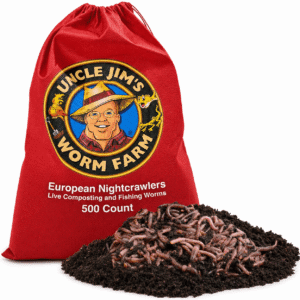
Sellers typically price red wigglers and European Nightcrawlers per count (250, 500, 1,000, 2,000, 5,000, 10,000+) rather than by weight. That’s because count is what matters for seeding a bin or stocking bait. Per-worm cost drops significantly as order size increases. A 5,000-count order will almost always cost less per worm than five separate 1,000-count orders, because shipping and packaging costs don’t scale up at the same rate as the worm count. European Nightcrawlers are larger and slower to reproduce than red wigglers. That’s why they generally cost more per worm at any given quantity tier.
How Much Do Worm Castings Cost?
This is where pricing swings the most, because sellers offer castings across a huge range of formats — from a 1-pound retail bag at a garden center to a full pallet of supersacks for a commercial grow operation. As a general rule, the smaller the package, the higher the per-pound price. That’s because you’re also paying for packaging, retail markup, and handling. Bulk buyers purchasing by the ton or pallet consistently pay a fraction of the per-pound price a small retail bag commands — often five to ten times less. That lower price reflects raw product cost without retail overhead.
Sellers also sometimes price worm castings by volume (cubic yard or cubic foot) rather than weight. This matters because density varies by producer — a cubic yard of castings can weigh anywhere from around 800 to over 1,600 pounds, depending on moisture content and how finely it’s screened. Always confirm whether a price is per pound or per cubic yard/foot before comparing two sellers.
What Actually Drives the Price?
1. Species
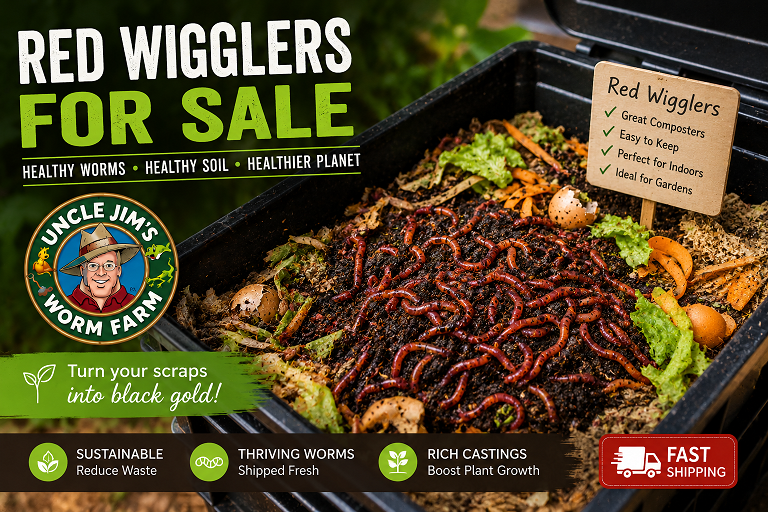
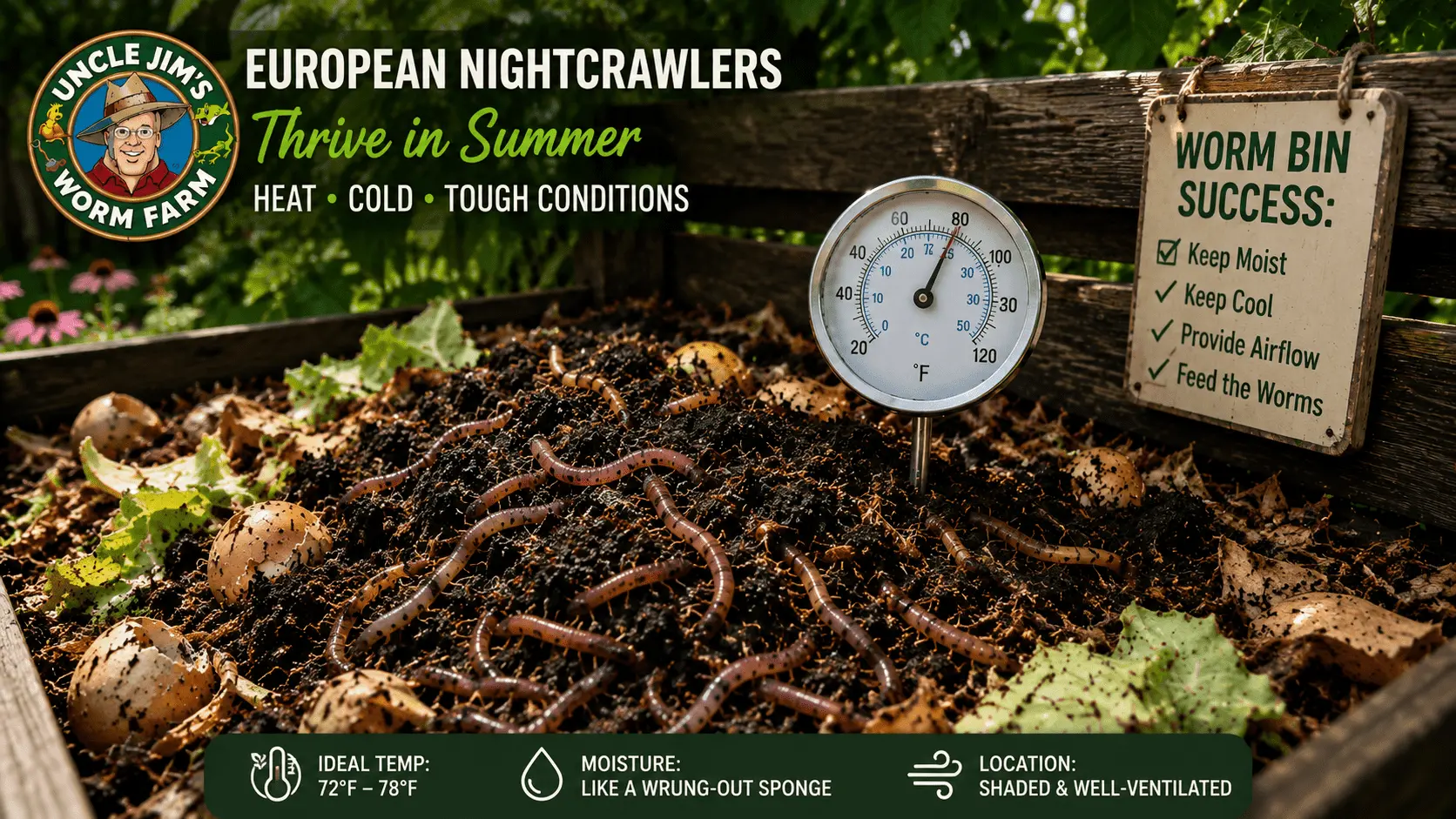
Red wigglers (Eisenia fetida) are the most widely farmed composting worm, and they’re typically the least expensive per worm. Farmers raise them at high volume because they reproduce quickly. European Nightcrawlers cost more. They’re larger, slower to mature, and often serve dual purposes as both composters and premium fishing bait — which supports a higher price point.
2. Quantity
Very large bulk orders — multiple tons of castings, or tens of thousands of worms — often require freight shipping. They also need equipment like a forklift or lift gate to unload, which adds cost back in at the top of the scale. So once you factor in delivery logistics, the cheapest per-unit price isn’t always at the absolute largest tier.
3. Live-Delivery Guarantees
For live worms, a guaranteed live-arrival policy adds cost. That’s typically because it means faster shipping methods — 2-day express rather than standard ground — and better insulated packaging. Sellers without a live guarantee may offer lower sticker prices. But a dead-on-arrival shipment with no replacement policy isn’t actually cheaper once you factor in the wasted purchase.
4. Shipping Distance and Method
Live worms almost always ship via expedited methods to minimize time in transit. That shows up in the shipping cost rather than the product price itself. Freight carriers price bulk castings by weight and distance, and shipments often require a business address with a loading dock. A residential delivery with a lift-gate truck typically costs more.
5. Retail vs. Bulk Format
A small bag from a garden center or big-box retailer will almost always cost more per pound than the same material bought directly from a producer in bulk. That’s because retail pricing bakes in shelf space, packaging, and distributor margin. This is the “Costco effect”: buying a larger format, direct from a source closer to production, cuts out layers of markup.
Is It Cheaper to Buy in Bulk or Make Your Own?
Making your own via a home vermicomposting bin has a low material cost — you mainly need worms, a bin, and bedding. But it comes with a real time cost, and your colony size limits output: a home setup produces pounds per month, not tons. Anyone needing regular, larger volumes — a market garden, a nursery, or ongoing soil amendment work — will almost always find buying bulk castings more time-efficient, even though it carries a real dollar cost that home production avoids.
How Worm Castings Compare in Cost to Other Soil Amendments
Worm castings carry a premium price compared to raw compost or manure, largely because of processing time and nutrient density. Comparative research from the University of Georgia’s Cooperative Extension found that a bag of synthetic 10-10-10 fertilizer delivers a nutrient load that would take several times more compost or cow manure by weight to match. That finding reframes the comparison. Castings and compost don’t compete dollar-for-dollar against synthetic fertilizer on raw NPK content. Instead, they offer soil-structure, moisture-retention, and microbial benefits that synthetic fertilizer doesn’t provide. So when you evaluate whether worm castings are “worth it” against a cheaper bag of compost or manure, cost-per-nutrient-unit isn’t the full picture. It’s cost-per-benefit — and those benefits come from different products entirely.
Retail vs. Bulk vs. “Warehouse Club” Pricing: What Changes
- Retail (garden center, big-box store): Highest per-pound or per-worm cost, but no minimum order, immediate availability, and no shipping logistics to manage.
- Direct-from-farm bulk: Meaningfully lower per-unit cost at moderate volumes (tens of pounds of castings, thousands of worms), typically still shipped via standard parcel carriers.
- Warehouse-club-style bulk (supersacks, pallets, freight tiers): The lowest per-pound price, but requires freight delivery, often a loading dock or forklift, and a real plan for storing and using the full volume before quality declines. This tier makes sense for commercial operations, not most home gardeners.
Frequently Asked Questions
How much do red wigglers cost per 1,000?
Pricing varies by seller and season, but per-worm cost consistently drops as order size increases from a few hundred up through several thousand. Always compare the guaranteed count, not just the listed price, since some sellers sell by approximate weight rather than an exact count.
Is it cheaper to buy worm castings or make my own?
Making your own has a lower direct dollar cost but requires an ongoing time investment and produces limited volume. Buying is more efficient for larger or time-sensitive needs.
Why do worm castings cost more than regular compost?
Castings take longer to produce, and they require active worm colonies rather than passive decomposition. They also carry a more concentrated, more biologically active nutrient and microbe profile than raw compost — and all of that adds to production cost.
Does a live-delivery guarantee affect the price of worms?
Yes. Guaranteed live delivery typically means faster, better-insulated shipping, which costs more to provide than standard shipping without a replacement guarantee.
What’s Next?
Now that you know what actually drives worm and castings pricing, you’re in a better position to compare offers and pick the format that fits your scale. Ready to see current pricing for your quantity? Shop Red Wigglers and European Nightcrawlers or check current Worm Castings pricing. New to buying worms online and want to know what to look for before you order? Read our guide on what to know before buying red wigglers online.
About the Author: This guide was developed by the Uncle Jim’s Worm Farm content team, drawing on decades of hands-on composting worm and castings production experience. Uncle Jim’s has been shipping live, guaranteed composting worms and organic worm castings across the U.S. since the 1970s, working with everyone from backyard beginners to bulk buyers running commercial-scale operations.
One thought on “How Much Do Composting Worms Cost?”
This is a helpful guide for understanding the cost of worm castings. I like how clearly the pricing is explained.