

Do worms eat leaves? They do, with one small catch: they like their leaves wet, shredded, and a little past their prime. That is great news if you are staring at a yard full of fallen leaves and wondering what to do with them. Instead of bagging them up, you can use those leaves, a layer of Black Gold, and some European nightcrawlers to build a garden bed that works all winter and wakes up in spring ready to plant.
Here is the fun part. Layered the right way, this setup keeps most weeds from showing up, loosens the soil from underneath, and asks for about one afternoon of your time. No tilling. No big spring cleanup. This guide walks through what each layer does, why it matters, and how to build it step by step.
Quick Summary
- Short answer: Do worms eat leaves? Yes. They mostly feed on the soft, microbe-rich film that grows on wet, shredded leaves, not on dry, crunchy ones.
- The method: Black Gold on the soil, wet shredded leaves on top, European nightcrawlers with a little starter food, then a cover of untreated burlap.
- Why it works: Black Gold gets the leaves breaking down, the worms keep things moving and open up the soil, and the burlap holds in moisture and blocks light.
- The payoff: Fewer weeds, softer soil, and a bed that is already primed for spring planting.
- Time needed: About one afternoon.
Do Worms Eat Leaves?
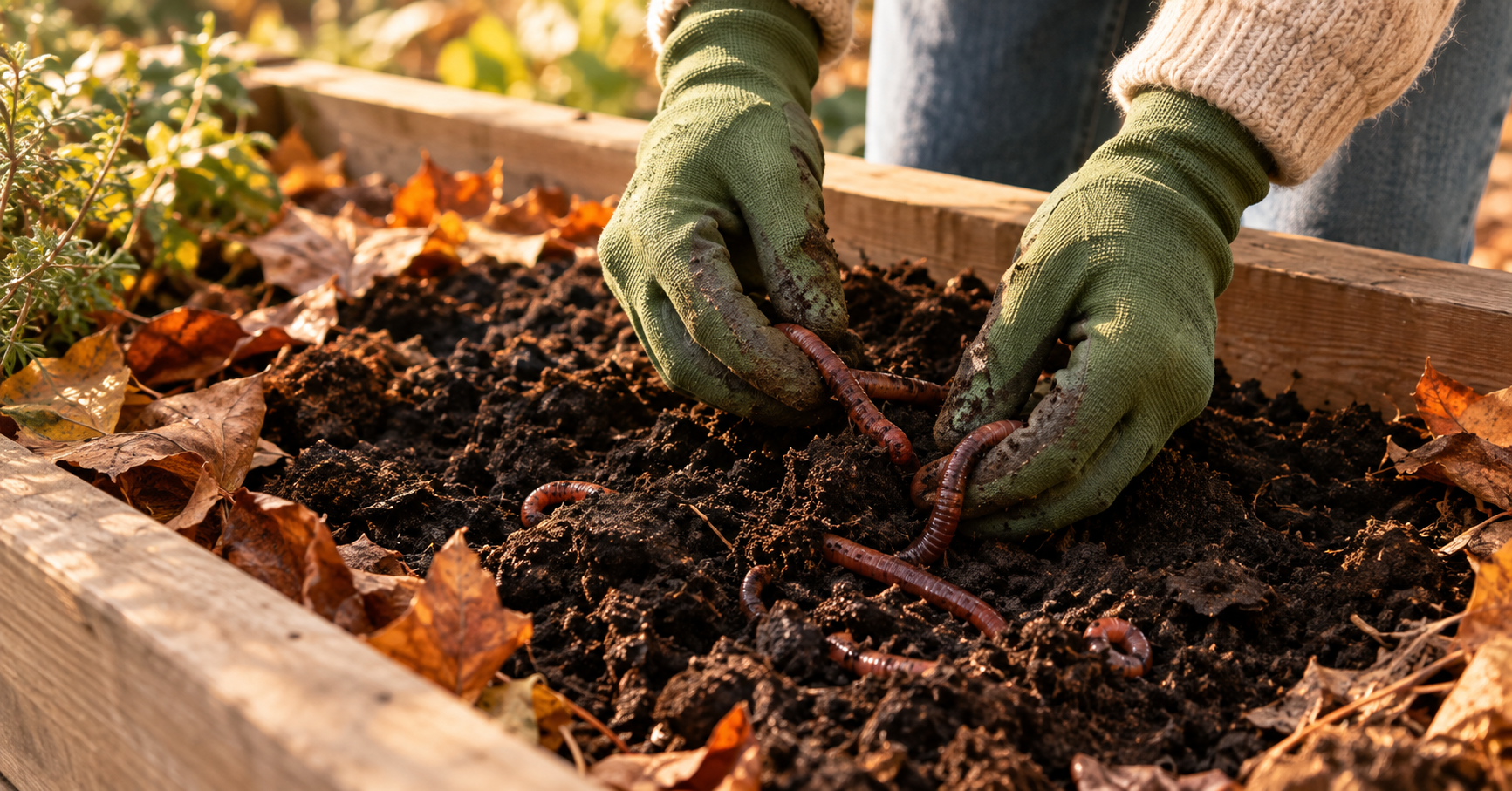
Yes, worms eat leaves, but not quite the way you might picture it. Worms do not chew on dry, crunchy leaves. They feed on the soft layer of microbes that grows on leaves once they are damp and starting to break down, along with the bits of leaf that have already softened. The University of Arizona Cooperative Extension notes that earthworms take in decomposing organic material along with plant litter lying on the soil surface, so a layer of leaves is a natural menu for them.
So when someone asks, “do worms eat leaves?”, the honest answer is yes, as long as the leaves are prepared the right way. That is why the way you prepare your leaves matters so much. Wet, shredded leaves turn into a soft, easy meal. Dry, whole leaves tend to sit there like a stack of paper plates, and nobody wants to eat those.
If you would like to see how leaves work in a bin rather than a garden bed, our guide to composting fall leaves covers that side of the story. This article is about using the leaves right where they land, in your garden.
What Is the Fall Garden Reset?
At Uncle Jim’s, we call it the UJWF Method. It is a simple stack of layers that turns a bed of fallen leaves into a slow, steady, self-running soil builder. Here is the lineup, from bottom to top:
- Black Gold: a thin layer of pure worm castings on the soil.
- Wet shredded leaves: the food supply.
- European nightcrawlers with a little worm food: the crew that does the work.
- Untreated burlap: the cozy blanket on top.
Each layer has a job, and they work best as a team. Let’s look at them one at a time.
Why Start With Black Gold?
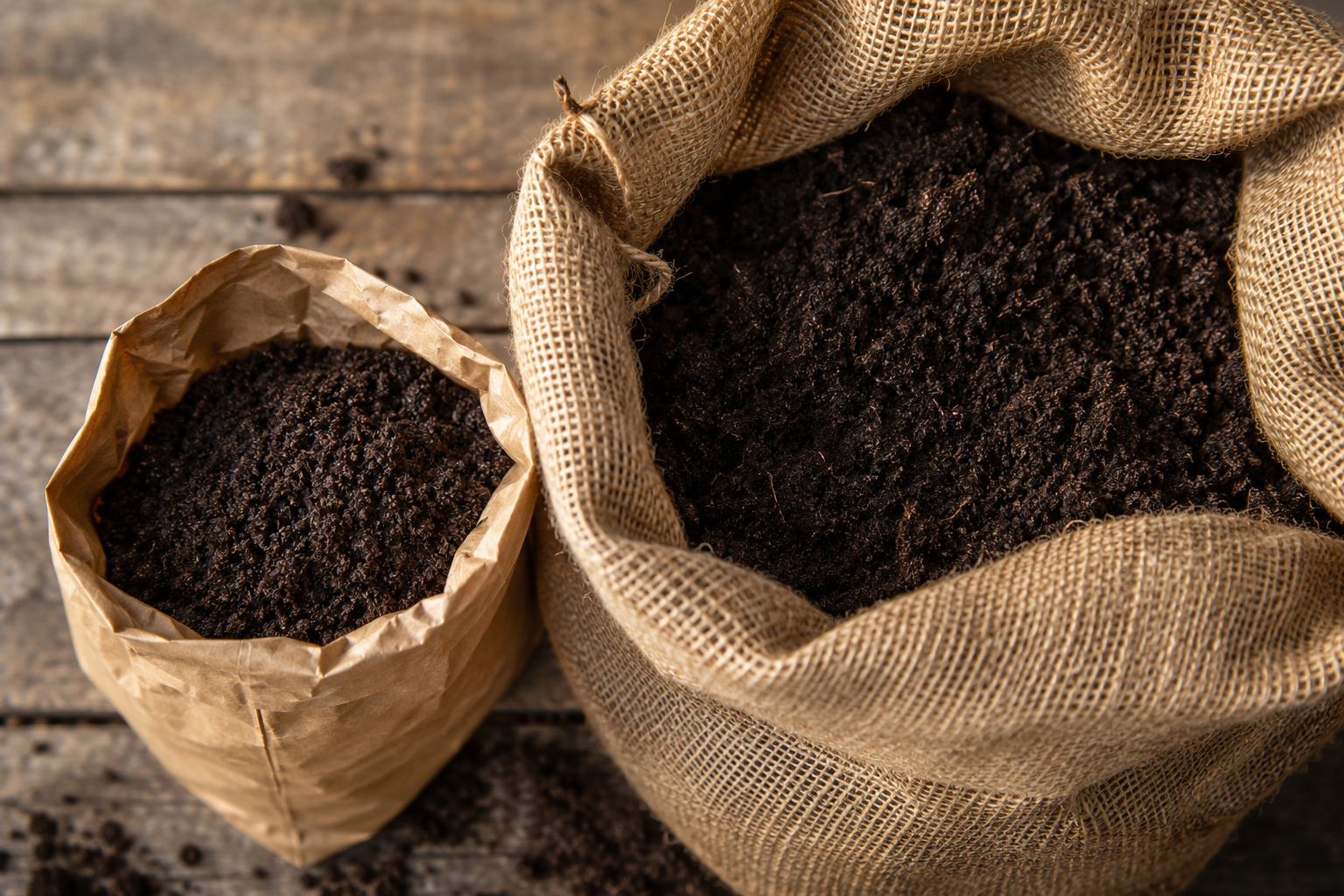
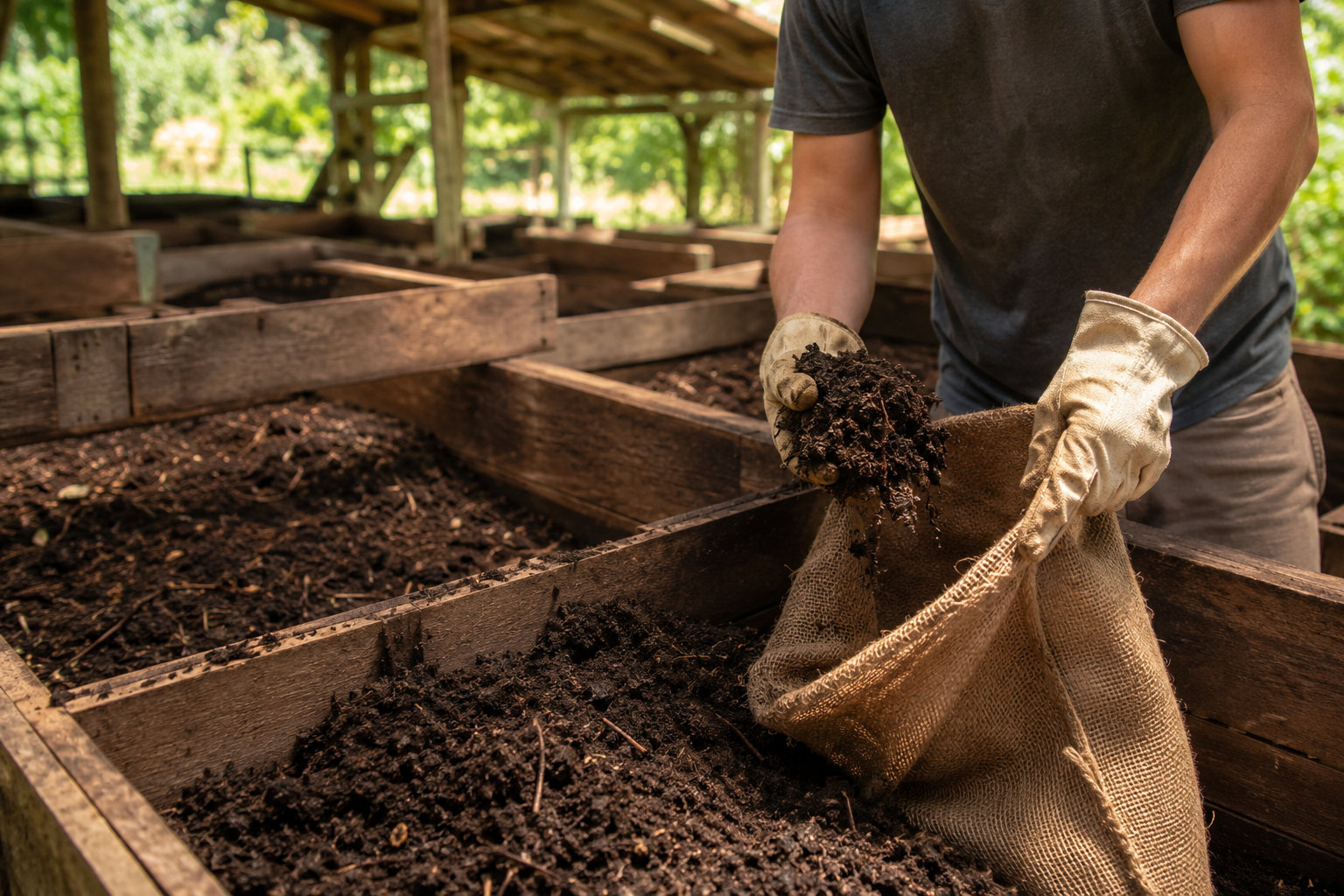
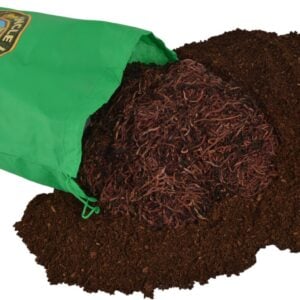
Our Black Gold worm castings come straight out of our worm beds, and we do not pasteurize them. That makes them living compost, full of beneficial microbes, and that is exactly what a pile of leaves is missing. Think of Black Gold as the starter for the whole system. A thin layer on the soil before the leaves go down is what turns plain old leaf rot into an active, living process.
Here is what that thin layer does for your bed:
- Gets leaf breakdown going. Black Gold is packed with helpful bacteria and fungi, so the leaves start softening right away instead of waiting for microbes to find them on their own.
- Gives worms a reason to come. The living, nutrient-rich layer tends to draw worms already in your soil up toward the leaves.
- Helps hold on to nutrients. The stable compounds in castings help bind the minerals released by decaying leaves, so there is less for winter rain and snowmelt to wash away.
- Improves soil structure. Soil tends to form loose, crumbly clumps instead of packing down, which leaves more room for air and water.
If you want to know more about what makes castings so special, our post on how Black Gold helps plants grow goes into the details.
Why Wet, Shredded Leaves?
Worms breathe through their skin, and that skin needs to stay moist. Dry leaves pull moisture away, which pushes worms down deep, away from the food. Wet leaves keep them comfortable and working right where the meal is, even late into fall.
Shredding helps too. Cut-up leaves have hundreds of tiny edges where microbes can settle in, so they soften into something worms like much sooner. Whole leaves can also mat together. University of Illinois Extension recommends shredding leaves before using them as mulch so they do not clump into a mat that keeps moisture from reaching the soil.
How thick can the layer be? Colorado State University Extension says vegetable and annual flower gardens can take six to eight inches of leaves each year, ideally shredded or chopped, so a generous layer is perfectly fine.
The easy way to shred: run a lawn mower over your leaf piles a couple of times. Then dampen the shredded leaves with a hose until they are wet but not dripping.
Where Do European Nightcrawlers Fit In?
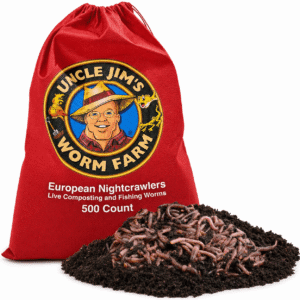
European nightcrawlers are the composting worm built for this winter system. They are big, hardy, and happy in cool weather, which makes them a natural fit for a garden bed rather than a kitchen bin. Here is what they bring to the party:
- They connect the surface and the soil below. They pull leaves down into their tunnels and carry microbes deeper into the root zone.
- They dig deep. Their burrows can reach 18 to 24 inches, leaving permanent air channels so freezing rain and snowmelt drain through instead of turning your bed into a soggy brick.
- They are tough. Thick bodies and a strong cold tolerance help them get through near-freezing weather, and they climb back up during thaws. Uncle Jim has even seen European nightcrawlers survive frozen in a block of ice. They are a seriously tough worm.
- They keep working longer. Under the burlap, they keep feeding and making castings well after red wigglers have gone dormant in surface freezes.
Red wigglers are wonderful in a worm bin, but this outdoor system is built for Euros. You can shop European nightcrawlers here or browse our full European nightcrawlers collection. If you would like to learn more about them first, take a look at why European nightcrawlers thrive in heat, cold, and tough conditions and how they improve soil aeration and garden soil health. And if you are brand new to adding worms to a garden, our guide to adding European nightcrawlers to your garden in fall is a great starting point.
Why Does the Right Burlap Matter?
The burlap is the part people are most tempted to skip, and it is the part that makes the whole thing work. It acts like a blanket and a shade all at once. For best results, use untreated, hydrocarbon-free, food-grade burlap in the 9 to 10 ounce range, which you can usually find at garden centers and farm supply stores. Here is why that weight is the sweet spot:
- It holds moisture. A tight enough weave keeps the leaves damp, blocks light, and keeps everything in place.
- It still breathes. It is porous enough for rain and fresh air to reach your worms and microbes.
- Lighter burlap can be too thin. It lets in too much light and dries out.
- Heavier burlap can be too thick. It can hold too much moisture and cut off air.
- It breaks down on its own. The natural fiber decomposes into worm food over two to three seasons, with no plastic left behind.
How Do You Build the Layers, Step by Step?
Here is the whole process, start to finish. Pick a mild afternoon once most of your leaves are down, ideally before the ground freezes solid. Then follow these steps:
- Clear the bed. Pull any weeds that are already growing. Iowa State University Extension explains that mulch works by preventing weed seeds from germinating, so weeds that are already up should be removed before you mulch.
- Add a thin layer of Black Gold. Sprinkle it evenly over the soil. A thin layer is all you need.
- Shred and wet your leaves. Run the mower over them, then dampen them with a hose.
- Spread the leaves over the Black Gold. Aim for several inches deep.
- Add your European nightcrawlers. Place them right on top of the wet leaves with a little worm food to get them started.
- Cover with burlap. Lay it over the whole bed and weigh the edges down with rocks or boards so the wind does not carry it off.
- Walk away. That is it. Your bed does the rest all winter.
It takes about an afternoon, and you can do it without a tiller, a shovel, or a single bag of yard waste for the curb.
What Should You Expect in Spring?
When the weather warms up, pull back the burlap. You should find softened, partly broken-down leaves, dark and crumbly soil underneath, and very few weeds. In Uncle Jim’s experience, this layering method suppresses 90 to 95 percent of weeds, with grass being the main survivor. Every garden is different, so think of that as a helpful guide rather than a promise.
Leaves that are not fully broken down yet can stay right where they are as mulch around your new plants. Your worms will keep working on them as the soil warms up. And if you would like to read more about keeping weeds under control in an organic garden, our post on controlling weeds in your organic garden has more ideas.
What Are the Most Common Mistakes (and Easy Fixes)?
Good news: this method is easier than it looks, and every one of these mistakes is simple to fix.
- Using dry, whole leaves. Shred them and wet them first. That one step makes a big difference.
- Choosing the wrong burlap. Check the weight and make sure it is untreated. The 9 to 10 ounce range is your target.
- Skipping the Black Gold. It is the spark that gets everything started, so do not leave it out.
- Covering up weeds that are already growing. Pull them first so they do not get a head start under the blanket.
- Using red wigglers outdoors in a freezing climate. Save them for the bin and use European nightcrawlers for the garden.
Do You Have Houseplants Too?
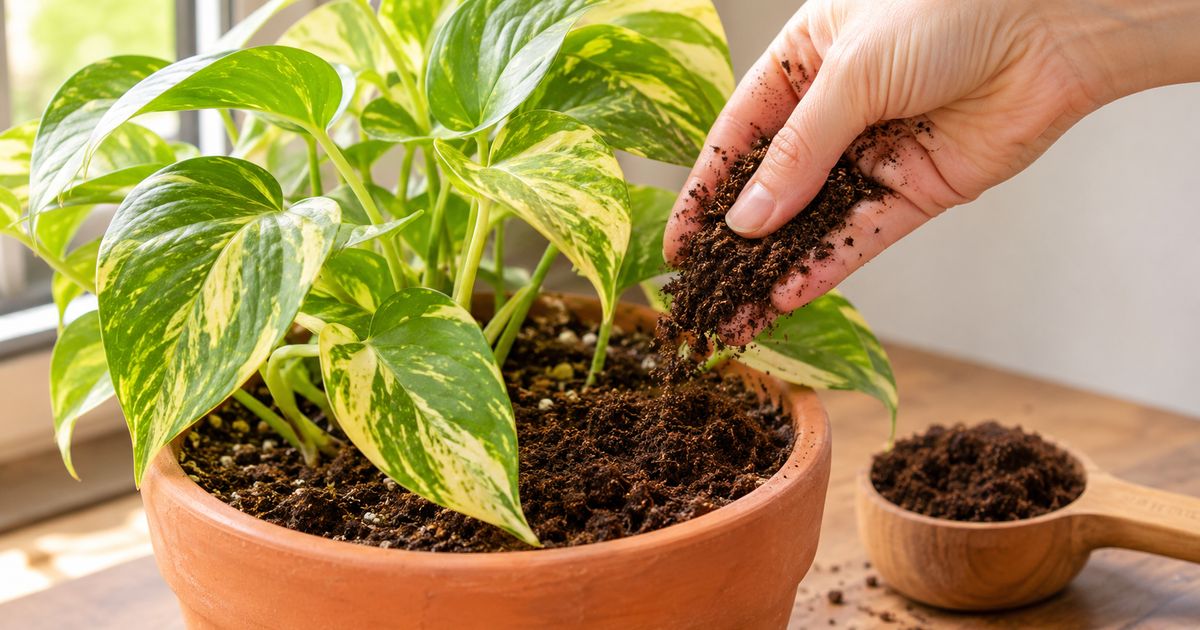
Plenty of gardeners have a shelf of houseplants as well. The same Black Gold that feeds your garden bed works on potted plants, just in much smaller amounts. If you want to see how much to use and how often, read our guide to worm castings for indoor plants. And for a deeper look at castings in general, Worm Castings: The Ultimate Guide is a great place to start.
Frequently Asked Questions About Worms and Leaves
Do worms eat leaves?
Yes. Worms eat leaves that are wet, shredded, and starting to break down. They mainly feed on the microbes growing on the leaves rather than on dry, crunchy ones.
Do worms eat dead leaves?
Yes, fallen leaves are exactly what they like. Dead leaves that have been shredded and dampened soften quickly and make an easy meal for worms.
Can European nightcrawlers survive winter in the garden?
European nightcrawlers are a hardy, cold-tolerant worm, and they have a reputation for toughness. Uncle Jim has seen them survive frozen in a block of ice. Under a layer of leaves and burlap, they have extra protection, and they climb back up to feed during thaws.
Do I need to till the bed in spring?
No tilling is needed. The worms open up the soil all winter, so you can pull back the burlap and plant.
How often should I add Black Gold to my garden?
A common rhythm is about every three months during the growing season, adjusted to your soil and what you are growing. The fall layer in this method counts as one of those applications.
Can I use red wigglers instead of European nightcrawlers?
Red wigglers are great for worm bins, but they tend to go dormant or die in surface freezes. European nightcrawlers are the better choice for an outdoor bed that goes through winter.
What’s Next?
So, do worms eat leaves? Absolutely, and now you know how to put that to work. You have the whole method: a thin layer of Black Gold, wet shredded leaves, European nightcrawlers, and the right burlap. Pick a mild afternoon, build your layers, and let your garden work while you are inside.
- Ready to start the layers? Shop Black Gold Worm Castings.
- Need your crew? Order European Nightcrawlers.
- Want to learn more first? Read about adding European nightcrawlers to your garden in fall.
About the Author
This article was written by the team at Uncle Jim’s Worm Farm. We have been raising composting worms on our farm in rural Pennsylvania for more than 40 years, and we love helping gardeners, plant lovers, and first-time composters get great results with worms and worm castings.