

Quick Summary (TL;DR): Worms love pumpkins—but not sugar. After Halloween, chop leftover pumpkins into small pieces, remove seeds, and mix with dry bedding. Skip candy, chocolate, and anything sticky or oily. Keep the bin balanced and odor-free with carbon-rich “browns” like shredded leaves and cardboard.
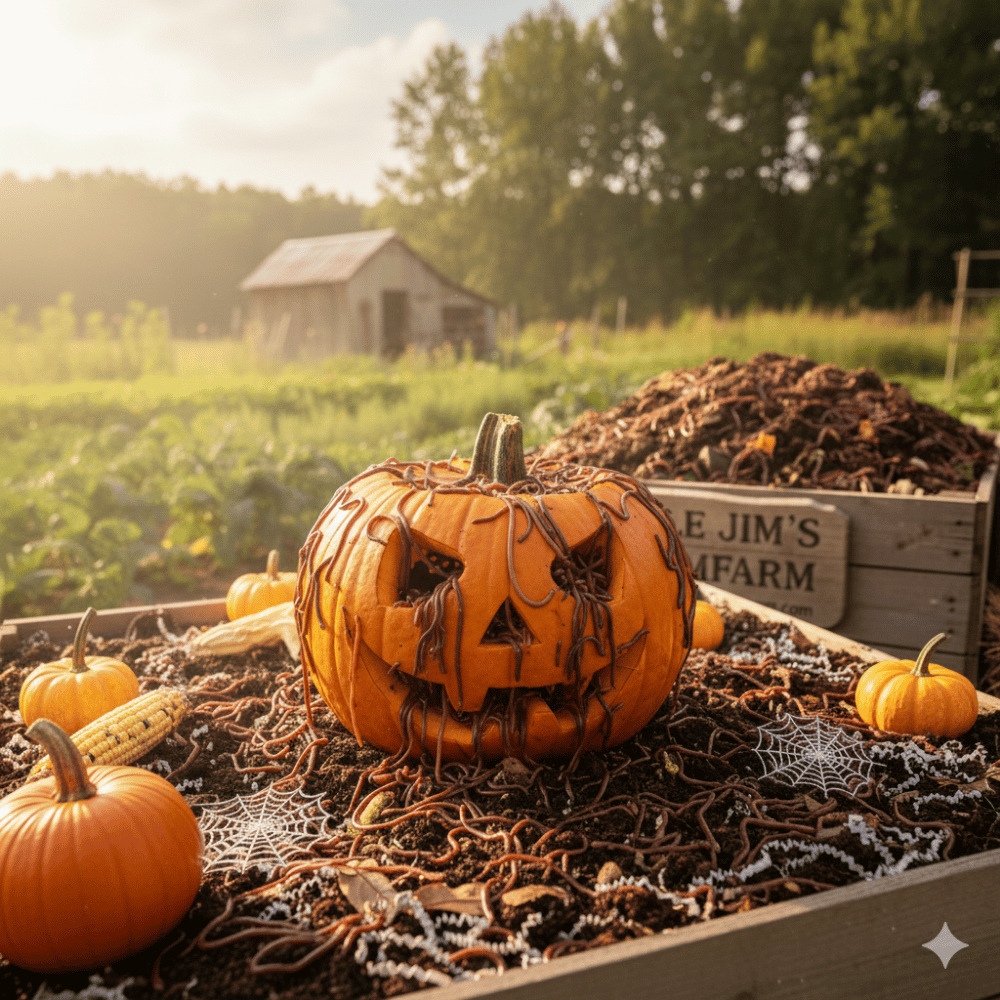
Why Halloween Is a Big Deal for Composters
Every October, households carve more than 1 billion pounds of pumpkins in the U.S., most of which end up in landfills. That’s a missed opportunity for nutrient-rich compost—and a risk for worm bins if the wrong treats are added.
As Uncle Jim likes to say, “Your worms want a fall feast, not a sugar rush.”
Can Worms Eat Pumpkin?
Yes! Pumpkins are an excellent worm food when prepared correctly. They’re soft, full of moisture, and break down quickly—just what microbes and red wigglers love.
- Chop or shred pumpkin flesh into small pieces to speed decomposition.
- Remove seeds—they sprout easily in moist bedding.
- Mix with dry bedding (leaves, cardboard, or coir) to prevent soggy spots.
- Balance moisture: Pumpkin is 90% water—offset with dry “browns.”
Adding pumpkin in moderation creates a microbial boost that helps worms process other materials faster.
What About Candy, Chocolate, or Sweets?
Here’s where composters get into trouble. Worms can’t handle concentrated sugar or artificial ingredients. These foods attract fruit flies, ants, and mold, and they ferment quickly—creating a sticky, acidic mess that harms your worm colony.
Avoid adding:
- Candy (hard or soft)
- Chocolate or baked goods
- Frosting, cookies, or donuts
- Soda, juices, or sugary liquids
If you’ve already added some by mistake, remove what’s visible and cover the area with dry bedding. Then sprinkle a small amount of Composter & Worm Farm Conditioner to neutralize acidity.
How to Compost Halloween Pumpkins the Right Way
- Remove decorations: Candles, stickers, paint, and glitter don’t belong in compost.
- Chop or blend: Smaller pieces break down faster.
- Mix with bedding: Combine with shredded leaves or coir for balance.
- Bury shallowly: 1–2 inches under bedding to deter fruit flies.
- Cover with dry layer: Always finish with leaves or paper to prevent odor.
Leftover pumpkins you can’t fit into the worm bin? Add them to a traditional outdoor compost pile or donate them to local farms—many animals love them as feed.
Common Halloween Worm Bin Mistakes
1. Adding Too Much Pumpkin at Once
Pumpkin decomposes fast. Overloading can lead to excess moisture and a sour smell. Start with a handful per square foot of surface area.
2. Forgetting the Browns
Dry carbon materials are the secret to balance. Without them, bins get slimy and anaerobic.
3. Leaving Candy Wrappers On
Plastic, foil, and wax coatings never break down. Always remove them completely.
4. Ignoring pH and Moisture
Too much pumpkin + sugar = acidic conditions. Add crushed eggshells or worm conditioner weekly to buffer pH.
Safe Halloween Foods for Worms
- ✅ Pumpkin (chopped)
- ✅ Apple cores & peels
- ✅ Banana peels (small pieces)
- ✅ Coffee grounds & filters
- ✅ Dry leaves, paper, cardboard
Foods to Avoid
- Candy, chocolate, or processed sweets
- Citrus peels (too acidic in large amounts)
- Meat, dairy, greasy foods
- Onions or garlic (strong odor compounds)
Keep the Bin Balanced After Halloween
After a big feeding, check temperature and moisture in two days. Bedding should feel like a wrung-out sponge—not soupy or bone dry. Fluff the top layer to improve airflow.
Use this quick reference:
- Smells fresh & earthy? Perfect balance.
- Smells sour or sticky? Add more dry bedding.
- Worms deep or hiding? Too hot or acidic—mix bedding and rest bin for a day.
Science Corner: Why Sugar and Worms Don’t Mix
Excess sugar ferments quickly, producing alcohol and organic acids that irritate worm skin and deplete oxygen. According to University of Illinois Extension and the US EPA, high-sugar waste should be diluted with dry organics or left out entirely. Sweet, processed foods also attract pests that compete for oxygen and space.
FAQ: Halloween Composting & Worm Feeding
Can worms eat moldy pumpkin?
Yes, within reason. A little surface mold is fine—it’s part of decomposition. Remove large moldy chunks that smell sour or feel slimy.
Can I feed pumpkin seeds?
Yes, if crushed or blended. Whole seeds often sprout in worm bins, which can crowd your bedding.
How long does pumpkin take to break down?
In an active worm bin, about 2–4 weeks depending on temperature and piece size.
Can I freeze pumpkin for later feeding?
Absolutely. Frozen pumpkin stores well for winter and breaks down faster after thawing.
What should I do with leftover candy?
Donate unopened candy or drop it at local collection drives. Don’t compost sugary treats—they harm your bin ecosystem.
What’s Next?
Now that you’ve saved your worms from a sugar overload, keep them happy all winter with balanced feed and fresh bedding. Explore these helpful resources:
Or stock up on seasonal essentials:
About the Author
Jim Shaw is the founder of Uncle Jim’s Worm Farm and a leading voice in vermiculture for over 40 years. His Pennsylvania-based farm supplies composting worms and equipment across North America. Read more articles.


2 thoughts on “Can Worms Eat Pumpkins and Candy? Halloween Composting Mistakes to Avoid”
Hey I’m a beginner so if this question is crazy, just understand this is my first time trying this on the dry cardboard that we’re putting in are we supposed to wet the shredding first or just add dry to the bedding
Hi Dan,
That’s a great question, and definitely not crazy at all! It’s something every beginner should understand because it’s a critical step in keeping your worms healthy.
The answer is yes, you should wet the shredded cardboard/paper first.
Why You Need to Wet the Bedding? Your worm bin bedding needs to be consistently moist, like a wrung-out sponge. If you add the cardboard dry, it will absorb all the moisture from the food scraps and the rest of the bedding, creating a few problems:
Worm Health: Worms breathe through their skin, which must stay moist. Dry bedding will dehydrate and stress them.
Decomposition: The microbes that break down the food and carbon (like cardboard) need moisture to do their job.
Preventing Dry Spots: Dry bedding can create pockets that slow down the whole composting process.
The Easiest Way to Do It:
Soak: Put the shredded cardboard in a bucket of water for a few minutes.
Squeeze: Pull it out and gently squeeze the excess water out. You want it moist, but not dripping wet.
Mix: Fluff this pre-moistened material into your existing bedding to help aerate the bin.
Getting the moisture right is key to happy worms! Don’t hesitate if you have any other questions.
— The Uncle Jim’s Worm Farm Team