

You’ve decided to start composting with worms. Great call. Then you open the indoor compost bin page and find a whole lineup of stacking bins that look almost identical. Trays, lids, spigots, stacks. Which one do you actually need?
For most people, the choice comes down to our two best-selling stacking bins: the Worm Factory 360 and the Worm Box 5-Tray Composting System. Both use the same proven method. Both work indoors and outdoors. But they’re built for different kinds of composters. This guide breaks down the real differences so you can pick the right one the first time.
Quick Summary
- Choose the Worm Factory 360 if you’re a beginner who wants a proven, easy system that can grow with you. It starts with 4 trays, and you can add extra trays later.
- Choose the Worm Box 5-Tray if you produce a lot of kitchen scraps or want everything in one box. It holds 12 gallons across 5 working trays and ships with bedding and tools included.
- Both bins use the same upward-migration tray system, work indoors and outdoors, and need the same things to succeed: live composting worms, moist bedding and the right temperature.
- Short on space? A 3-tray system is the better fit. See the small-space section below.
How Do Stacking Worm Bins Work?
Before comparing models, it helps to understand what you’re buying. Both the Worm Factory 360 and the Worm Box are stacking tray systems, also called upward-migration systems.
Here’s how they work, in plain terms:
- You start with one tray filled with moist bedding, worms and food scraps.
- The worms eat the scraps and turn them into castings (worm compost).
- When the first tray is full of finished compost, you stack a new tray on top with fresh bedding and food.
- The worms crawl up through holes in the tray bottom to reach the new food.
- Once most worms have moved up, you remove the bottom tray and harvest the castings. No sorting worms by hand.
Liquid drains down through the trays into a base. That liquid is often called leachate, and it’s different from true worm tea. We explain the difference in our guide on worm tea vs. worm leachate.
The big advantage of this design is easy harvesting. The worms do the sorting for you. That’s why stacking bins are the most popular choice for home composters.
Worm Factory 360 vs. Worm Box 5-Tray: What’s the Difference?
Here’s a side-by-side look at what each system offers, based on the product details on each page.
Worm Factory 360
- Trays: 4 stacking trays included
- Expandable: Yes. Extra trays are sold separately
- Included: Instruction manual and an accessory kit with a hand rake and scraper
- Handy extra: The lids double as stands for trays while you harvest
- Materials: Made from recycled materials
- Use: Indoors or outdoors
- Best for: Beginners and small to medium households
Worm Box 5-Tray Composting System
- Trays: 5 working trays
- Capacity: 12 gallons, the largest bin in our stacking lineup
- Included: Gloves, a coconut coir bedding brick, a shovel and a silicone scraper
- Worm tea: Built-in spigot for easy liquid collection
- Odor control: Closed design with ventilation
- Use: Indoors or outdoors
- Best for: Larger households, heavy scrap producers and anyone who wants everything in one box
Neither bin comes with worms, so plan to add live composting worms to your order.
Which Worm Bin Is Best for Beginners?
The Worm Factory 360 is the better choice for most beginners. It starts at a manageable size, comes with a detailed instruction manual, and lets you add trays only when your worm colony is ready for them.
That last point matters more than it sounds. The most common beginner mistake is overfeeding. A new colony can only eat so much, and uneaten food rots, smells and attracts fruit flies. Starting with a smaller system keeps the amount of food in balance with the number of worms.
How much can your worms eat? According to NC State Extension, red wigglers eat about one-quarter to one-third of their body weight per day. Cornell Cooperative Extension puts it another way: once settled in, a pound of worms can handle up to about 3 pounds of scraps per week.
So a beginner with one pound of worms should expect to feed small amounts and build up over time. The Worm Factory 360 fits that rhythm well. Our list of common composting worm mistakes covers the other pitfalls to avoid in your first months.
Which Worm Bin Handles More Food Scraps?
The Worm Box 5-Tray is built for volume. With 12 gallons of capacity across five working trays from day one, it gives a growing colony plenty of room. It’s a good match for families who cook at home most days, or for anyone who already composts and wants to scale up.
The 5-tray setup also means you’ll have more trays in rotation. While worms are busy in the top trays, finished compost keeps maturing in the lower ones. That means more frequent harvests of worm castings for your garden and houseplants.
One tip: a bigger bin doesn’t mean you should start with more food. Start feeding lightly and increase as your worms multiply. Capacity is room to grow, not a target for week one.
How Many Worms Do You Need for a Stacking Bin?
Start with about 1,000 worms (roughly one pound) for either bin. NC State Extension recommends one pound of worms, about 1,000, for each square foot of bin surface.
If your household produces a lot of scraps, 2,000 worms will get the bin up to speed faster. Either way, your colony will reproduce on its own and grow to match the space. For a deeper breakdown, read how many worms you need for your composting bin.
Which worms? For stacking bins, you have two great options:
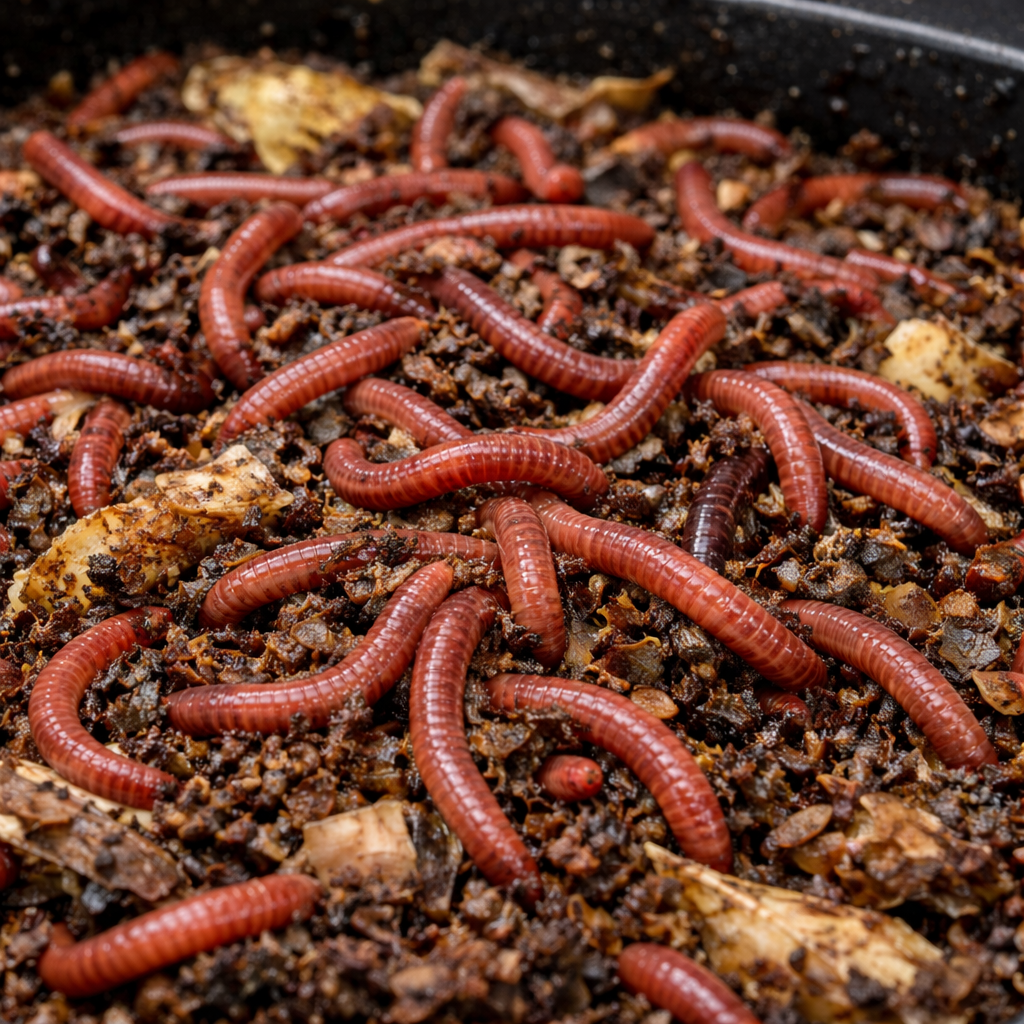
- Red Composting Worm Mix: Classic red wigglers, fast eaters and prolific breeders. The go-to choice for indoor bins.
- Super Red European Nightcrawlers: Larger, hardy worms that handle a wider range of conditions. A strong pick for bins that live in a garage or on a porch.
Not sure which to choose? Our guide to red wigglers vs. nightcrawlers explains the differences.
Can You Use These Worm Bins Indoors in Winter?
Yes. Both the Worm Factory 360 and the Worm Box 5-Tray work indoors, which makes them ideal for fall and winter composting.
Temperature is the key. University of Illinois Extension notes that red wigglers are most active between 55°F and 77°F. They slow down in the cold and can die near freezing. A heated basement, laundry room, closet or kitchen corner keeps them comfortably in range.
Indoor bins also need a little extra attention to moisture. Winter air is dry, so check the bedding every week or so. It should feel like a wrung-out sponge. A worm blanket on top of the bedding helps hold in moisture and keeps the top layer dark and cozy.
If your bin will stay outside, see our guide to keeping your worms warm in winter. For a full walkthrough of setting up inside, read The Ultimate Guide to Indoor Composting with Worms.
What About Smaller Spaces?
If you live in an apartment or only have room under the sink, a 5-tray system may be more than you need. In that case, look at a 3-tray option like the Worm Box 3-Tray Composting System. It uses the same stacking method in a more compact footprint and is beginner-friendly.
A 3-tray bin is also a good fit for singles, couples who eat out often, and classroom or kids’ projects. You can browse every size in our indoor compost bins collection.
What Else Do You Need to Get Started?
Whichever bin you choose, a few supplies make the first weeks much easier:
- Bedding: Worms need moist bedding to live in and to bury food under. Coconut coir is a clean, easy option. The Worm Box includes a coir brick, and you can add a coconut coir brick to a Worm Factory 360 order. Learn more in what you can use for worm bedding.
- A worm blanket: Keeps moisture in and light out. The Worm Blanket and Coco Coir Brick combo covers both needs at once.
- Worm food: Kitchen scraps are the main menu. A feed supply helps keep a new colony well fed while you learn the balance. Check what to feed red wigglers for a full list of dos and don’ts.
Want the simplest start? Our worm kits bundle worms, bedding and feed so you don’t have to piece everything together.
Is a Stacking Worm Bin Worth It?
For most home composters, yes. A stacking bin turns daily kitchen scraps into castings you’d otherwise buy by the bag. It also keeps food out of the trash. University of Missouri Extension notes that vermicomposting can reduce household food waste by up to two-thirds, without the work of a backyard pile.
Compared to a DIY tote, a stacking system mainly saves you time at harvest. Instead of sorting worms from compost by hand, you lift off a finished tray. If you enjoy building things, a DIY worm bin works too. If you want a cleaner, easier routine, a stacking bin pays off quickly.
Still weighing other styles, like flow-through bins? Our roundup of the best worm composters covers more options.
Frequently Asked Questions
Is the Worm Factory 360 good for beginners?
Yes. The Worm Factory 360 is one of the most beginner-friendly stacking bins. It comes with an instruction manual and an accessory kit, starts with 4 trays, and can be expanded with extra trays as your colony grows.
Does the Worm Box 5-Tray come with worms?
No. The Worm Box 5-Tray includes gloves, a coconut coir bedding brick, a shovel and a silicone scraper, but worms are sold separately. Most people start with about 1,000 red wigglers or European nightcrawlers.
Can I keep a stacking worm bin in my kitchen?
Yes. Both the Worm Factory 360 and the Worm Box are designed for indoor use. A well-managed worm bin should smell like fresh soil. Bad odors usually mean too much food or too much moisture.
How long until I can harvest worm castings?
It depends on how many worms you start with and how much you feed them. Most new bins need a few months before the first tray is ready. Our guide to harvesting worm castings explains the signs to look for.
Can I use nightcrawlers in a stacking worm bin?
Yes. European nightcrawlers work well in stacking bins, especially in spaces with wider temperature swings like garages. Red wigglers are the classic choice for indoor bins. Many composters use a mix of both.
What’s Next?
You know the difference. Now it’s time to pick your bin and get your worms working.
- Just starting out? Shop the Worm Factory 360.
- Composting for a busy household? Shop the Worm Box 5-Tray Composting System.
- Need worms? Order live composting worms, guaranteed to arrive alive.
Questions before you buy? Our team is happy to help you choose the right setup. You can also browse our getting started resources.
About Uncle Jim’s Worm Farm
Uncle Jim’s Worm Farm has been raising composting worms in Pennsylvania since 1976. What started as a small operation selling worms to local gardeners is now one of the leading suppliers of red wigglers, European nightcrawlers and vermicomposting supplies in the United States. Every guide on our blog comes from decades of hands-on experience helping gardeners, families and farms turn scraps into black gold.


One thought on “Worm Factory 360 vs Worm Box 5-Tray: Which to Buy?”
I’ve been looking into indoor vermicomposting for a while. For anyone already using either the 360 or the 5-Tray indoors, how’s the smell management during hot summer months?