


If you’re starting a compost bin or preparing your garden for spring, you’ve probably come across two popular options: Red Wigglers and European Nightcrawlers.
Both are excellent composting worms — but they serve different purposes. Choosing the right one depends on whether your goal is fast composting, better soil aeration, or a multi-purpose solution.
Quick Summary
- Red Wigglers: Best for fast composting in bins.
- European Nightcrawlers: Best for soil aeration, gardens, and versatility.
- Super Reds (European Nightcrawlers): Ideal for composting, gardening, and fishing.
- For spring soil improvement, European Nightcrawlers are often the better choice.

What’s the Difference Between Red Wigglers and European Nightcrawlers?
While both worms are used in vermicomposting, they behave very differently in soil.
Red Wigglers (Eisenia fetida)
- Live near the surface
- Excellent for breaking down food scraps quickly
- Best suited for indoor compost bins
- Do not burrow deeply into soil
European Nightcrawlers (Eisenia hortensis)
- Burrow deeper into soil
- Improve aeration and drainage
- Work well in compost AND garden beds
- Larger and more resilient
If your goal is improving soil structure, you may also want to read:
How European Nightcrawlers Improve Soil Aeration
Why European Nightcrawlers Are Better for Soil Aeration
One of the biggest advantages of European Nightcrawlers is their ability to burrow deeper into soil. This creates channels that allow air, water, and nutrients to move more freely.
These natural tunnels:
- Reduce soil compaction
- Improve root growth
- Increase water infiltration
- Support beneficial microbes
Unlike Red Wigglers, which stay near the surface, European Nightcrawlers actively improve the structure of your soil over time.
Composting Performance: Surface vs Deep Processing
Red Wigglers are known as composting champions — and for good reason. They quickly consume food scraps and produce nutrient-rich castings.
However, European Nightcrawlers bring something different to the table.
They process organic material at multiple levels.
This means:
- Top-layer composting (like Red Wigglers)
- Deeper soil integration
- More complete organic breakdown
Super Reds: The Best of Both Worlds
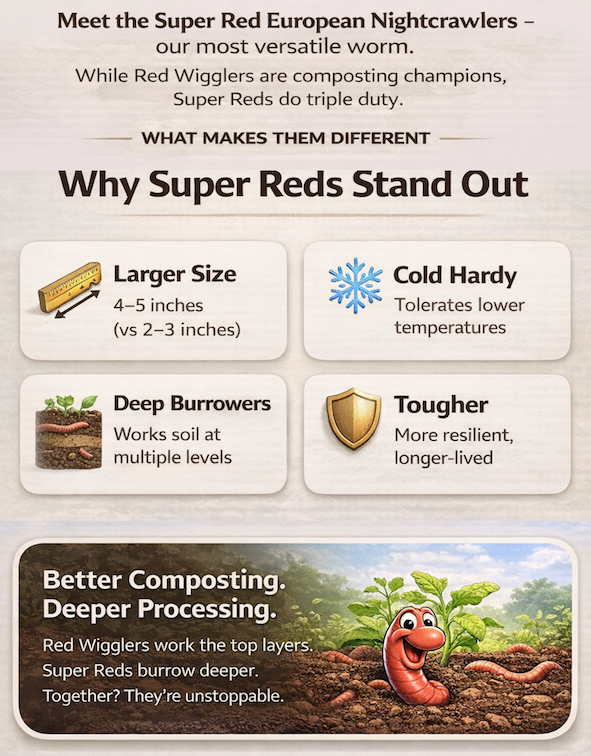
European Nightcrawlers are often referred to as “Super Reds” because they combine the strengths of multiple worm types into one versatile solution.
- Larger size (4–5 inches)
- Deep burrowing for aeration
- Tolerates cooler temperatures
- Works in compost bins AND garden beds
This is why many gardeners call them the “Swiss Army knife of worms.”
Side-by-Side Comparison
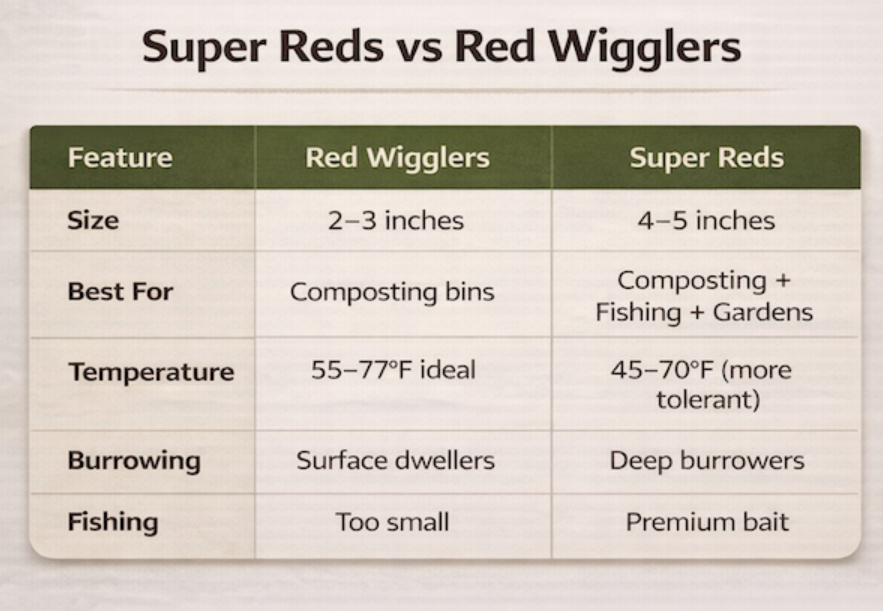
When Should You Choose Each Worm?
Choose Red Wigglers if you:
- Want fast composting indoors
- Are using a small worm bin
- Focus mainly on food scrap recycling
Choose European Nightcrawlers if you:
- Want to improve garden soil
- Need better aeration and drainage
- Are working with raised beds
- Want one worm for composting AND soil health
Using European Nightcrawlers in Garden Beds
European Nightcrawlers can be added directly to garden beds, where they will:
- Aerate soil naturally
- Create nutrient channels
- Improve plant root access
- Enhance long-term soil fertility
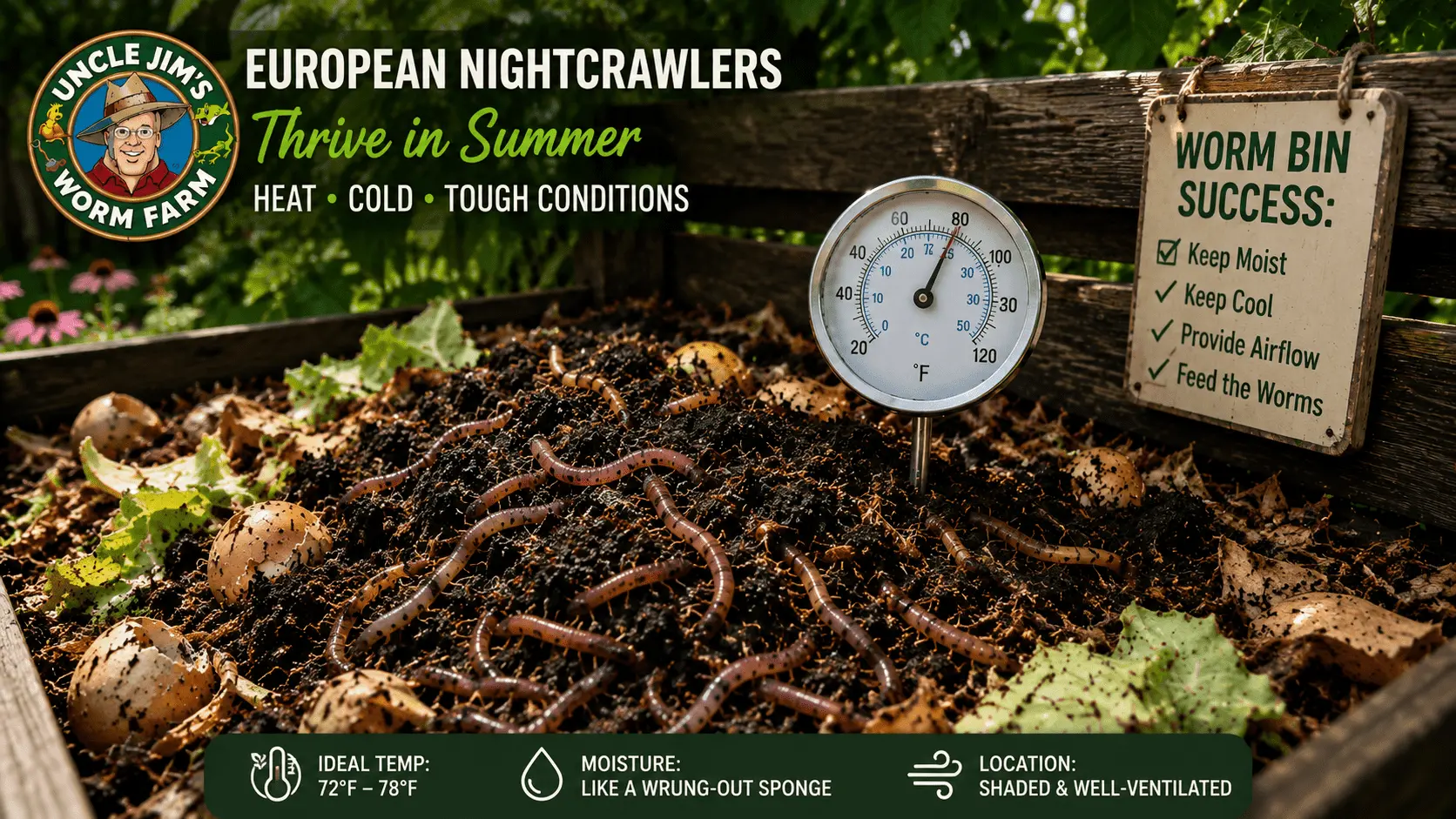
For best results, add them to soil rich in organic matter and keep the environment moist.
Bonus: They’re Also Premium Fishing Bait
Unlike Red Wigglers, European Nightcrawlers are also widely used as fishing bait.
They are:
- Larger and more durable
- Stay on hooks longer
- Ideal for bass, trout, and catfish
What’s Next?
If you’re looking for a worm that can handle composting, soil improvement, and even fishing, European Nightcrawlers are one of the best choices available.
They don’t just recycle organic waste — they actively build healthier soil.
Limited Time Offer: Buy 1000 worms and get 1000 FREE.
Shop European Nightcrawlers Now
FAQ
Are European Nightcrawlers better than Red Wigglers?
It depends on your goal. Red Wigglers are best for composting, while European Nightcrawlers are better for soil aeration and versatility.
Can you use European Nightcrawlers in compost bins?
Yes, they work well in compost bins but also improve soil when added to garden beds.
Do European Nightcrawlers improve soil?
Yes, they create tunnels that improve aeration, drainage, and nutrient distribution.
About the Author
Uncle Jim’s Worm Farm Team
With over 50 years of experience in vermiculture, Uncle Jim’s Worm Farm has supplied millions of composting worms nationwide.
Continue Learning:
How to harvest Worm Castings & Use Them in Your Garden This Spring
How Long Do Earthworms Live in Containers? A Complete Guide
6 thoughts on “European Nightcrawlers vs Red Wigglers: Which Worm Is Best for Your Garden?”
Der sir. I purchased worms and put them in large foam coolers. Things were fine until yesterday I found a lot of worms on the sides of the cooler and were dead . We have been very careful how we feed them. Could you tell me whats wrong. We use house scraps. No meat , onions, or dairy products.
I need a recommendations on the correct worms for my flower beds. I live in Northwest Georgia and my groud is rocky, compacked clay rich . My goals are cottage garden with native wild flowers.
Can any of the worms be used outside in raised beds in Texas summer where temps get up to 105?
I have yet to receive my red wriglers!
What would the implications be if we mixed the two types into one garden bed or fabric bed?
It’s interesting how their different behaviors affect soil health. Have you found specific scenarios where one performs better than the other in your own gardening experience? gd