

Description
Simple bags. Smart details.
Zip-top lid
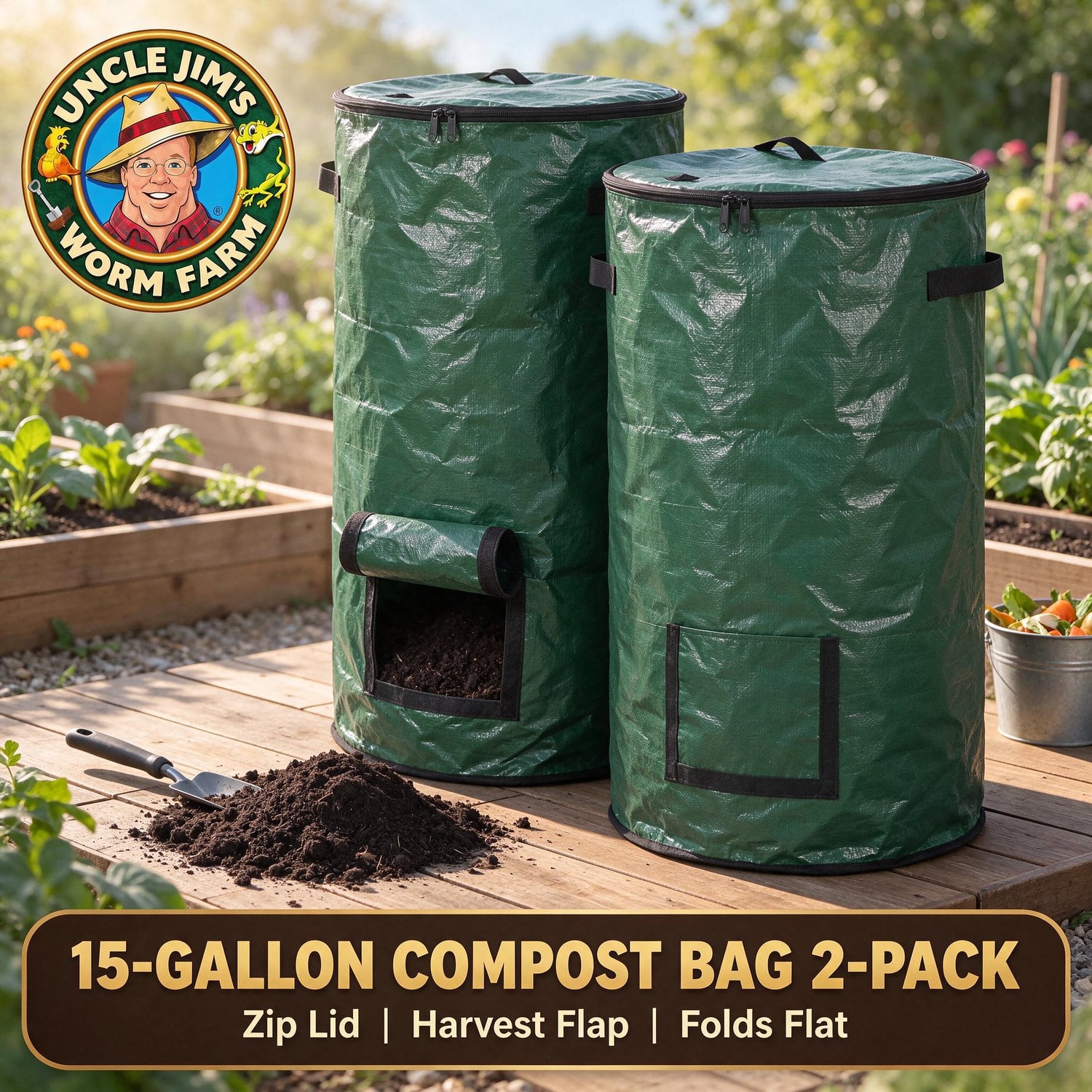
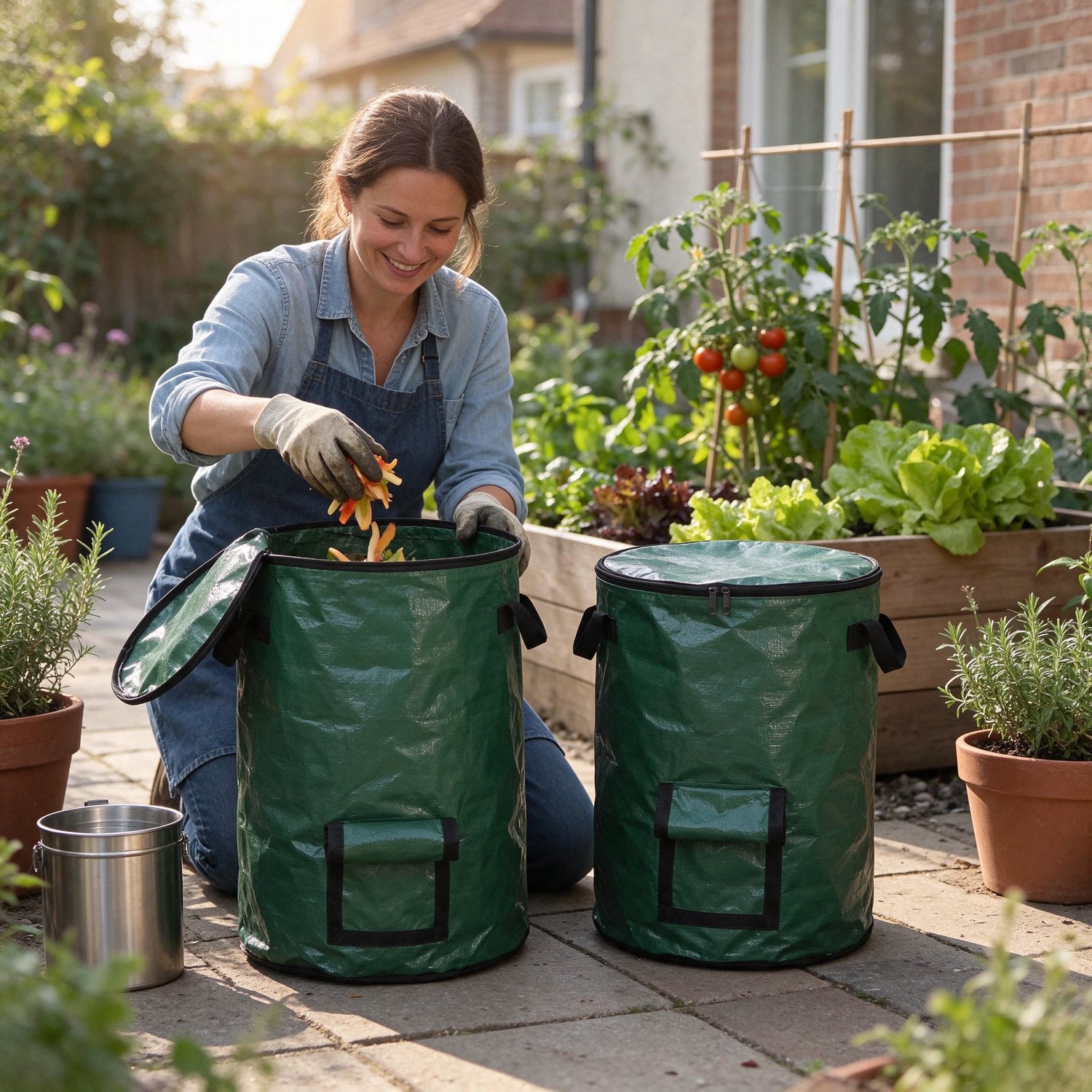
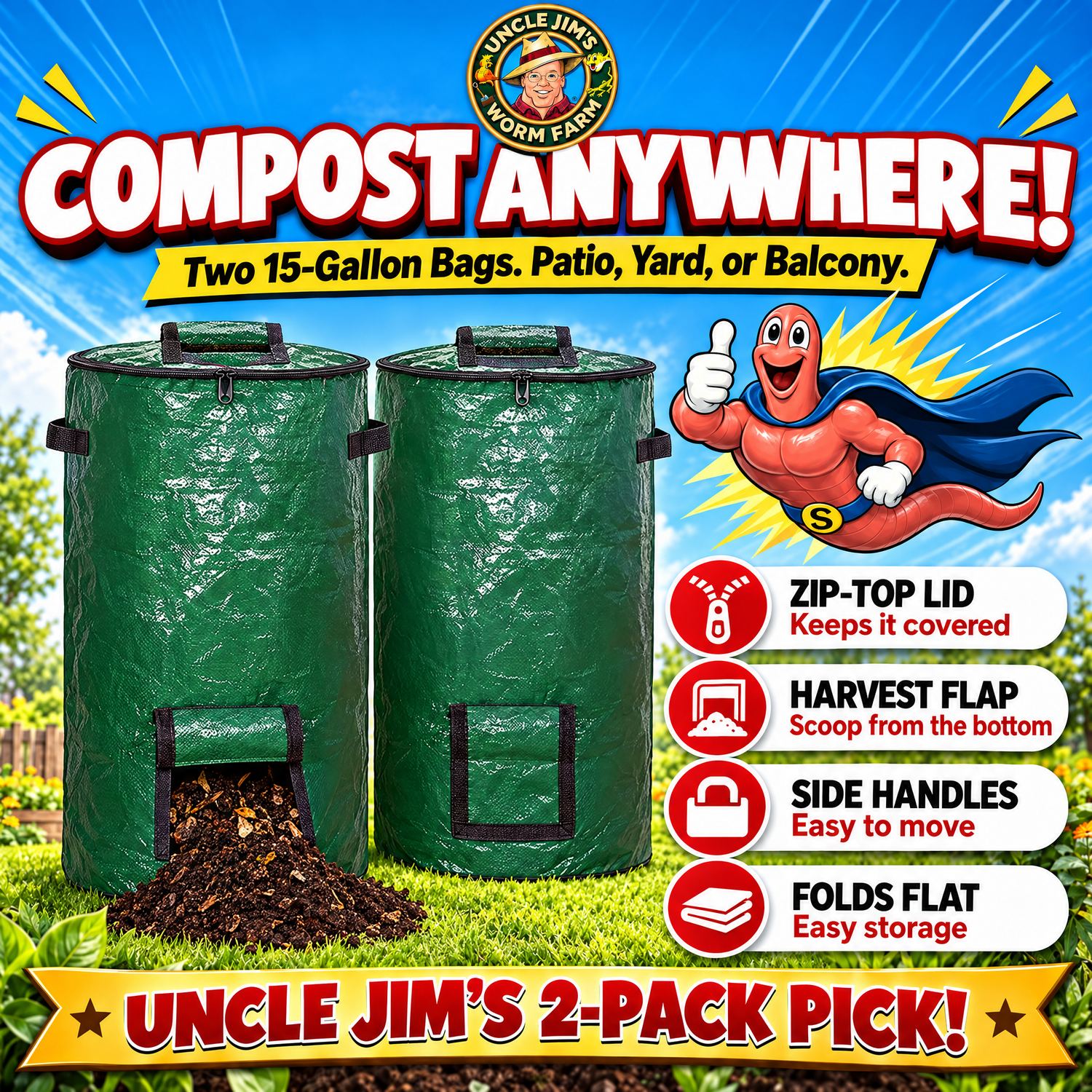
A round lid zips all the way around the top, with a pull handle in the middle. Unzip to add scraps, zip it shut to keep things covered and tidy.
Bottom harvest flap
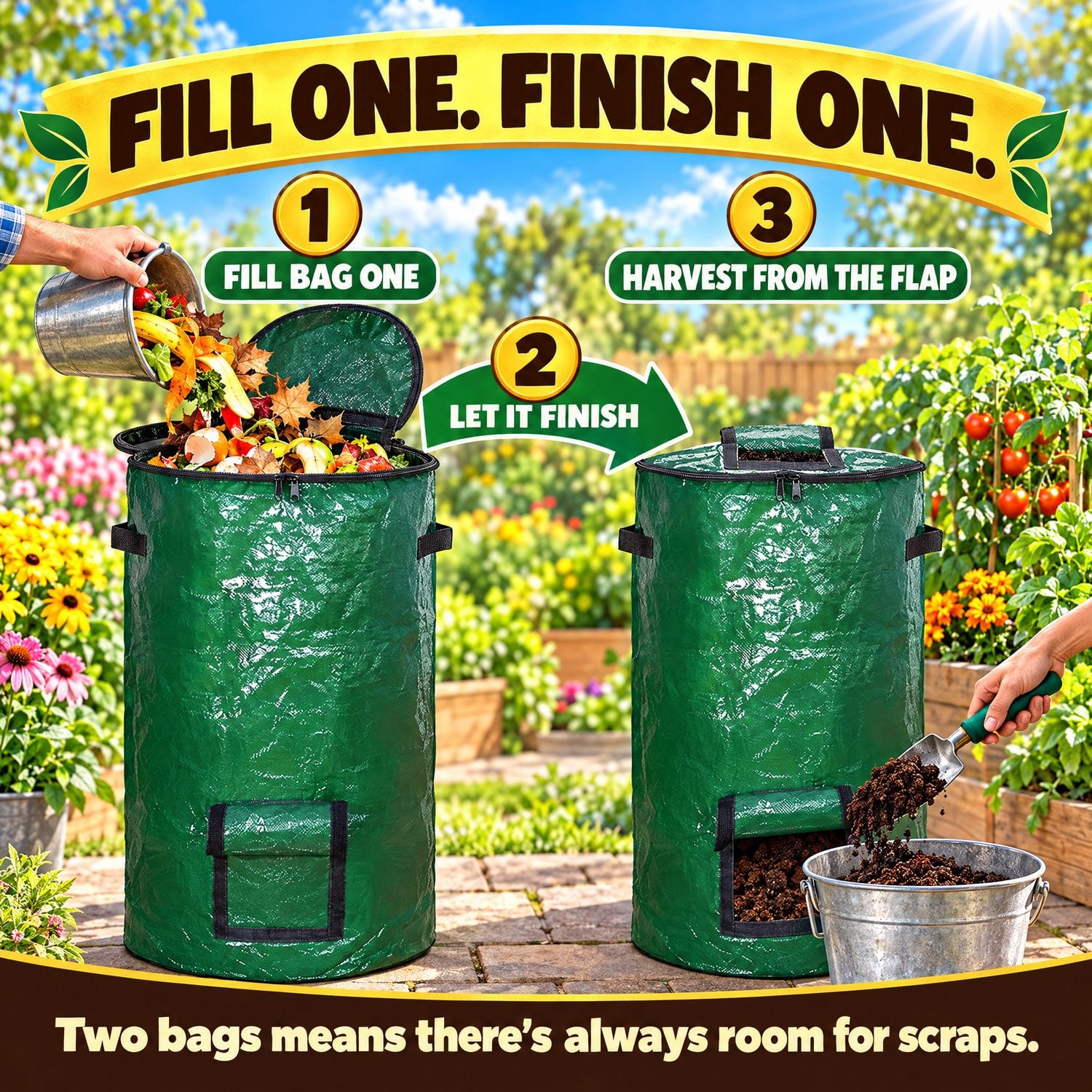
The oldest compost settles to the bottom. Fold open the flap at the front to check on it and scoop out what is ready, then close it back up with the hook-and-loop strip.
Two side handles
Webbing handles on both sides make it easy to move a bag into place, or carry it to the garden while it is still light.
Tough woven fabric
Made of woven polyethylene, like a tarp. Like any fabric bag it is floppy when empty, so pull it into shape and add a few inches of leaves to help it stand.
Folds flat
Empty bags fold down small enough to tuck on a shelf, so you can store them in a shed or closet over winter.
Fits almost anywhere
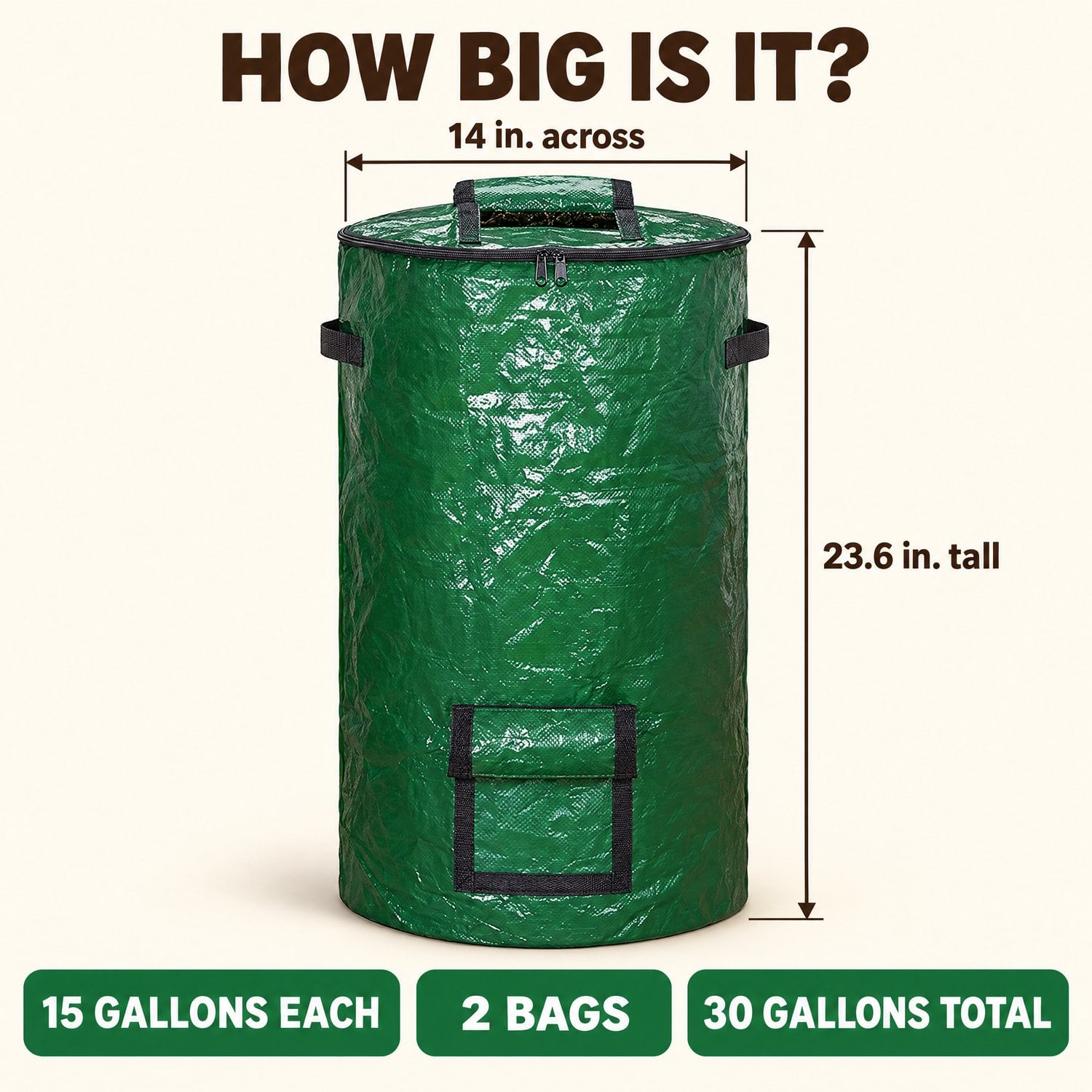
About 14 inches across. Two bags fit side by side in a 2.5-foot spot on a patio, a deck corner, or beside the back steps.
Makes great leaf mold
Pack a bag with shredded fall leaves, dampen them, and let them rot down into crumbly leaf mold for mulch and potting mix. It takes about a year or two.
Unfold it. Place it. Fill it.
There is nothing to build. The most important choice is where it goes, because a full bag is heavy and is best left in one spot.
Unfold and open
Take the bag out, unfold it, and pull it into its round shape. Unzip the lid all the way.
Pick the spot
Choose a level spot it can stay in, close to the kitchen door if you can. Bare soil, grass, or gravel is best. On a deck or patio, set it on a boot tray to catch any drips.
Start with browns
Put 3 to 4 inches of dry leaves or shredded cardboard in the bottom. It soaks up moisture and helps the bag hold its shape.
Add scraps and cover
Add kitchen scraps, cover them with more browns, and zip the lid. That is it. Keep going until the bag is full.
Uncle Jim’s tip: partial shade is the sweet spot. It keeps the bag from drying out in summer, and keeping plastic fabric out of harsh all-day sun helps it last more seasons. Questions? Call us at 800-373-0555.
Good to know before you order.
Slow and steady
A 15-gallon bag is too small to heat up like a big pile, so it composts slowly. Plan on several months. Chop scraps small and stir now and then to help it along.
Give it air
A zipped fabric bag does not get much airflow on its own. Stir every week or two, and leave the lid open for a while when you do.
Keep the zipper clean
Brush compost off the zipper and the flap’s hook-and-loop strip before you close them. Clean closures work better and last longer.
Heavy when full
Damp compost is heavy. Set the bag where it will stay before you fill it, and use the handles to move it while it is still light.
A little drip can happen
Wet scraps can make a bag weep at the seams or the flap. Set it on soil or a tray (empty the tray so the bag never sits in water), and add browns if it gets soggy.
It is fabric, not armor
A zipped lid keeps things tidy, but a hungry critter can chew through fabric. Keep meat and dairy out and keep the lid closed.
Round out your compost setup.
Composting worms
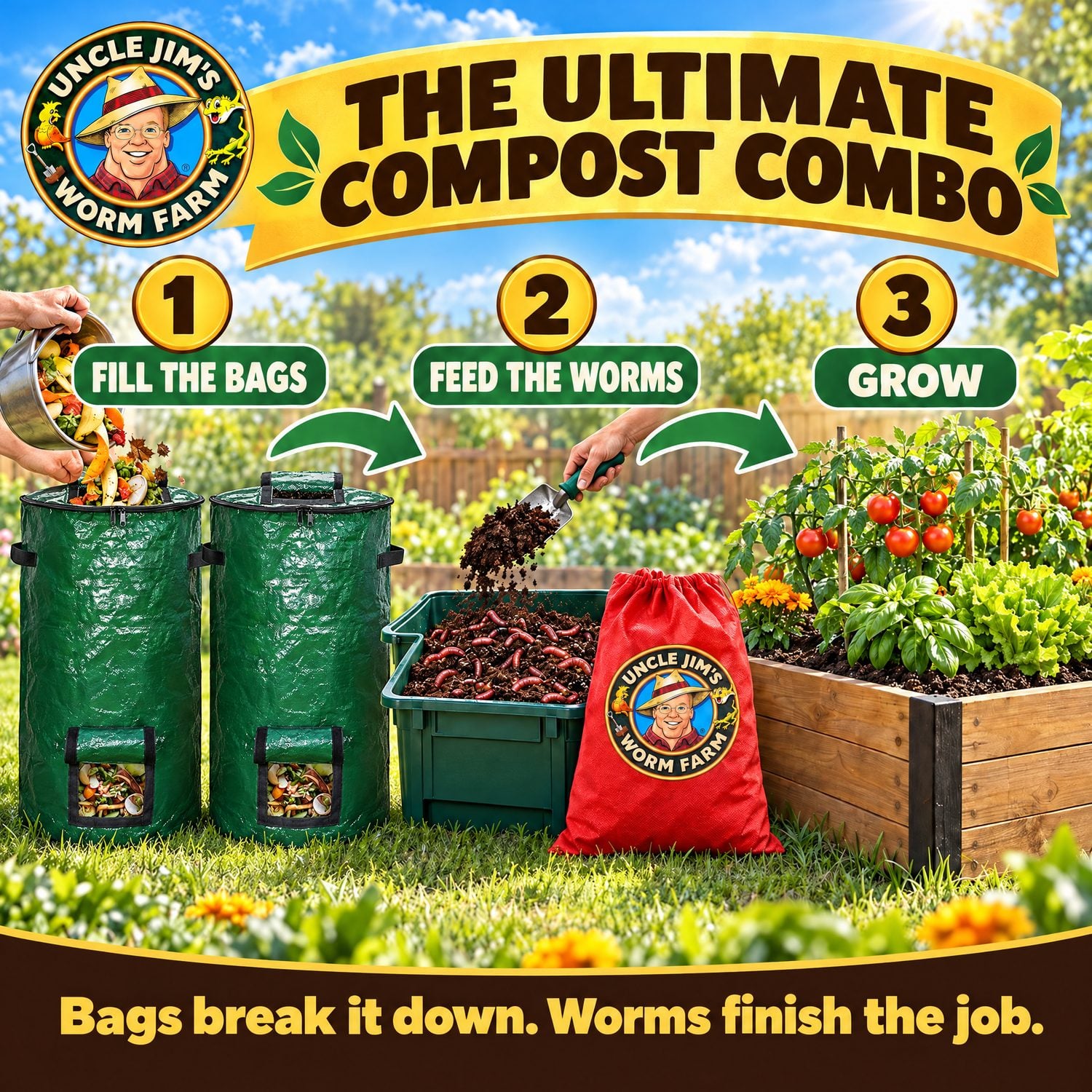
Live red wigglers and European nightcrawlers, raised right here at Uncle Jim’s since 1973.
3-Tray Mini Composter
A compact worm bin that turns your bags’ pre-compost into rich worm castings.
Urban Worm Bag
A breathable fabric worm bin you feed from the top and harvest castings from the bottom.
Outdoor compost bins
Lots of fall leaves and yard waste? Compare our bigger outdoor bins and tumblers.
Since 1973
A family worm farm helping gardeners compost for over 50 years
Live help
Real people 10 AM to 6 PM EST at 800-373-0555
Tracked shipping
Tracking emailed when it ships. Shipping policy