
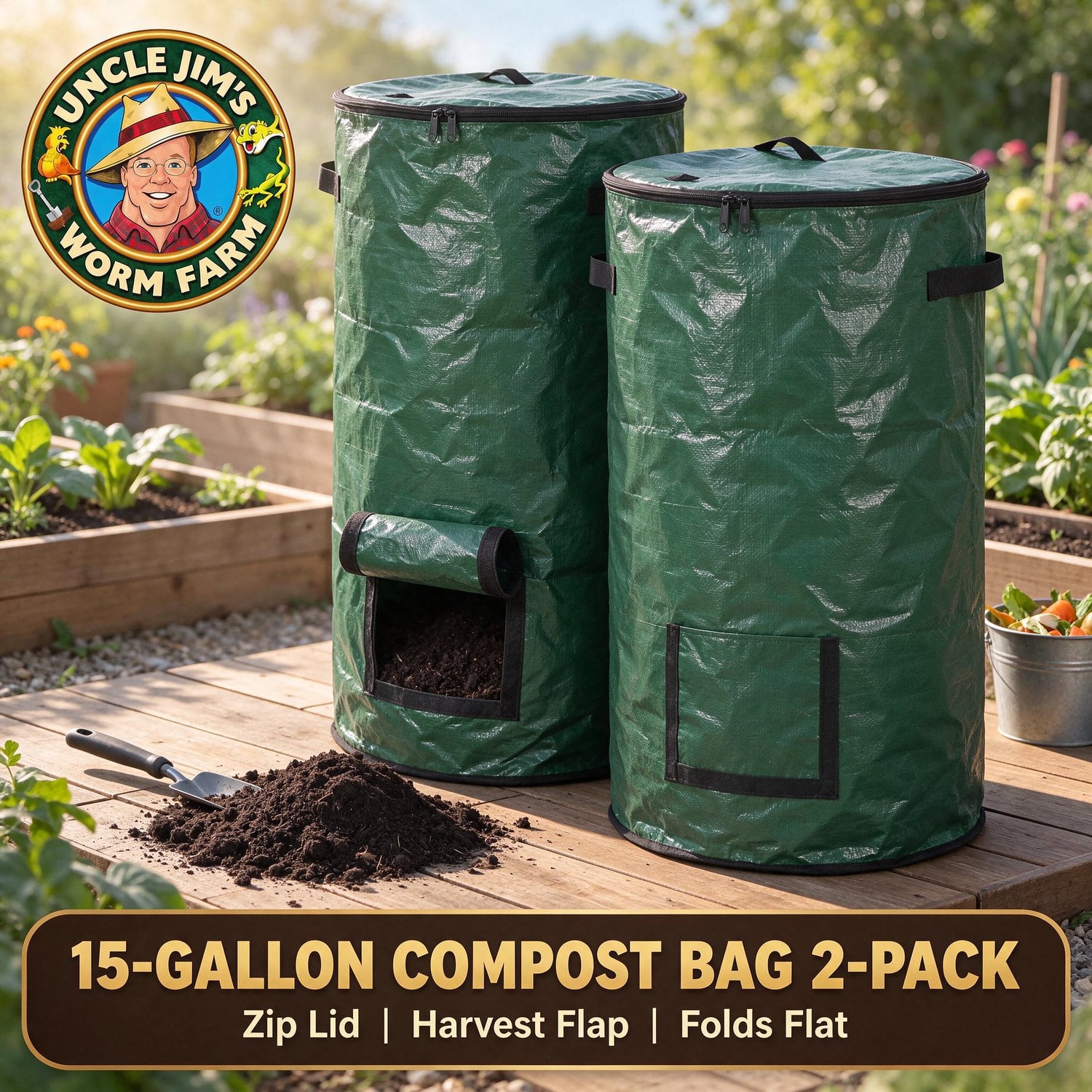
15-Gallon Compost Bag with Zip Lid & Harvest Flap. (2-Pack)

Original price was: $44.95.Current price is: $29.95.

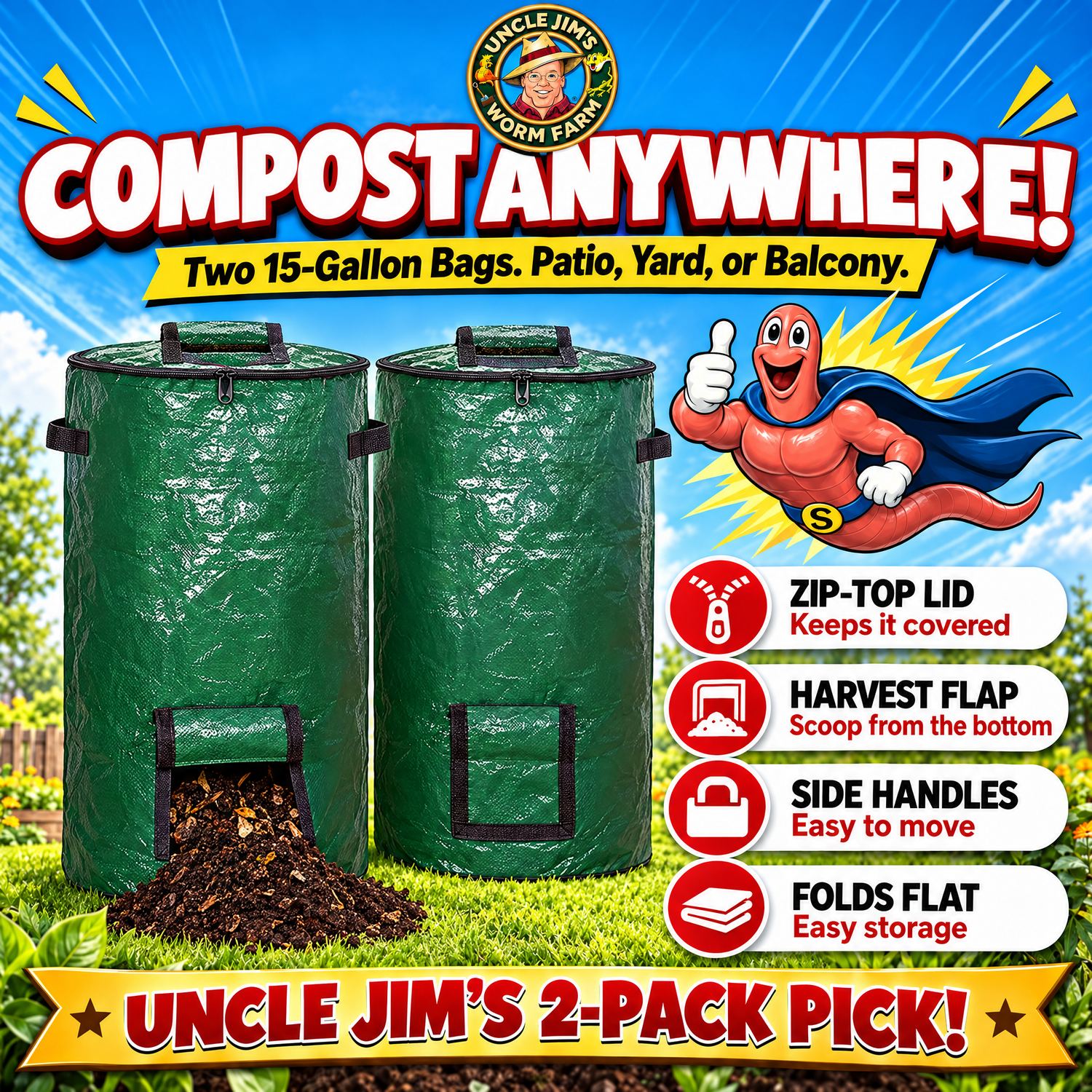
  • 2 compost bags in every pack: about 15 gallons each, 30 gallons total
  • Zip-top lid keeps scraps covered and tidy
  • Bottom harvest flap to check on it and scoop out finished compost
  • Two side handles and folds flat for storage
  • About 14 in. across x 23.6 in. tall. No tools, no assembly
  • Fill one bag while the other one finishes

SKU: 73971 Category:

Description

New! 2 bags in every pack

Small space? Start composting today.

Two 15-gallon compost bags with zip-top lids and bottom harvest flaps. Fill one bag while the other one finishes.

No bin to build and no tools to find. Unfold a bag, pop it open, and start adding kitchen scraps and dry leaves. It fits on a patio, beside the garage, or in a corner of the garden, and folds flat when you are done.

2 bagsin every pack
15 galeach, 30 gallons total
14 inacross, 23.6 in. tall
0 toolsunfold and fill
  • ✓Zip-around lid keeps scraps covered and tidy
  • ✓Bottom flap lets you check on it and scoop out finished compost
  • ✓Two sturdy side handles for moving it while it is light
  • ✓Folds flat for storage when you are not using it

Add the 2-pack to cart

Real people, real help: our live customer service team is here 10 AM to 6 PM EST at 800-373-0555.

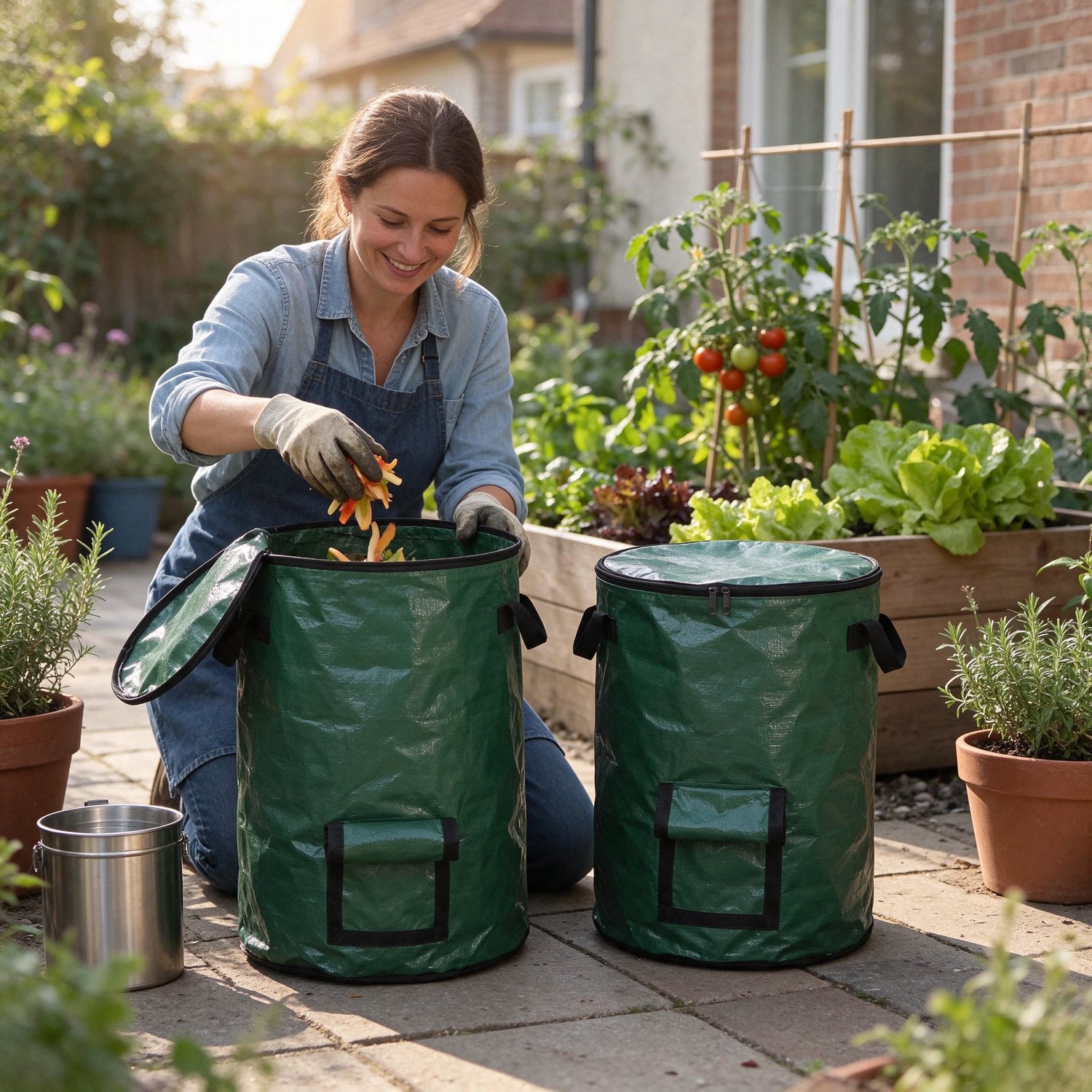
Gardener kneeling on a patio and adding vegetable scraps to one of two green 15-gallon compost bags

Real size: each bag is about knee-high, perfect for a patio or small yard.

How it works

Fill one. Finish one.

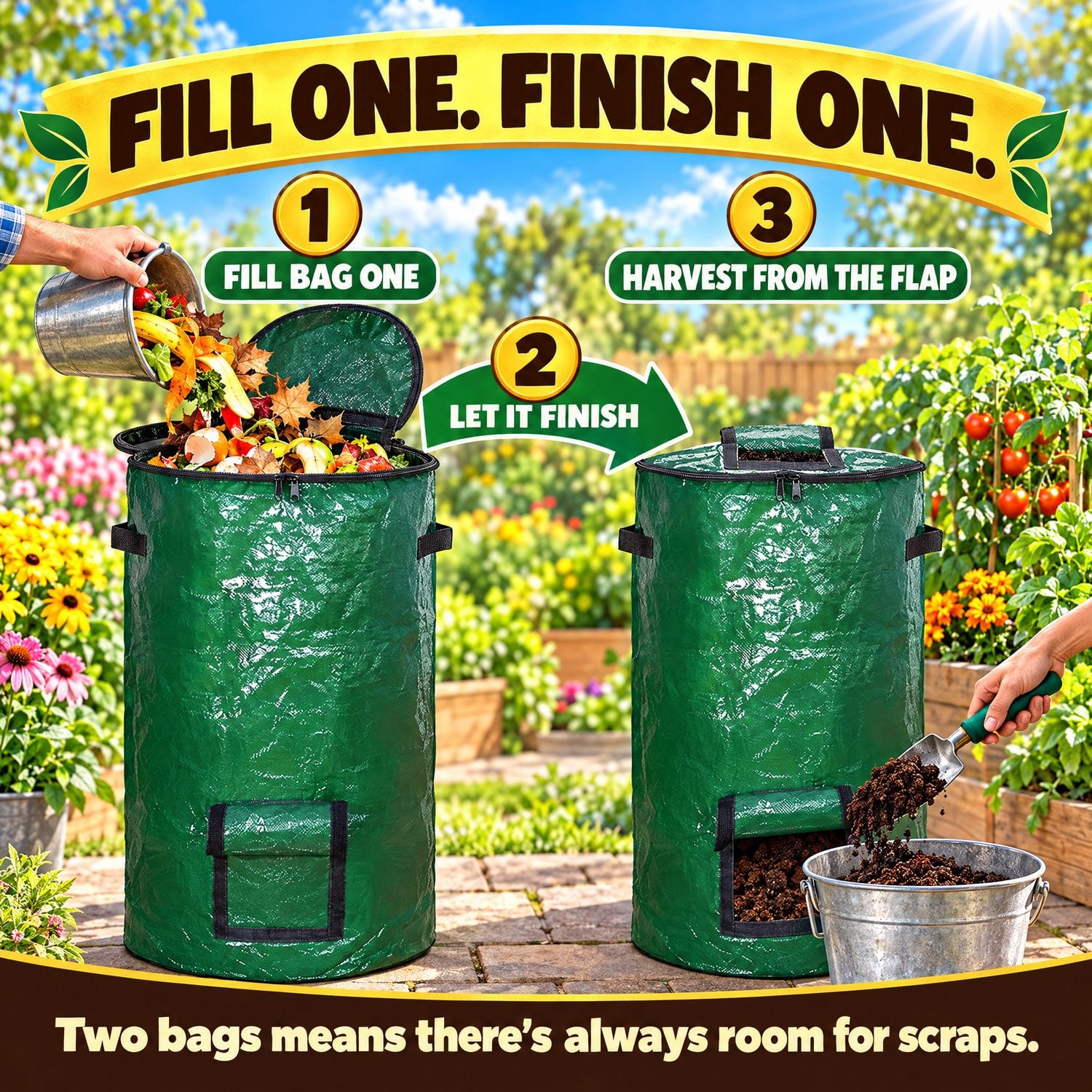
Two bags is the secret to easy small-space composting. When the first bag is full, zip it shut and let it finish while you start filling the second. You never have to pile fresh scraps on compost that is almost done.

Fill one compost bag with scraps and leaves while the second bag finishes, then harvest from the bottom flap
1

Unzip and fill bag one

Start with a layer of dry leaves or shredded cardboard, then add kitchen scraps. Cover each batch of scraps with more browns.

2

Zip it and let it work

Zip the lid to keep it covered and tidy. Every week or two, unzip it, stir with a trowel, and let it air out for a bit.

3

Start bag two

When bag one is full, stop adding to it and let it finish. New scraps go into bag two.

4

Harvest from the flap

When the bottom of bag one is dark and crumbly, open the flap and scoop it out. Anything that is not done yet goes back in for another round.

Made for small spaces

Simple bags. Smart details.

Compost bag 2-pack benefits: zip-top lid, harvest flap, side handles, and folds flat
◯

Zip-top lid

A round lid zips all the way around the top, with a pull handle in the middle. Unzip to add scraps, zip it shut to keep things covered and tidy.

◫

Bottom harvest flap

The oldest compost settles to the bottom. Fold open the flap at the front to check on it and scoop out what is ready, then close it back up with the hook-and-loop strip.

⇄

Two side handles

Webbing handles on both sides make it easy to move a bag into place, or carry it to the garden while it is still light.

▦

Tough woven fabric

Made of woven polyethylene, like a tarp. Like any fabric bag it is floppy when empty, so pull it into shape and add a few inches of leaves to help it stand.

▬

Folds flat

Empty bags fold down small enough to tuck on a shelf, so you can store them in a shed or closet over winter.

▣

Fits almost anywhere

About 14 inches across. Two bags fit side by side in a 2.5-foot spot on a patio, a deck corner, or beside the back steps.

✿

Makes great leaf mold

Pack a bag with shredded fall leaves, dampen them, and let them rot down into crumbly leaf mold for mulch and potting mix. It takes about a year or two.

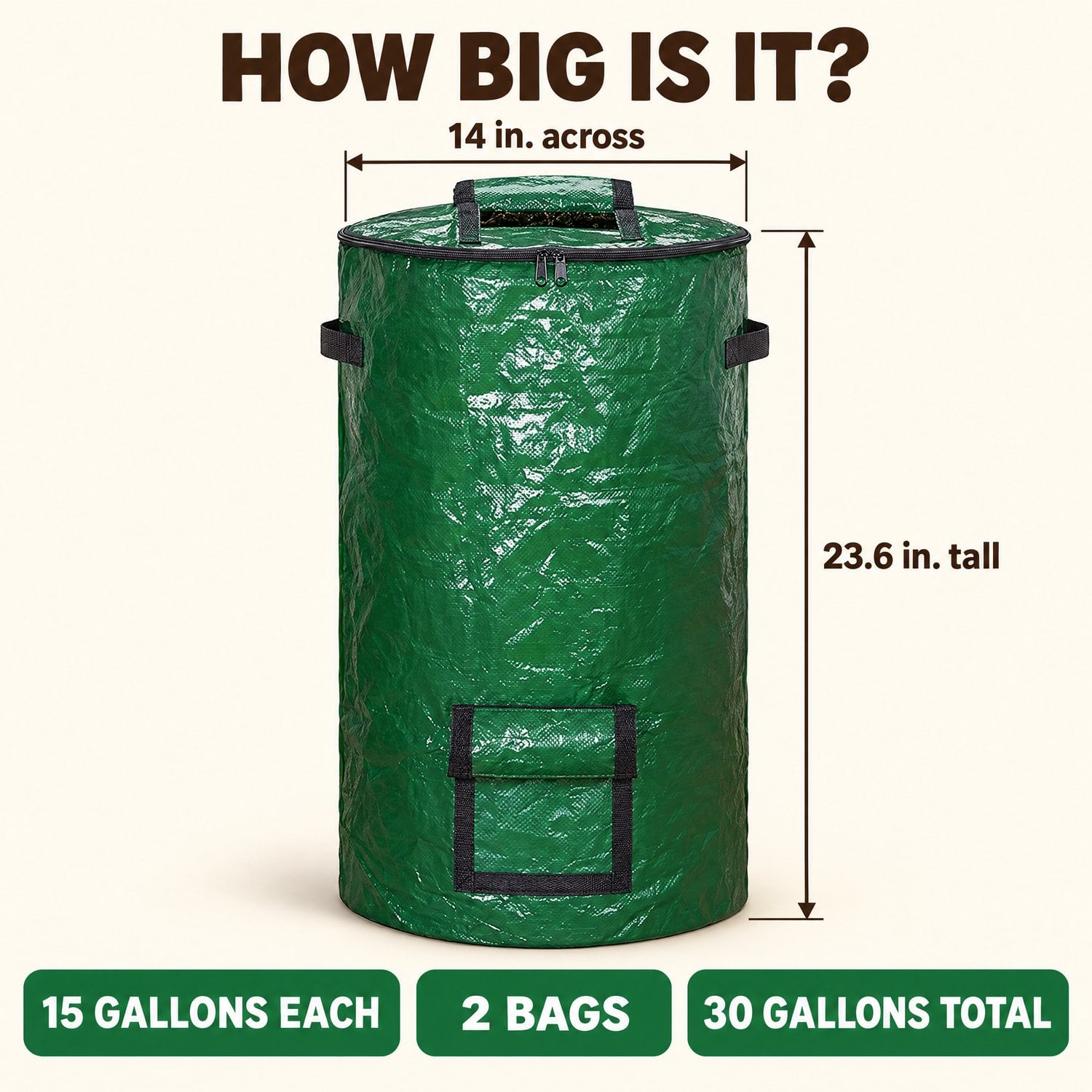
Compost bag dimensions: 14 inches across and 23.6 inches tall, 15 gallons each, 30 gallons total for 2 bags
Size check

Here is exactly how big they are.

Each bag is about 14 inches across and 23.6 inches tall (35 x 60 cm), and holds about 15 gallons. That is about the size of a small kitchen trash can, or roughly knee-high on most adults. You get two bags, for about 30 gallons of composting space in all.

These are made for a household’s kitchen scraps and a small garden, not a whole yard of fall leaves. Got lots of leaves too? Pair them with one of our bigger outdoor compost bins.

What is in the box

  • ✓2 compost bags, about 15 gallons each
  • ✓Each bag has a zip-top lid, a bottom harvest flap, and two side handles
  • ✓No assembly and no tools needed
Set up in a minute

Unfold it. Place it. Fill it.

There is nothing to build. The most important choice is where it goes, because a full bag is heavy and is best left in one spot.

Step 1

Unfold and open

Take the bag out, unfold it, and pull it into its round shape. Unzip the lid all the way.

Step 2

Pick the spot

Choose a level spot it can stay in, close to the kitchen door if you can. Bare soil, grass, or gravel is best. On a deck or patio, set it on a boot tray to catch any drips.

Step 3

Start with browns

Put 3 to 4 inches of dry leaves or shredded cardboard in the bottom. It soaks up moisture and helps the bag hold its shape.

Step 4

Add scraps and cover

Add kitchen scraps, cover them with more browns, and zip the lid. That is it. Keep going until the bag is full.

Uncle Jim’s tip: partial shade is the sweet spot. It keeps the bag from drying out in summer, and keeping plastic fabric out of harsh all-day sun helps it last more seasons. Questions? Call us at 800-373-0555.

Uncle Jim’s compost bag recipe

What goes in, and what stays out.

Small bags work best with a good mix. Aim for about 2 to 3 scoops of dry browns for every scoop of juicy greens, chop things small, and keep it as damp as a wrung-out sponge.

Browns: add plenty

Dry, crumbled leaves
Shredded plain cardboard
Shredded newspaper
Straw or dried plants
Paper egg cartons, torn up
Plain paper towels and napkins

Greens: mix these in

Fruit and veggie scraps, chopped
Coffee grounds and filters
Plastic-free tea bags
Crushed eggshells
Fresh grass clippings, a little at a time
Chopped spent garden plants

Keep these out

Meat, fish, and bones
Dairy, grease, and oils
Pet waste
Diseased or buggy plants
Weeds that have gone to seed
Compostable plastics

Chop it small

Smaller pieces break down much faster in a small bag. Cut scraps to about an inch or two.

Too wet or smelly?

Add a few handfuls of shredded cardboard or dry leaves and stir it in.

Too dry?

Sprinkle in a little water as you stir, until it feels like a wrung-out sponge.

How long does it take? Small bags stay cool and compost slowly, so plan on several months, often 6 months or more, before the first bag is ready. Cold weather slows things down. That is why the 2-pack works so well: one bag keeps taking scraps while the other one finishes. Compost is ready when it is dark, crumbly, and smells like the forest floor.

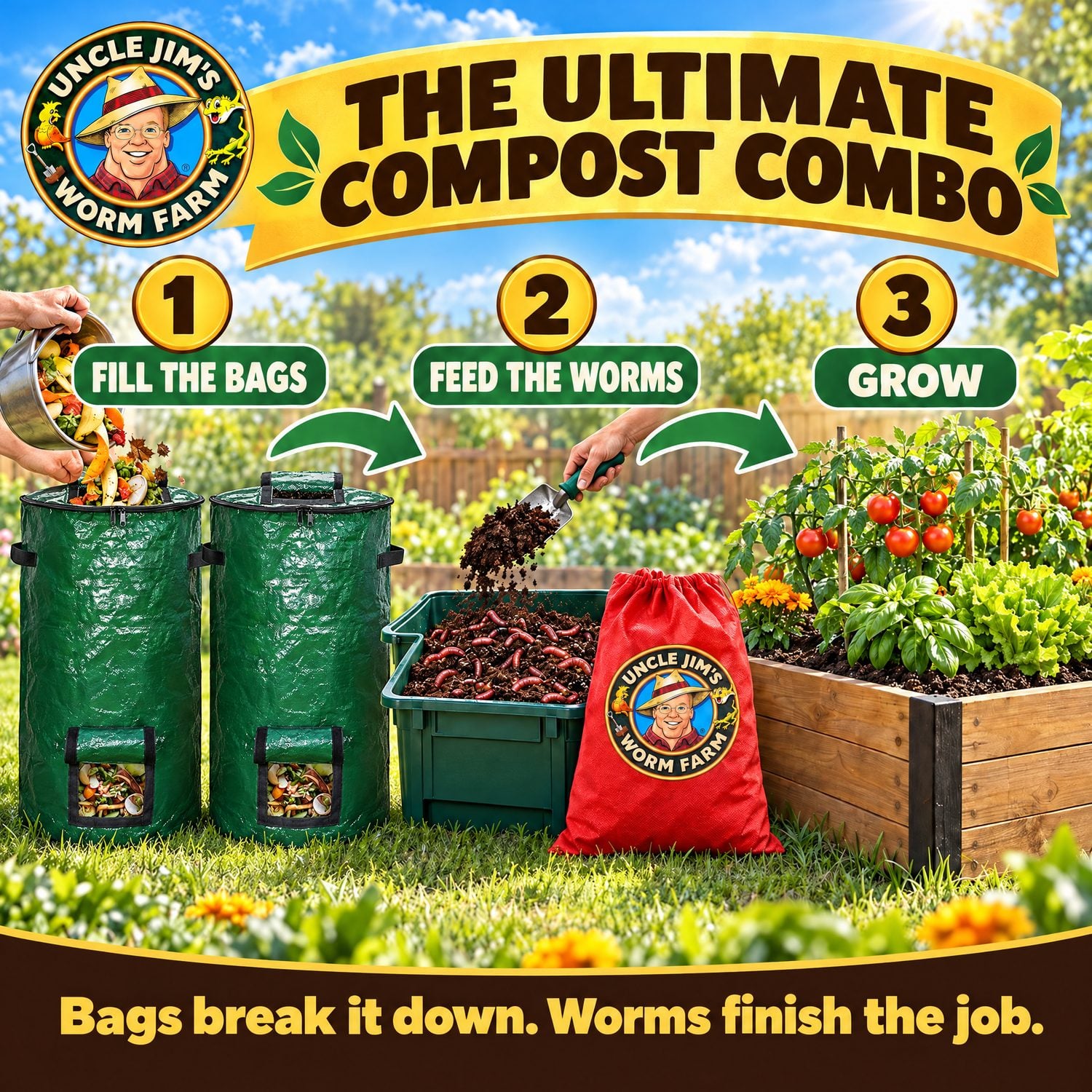
The ultimate compost combo

Bags break it down. Worms finish the job.

We have been raising composting worms since 1973, so here is our favorite small-space trick: let the bags start breaking your scraps down, then feed that soft pre-compost to a worm bin. The worms turn it into rich, crumbly castings for your plants.

Give the worms a home of their own. A worm bin built for them, like our 3-Tray Mini Composter or the Urban Worm Bag, keeps them comfortable. Start with our Red Composting Worm Mix.

Meet the worm crew →

Three steps: fill the compost bags, feed the pre-compost to Uncle Jim's composting worms, grow a vegetable garden
Straight talk from Uncle Jim

Good to know before you order.

⏱

Slow and steady

A 15-gallon bag is too small to heat up like a big pile, so it composts slowly. Plan on several months. Chop scraps small and stir now and then to help it along.

○

Give it air

A zipped fabric bag does not get much airflow on its own. Stir every week or two, and leave the lid open for a while when you do.

◫

Keep the zipper clean

Brush compost off the zipper and the flap’s hook-and-loop strip before you close them. Clean closures work better and last longer.

!

Heavy when full

Damp compost is heavy. Set the bag where it will stay before you fill it, and use the handles to move it while it is still light.

▼

A little drip can happen

Wet scraps can make a bag weep at the seams or the flap. Set it on soil or a tray (empty the tray so the bag never sits in water), and add browns if it gets soggy.

⚠

It is fabric, not armor

A zipped lid keeps things tidy, but a hungry critter can chew through fabric. Keep meat and dairy out and keep the lid closed.

The details

Specs at a glance

You get
2 compost bags
Capacity
About 15 gallons per bag (57 L), about 30 gallons total
Size
About 14 in. across x 23.6 in. tall per bag (35 x 60 cm)
Material
Green woven polyethylene (PE) fabric with black trim
Lid
Round zip-around lid with a top pull handle
Harvest flap
Bottom front flap with a hook-and-loop closure
Handles
2 webbing handles per bag
Weight
About 7 oz per bag, empty
Assembly
None. Unfold and fill
Best for
Kitchen scraps, small garden waste, and leaf mold on patios, decks, balconies, and small yards
Gardeners often add these too

Round out your compost setup.

Pairs with your bags

Composting worms

Live red wigglers and European nightcrawlers, raised right here at Uncle Jim’s since 1973.

Shop composting worms →

Pairs with your bags

3-Tray Mini Composter

A compact worm bin that turns your bags’ pre-compost into rich worm castings.

See the mini composter →

Pairs with your bags

Urban Worm Bag

A breathable fabric worm bin you feed from the top and harvest castings from the bottom.

See the Urban Worm Bag →

Need more room?

Outdoor compost bins

Lots of fall leaves and yard waste? Compare our bigger outdoor bins and tumblers.

See outdoor bins →

Common questions

Before you start filling.

Tap a question to see the answer.

What comes in the 2‑pack?+

Two compost bags. Each one holds about 15 gallons and has a zip-top lid, a bottom harvest flap, and two side handles. There is nothing to assemble.

How big is each bag?+

About 14 inches across and 23.6 inches tall, roughly knee-high on most adults. Two bags fit side by side in a spot about 2.5 feet wide.

Why two bags?+

So you always have room for scraps. Fill one bag, let it finish, and fill the other in the meantime.

How long until I get compost?+

Small bags stay cool and compost slowly, so plan on several months, often 6 months or more, before the first bag is ready. Cold weather slows things down. Chopping scraps small and stirring every week or two helps.

How do I mix it?+

Stir it with a hand trowel or a small cultivator every week or two, and let it air out with the lid open for a bit. Skip the garden fork, which can poke holes in the fabric. A full bag is too heavy to shake or roll.

Will it stand up on its own?+

Like any fabric bag, it is floppy when empty. Pull it into its round shape and add 3 to 4 inches of leaves or shredded cardboard to the bottom. It holds its shape better as it fills.

Can I make leaf mold in it?+

Yes, and it is one of the best uses. Fill a bag with shredded fall leaves, dampen them, and let them sit. In about a year or two you get crumbly leaf mold for mulch and potting mix.

Will it smell?+

A balanced mix smells earthy. A sour smell means it is too wet or has too many greens, so stir in shredded cardboard or dry leaves.

Can I use it on a patio or balcony?+

Yes. Set it on a boot tray or saucer to catch any drips, empty the tray so the bag never sits in water, and keep the lid zipped between visits.

Can I put worms in the bags?+

We suggest giving worms their own worm bin and feeding them the pre-compost from your bags. A bin made for worms keeps their air, moisture, and bedding just right.

Is it rodent-proof?+

No fabric bag is. A zipped lid helps keep things tidy, but keep meat, dairy, and oily foods out and the lid closed.

How does it ship?+

Both bags ship folded flat in one package, and we email tracking once it is on the way. See our shipping policy for details, or call us at 800-373-0555.

Since 1973

A family worm farm helping gardeners compost for over 50 years

Live help

Real people 10 AM to 6 PM EST at 800-373-0555

Tracked shipping

Tracking emailed when it ships. Shipping policy
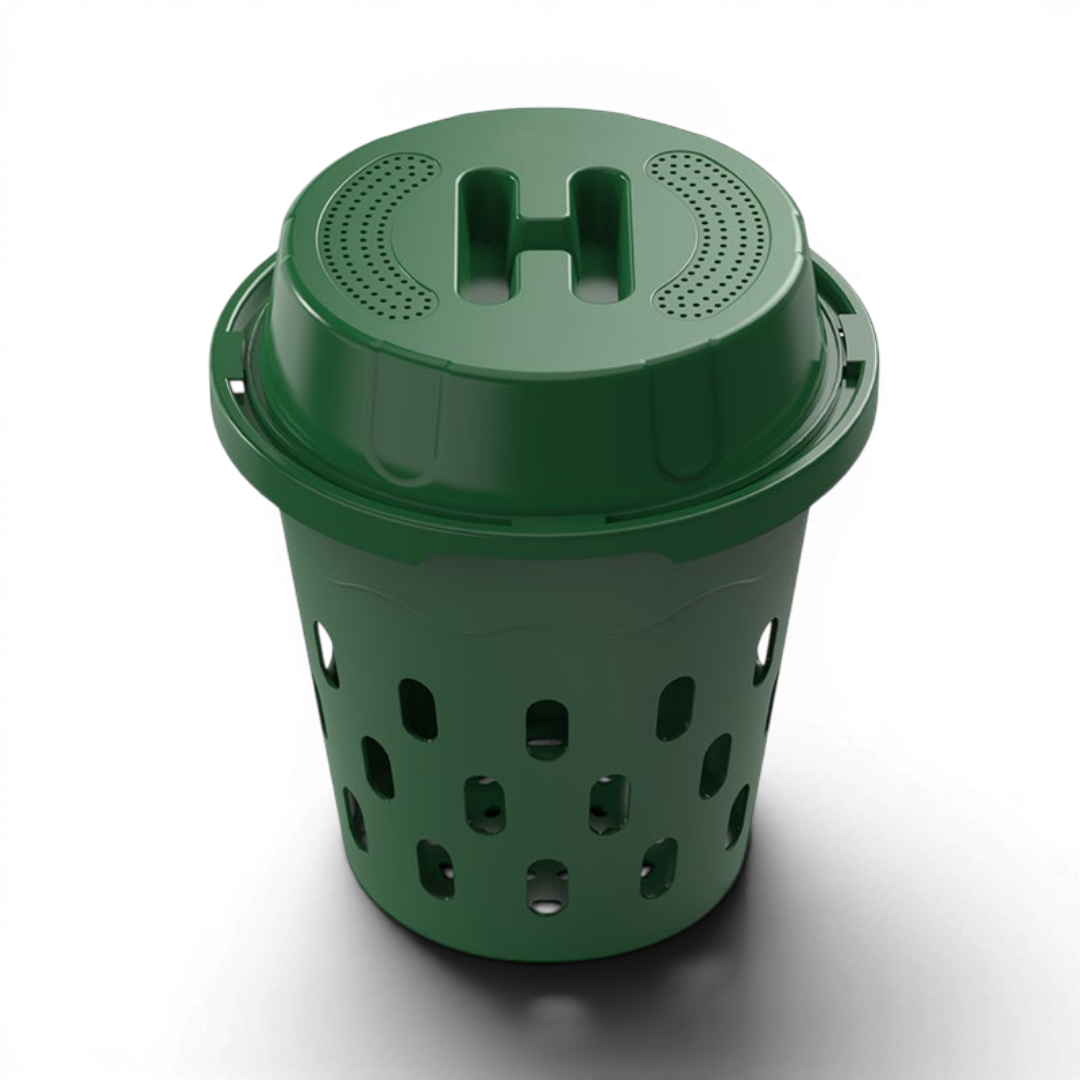
2 bags • 15 gallons each • no tools

Ready to start composting?

Unfold a bag, toss in your scraps, and let it work. Fill one, finish one, and grow a better garden.

Add the 2-pack to cart

Want the full combo? Add a worm crew too. Uncle Jim’s Worm Farm has been helping families compost since 1973.

Uncle Jim's 15-gallon compost bag 2-pack with zip lids and harvest flaps on a garden patio

Additional information

Weight 1 lbs

Got Compost Bag Questions? We’ve Got Answers!

What comes in the 2‑pack?

Two compost bags. Each one holds about 15 gallons and has a round zip-top lid, a flap at the bottom front for checking on and harvesting compost, and two webbing handles. There is nothing to assemble and no tools to find.

How big is each bag?

About 14 inches across and 23.6 inches tall (35 x 60 cm). That is about the size of a small kitchen trash can, or roughly knee-high on most adults. Two bags fit side by side in a spot about 2.5 feet wide.

How much do they hold?

About 15 gallons per bag (57 liters), so about 30 gallons between the two. That is plenty for the kitchen scraps from a typical household plus small garden trimmings. If you have a whole yard of fall leaves, you will want one of our bigger outdoor compost bins too.

Why two bags instead of one?

So you always have somewhere to put fresh scraps. Fill the first bag, zip it shut, and let it finish. Meanwhile, start filling the second bag. That way you never pile fresh scraps on top of compost that is almost done.

What are the bags made of?

A green woven polyethylene fabric, a lot like a tarp, with black binding trim around the top and bottom. It is light, it folds up when empty, and it can be rinsed out between batches.

How do I set it up?

Unfold the bag, pull it into its round shape, and unzip the lid. Pick a level spot it can stay in, then put 3 to 4 inches of dry leaves or shredded cardboard in the bottom. Add your kitchen scraps, cover them with more browns, and zip the lid. That’s it.

Will it stand up on its own?

Like any fabric bag, it is floppy when it is empty. Pull it into shape and add a few inches of leaves or shredded cardboard to the bottom, and it holds its shape better and better as it fills.

Where should I put it?

Partial shade is the sweet spot. It keeps the bag from drying out in summer, and keeping the fabric out of harsh all-day sun helps it last more seasons. Bare soil, grass, or gravel works best. Close to the kitchen door is handy, so you will actually use it.

Can I use it on a patio, deck, or balcony?

Yes. Set it on a boot tray or a large plant saucer to catch any drips, and empty the tray so the bag never sits in water. Keep the lid zipped between visits.

What can I put in it?

Fruit and veggie scraps, coffee grounds and filters, plastic-free tea bags, crushed eggshells, and chopped garden plants, mixed with plenty of dry browns like crumbled leaves, shredded plain cardboard, or shredded newspaper. Aim for 2 to 3 scoops of browns for every scoop of scraps.

What should I keep out?

Meat, fish, bones, dairy, grease, and oily foods, which can smell and attract animals. Also skip pet waste, diseased or buggy plants, weeds that have gone to seed, and “compostable” plastics. A small bag doesn’t get hot enough to break those down safely.

How long until I get compost?

Small bags stay cool and compost slowly, so plan on several months, often 6 months or more, before the first bag is ready. Cold weather slows things down, and it picks back up in spring. Chopping scraps small and stirring every week or two helps it along.

How do I mix it?

Every week or two, unzip the lid and stir it with a hand trowel or a small hand cultivator, then let it air out with the lid open for a bit. Skip the garden fork, which can poke holes in the fabric. A full bag is too heavy to shake or roll.

Will it smell?

A balanced mix smells earthy, like the forest floor. A sour or rotten smell means it is too wet, has too many scraps, or needs more air. Stir in a few handfuls of shredded cardboard or dry leaves and leave the lid open for a while.

It’s too wet or too dry. What do I do?

It should feel like a wrung-out sponge. Too wet or soggy? Mix in dry browns. Too dry and nothing is happening? Sprinkle in a little water as you stir.

How do I harvest the compost?

The oldest material settles to the bottom. Open the flap at the bottom front to check on it. When it is dark, crumbly, and you can’t recognize the food anymore, scoop it out into a bucket. Anything that isn’t done yet goes back in for another round. Let finished compost sit for a few more weeks before it goes on your beds.

Can I make leaf mold in it?

Yes, and it is one of the best uses for a bag like this. Fill a bag with shredded fall leaves, dampen them, and let them sit. In about a year or two, you get dark, crumbly leaf mold, which is great as mulch or mixed into potting soil.

Can I put worms in the bags?

We suggest giving the worms a home of their own. A worm bin made for them, like our 3-Tray Mini Composter or the Urban Worm Bag, keeps their air, moisture, and bedding just right. Then feed them the soft pre-compost from your bags, and they will turn it into rich worm castings.

Is it rodent-proof?

No fabric bag is. The zipped lid keeps things covered and tidy, but a hungry critter can chew through fabric. Keep meat, dairy, and oily foods out, cover your scraps with browns, and keep the lid closed.

Can I move it once it’s full?

Damp compost is heavy, so set the bag where it will stay before you fill it. The handles are for moving it into place, or carrying it while it is still light. Don’t try to lift a full, wet bag by the handles.

How do I take care of the bags?

Brush compost off the zipper and the flap’s hook-and-loop strip before you close them, so they keep working smoothly. When a bag is empty, rinse it out, let it dry, and fold it up for storage in a shed or closet.

How does it ship?

Both bags ship folded flat in one package, and we’ll email your tracking number once it’s on the way. See our shipping policy for details, or call us at 800-373-0555, 10 AM to 6 PM EST.