



Description
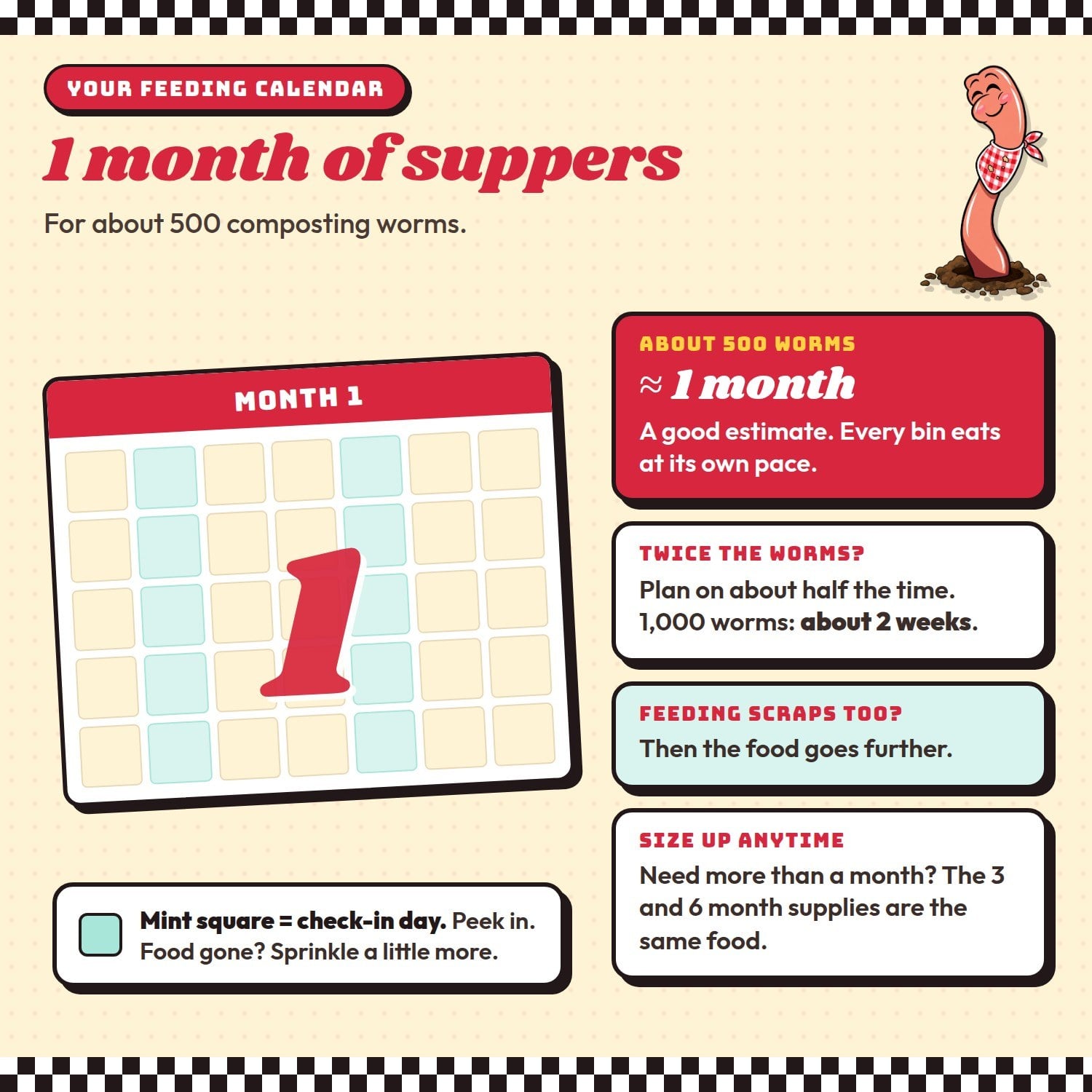
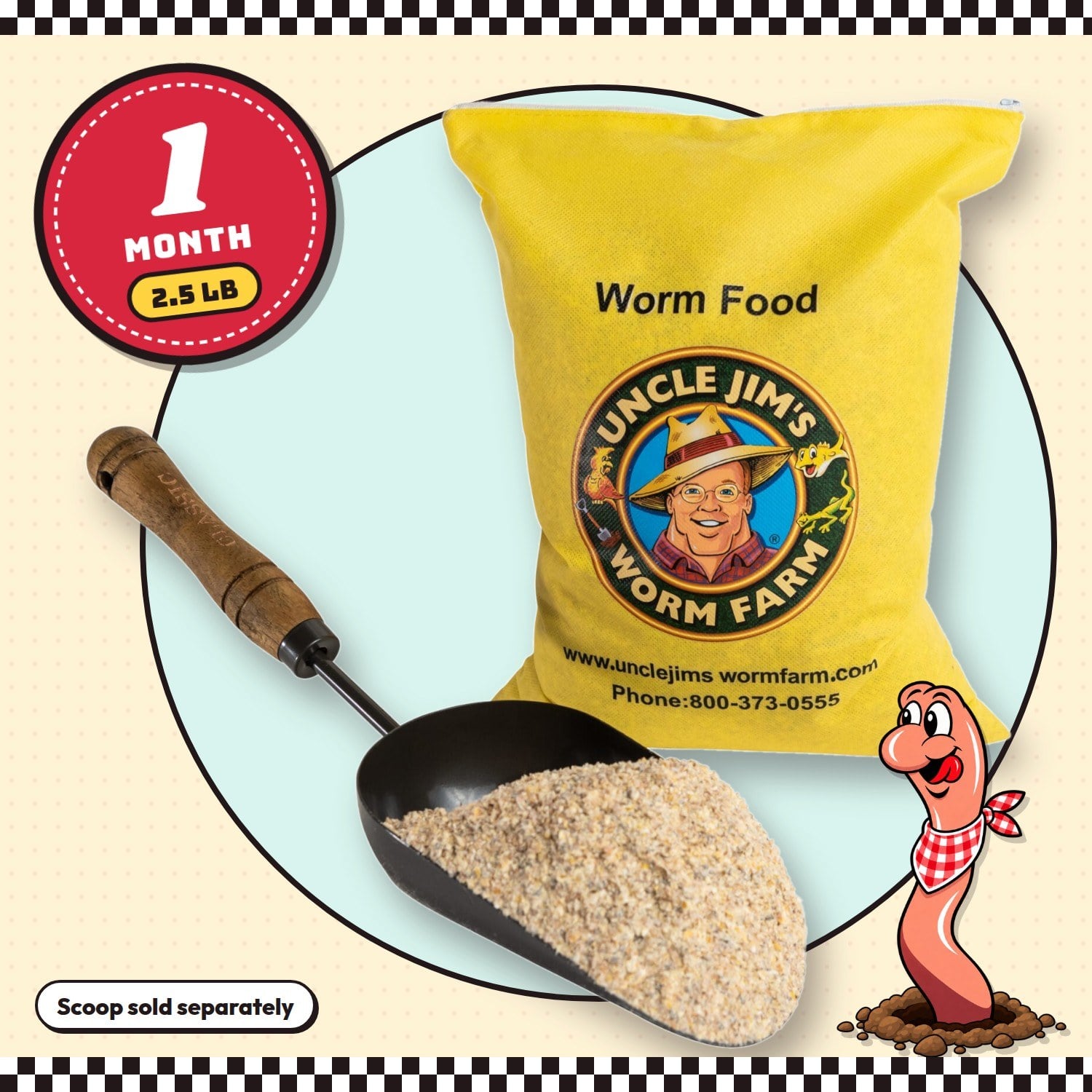
About a month of suppers.
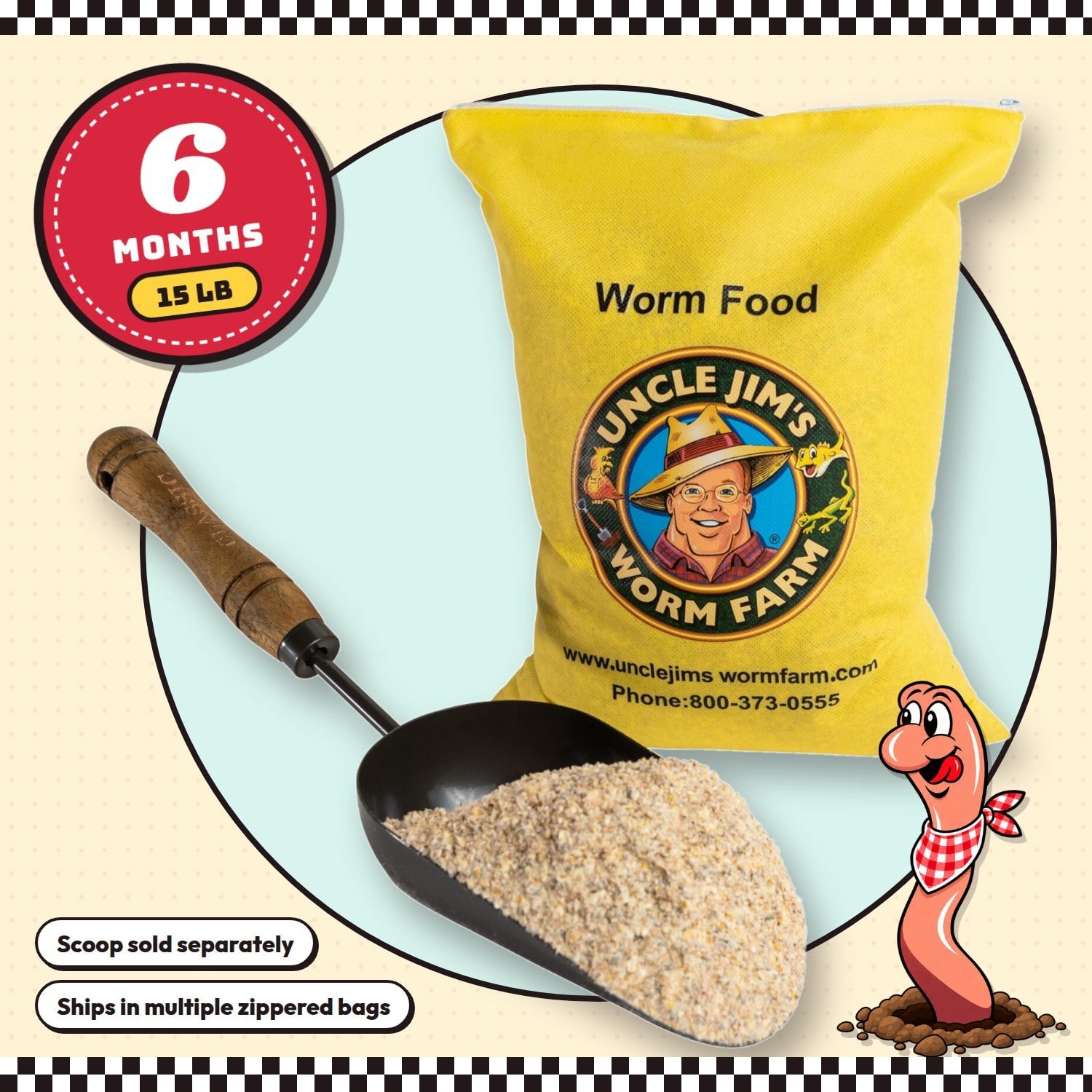
We size this bag for roughly 500 composting worms for about a month. Think of that as a good estimate, not a stopwatch. Warm, busy bins eat faster, cool bins eat slower, and any kitchen scraps you add make the bag go further.
Mint squares: On the calendar, those are check-in days. Peek in. If the last feeding is gone, sprinkle a little more. If it is still there, close the lid and look again in a day or two.
Made for composting worms.
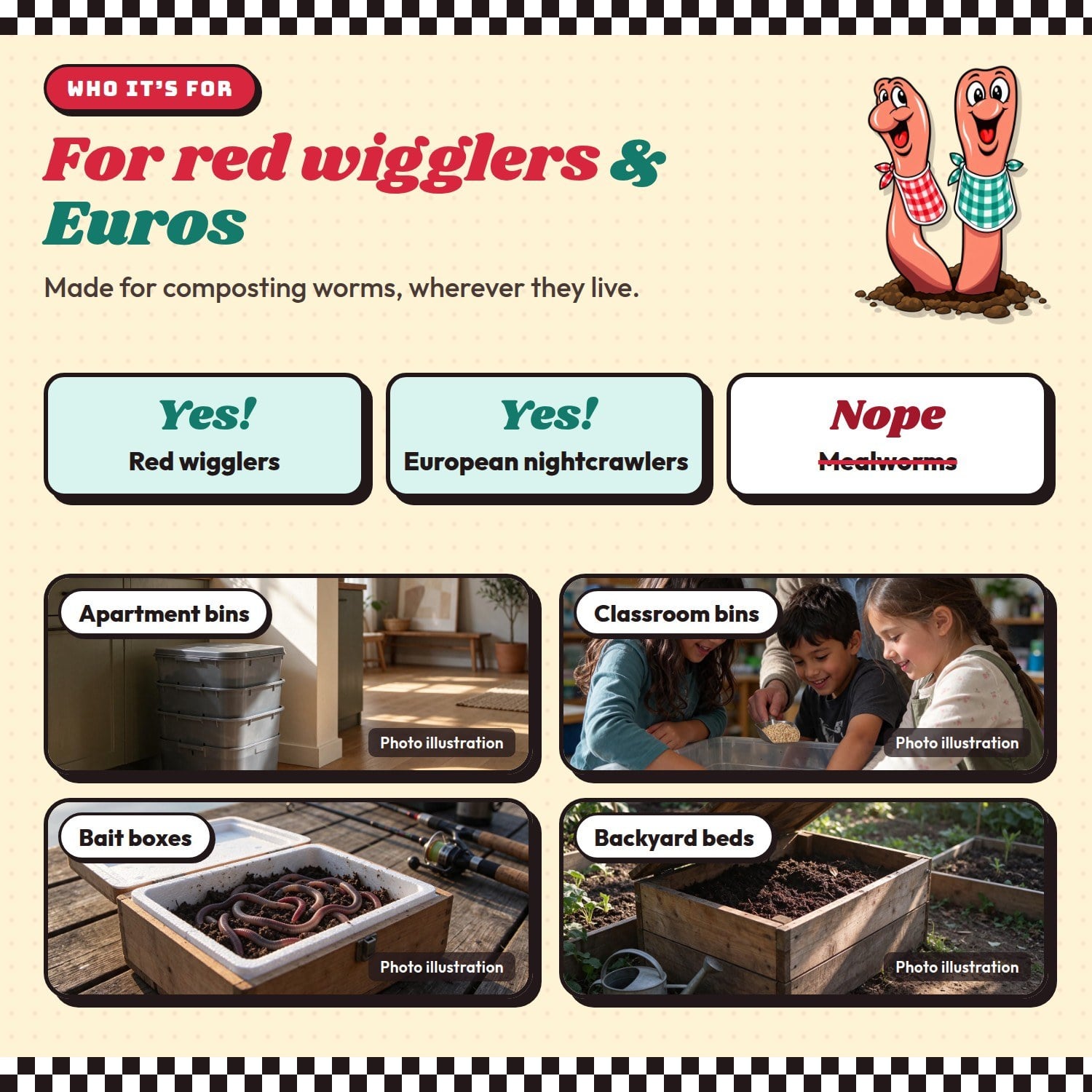
This food is for the worms that live in bins and beds: red wigglers and European nightcrawlers. Keeping a box of Euros for fishing? It works for them, too. Apartment bin, classroom bin or a backyard bed, the routine is the same.
Not for mealworms: Mealworms are beetle larvae, not worms, and they need a different setup. This bag is for composting worms only.
Need worms to go with it? Meet our Red Composting Worm Mix or our Super Red European Nightcrawlers.
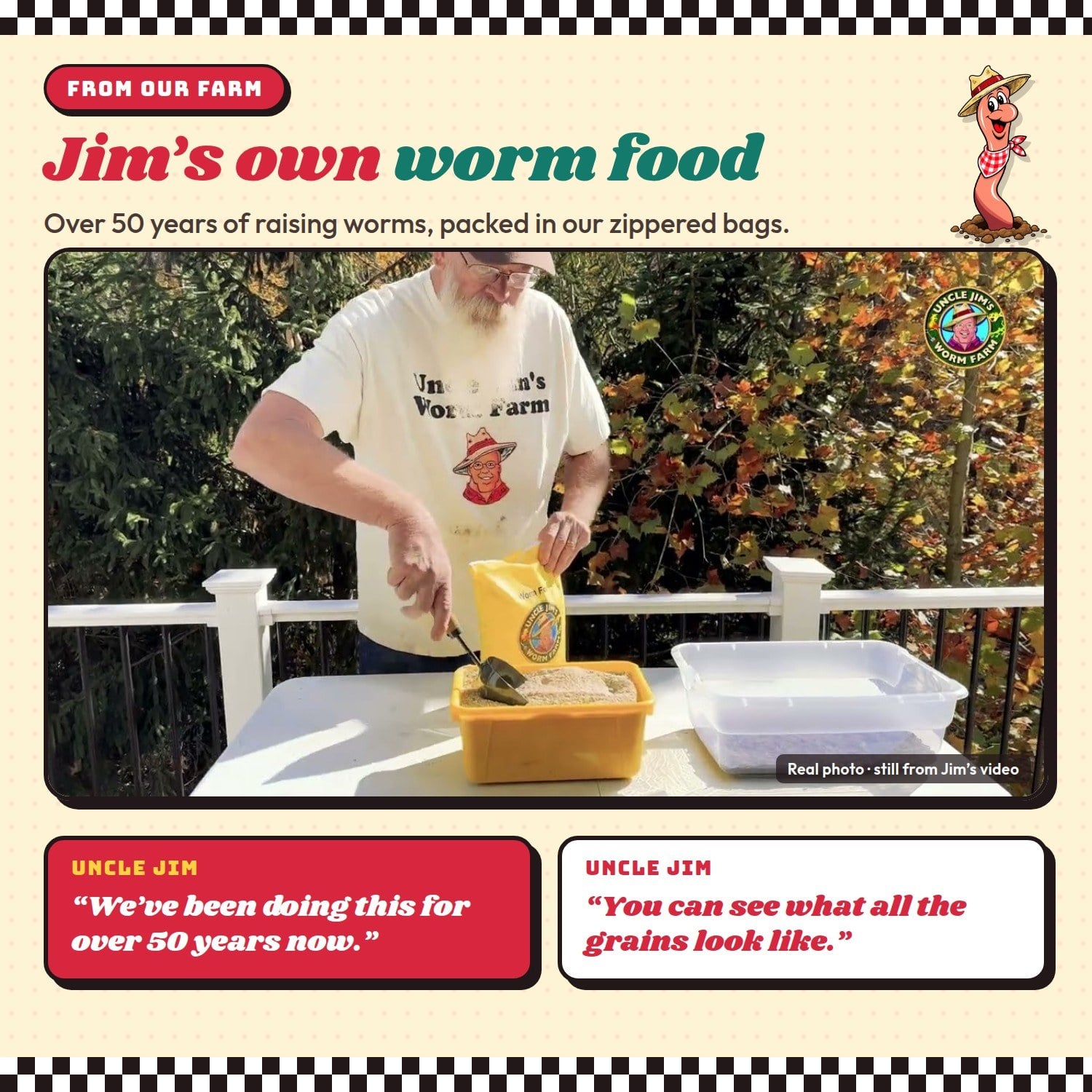
Watch Jim open a bag.
Jim has raised worms for more than 50 years. In this short video he opens a bag of his worm food, shows you the grains up close and feeds a bin the way he does it on the farm.
“You can see what all the grains look like.”
— Jim
“Never mix the feed in. Just sprinkle it right on the top and spray some water, and the worms will come.”
— Jim
That zipper is there for a reason: scoop out what you need, zip it shut and save the rest for next time.
Sprinkle. Mist. Walk away.
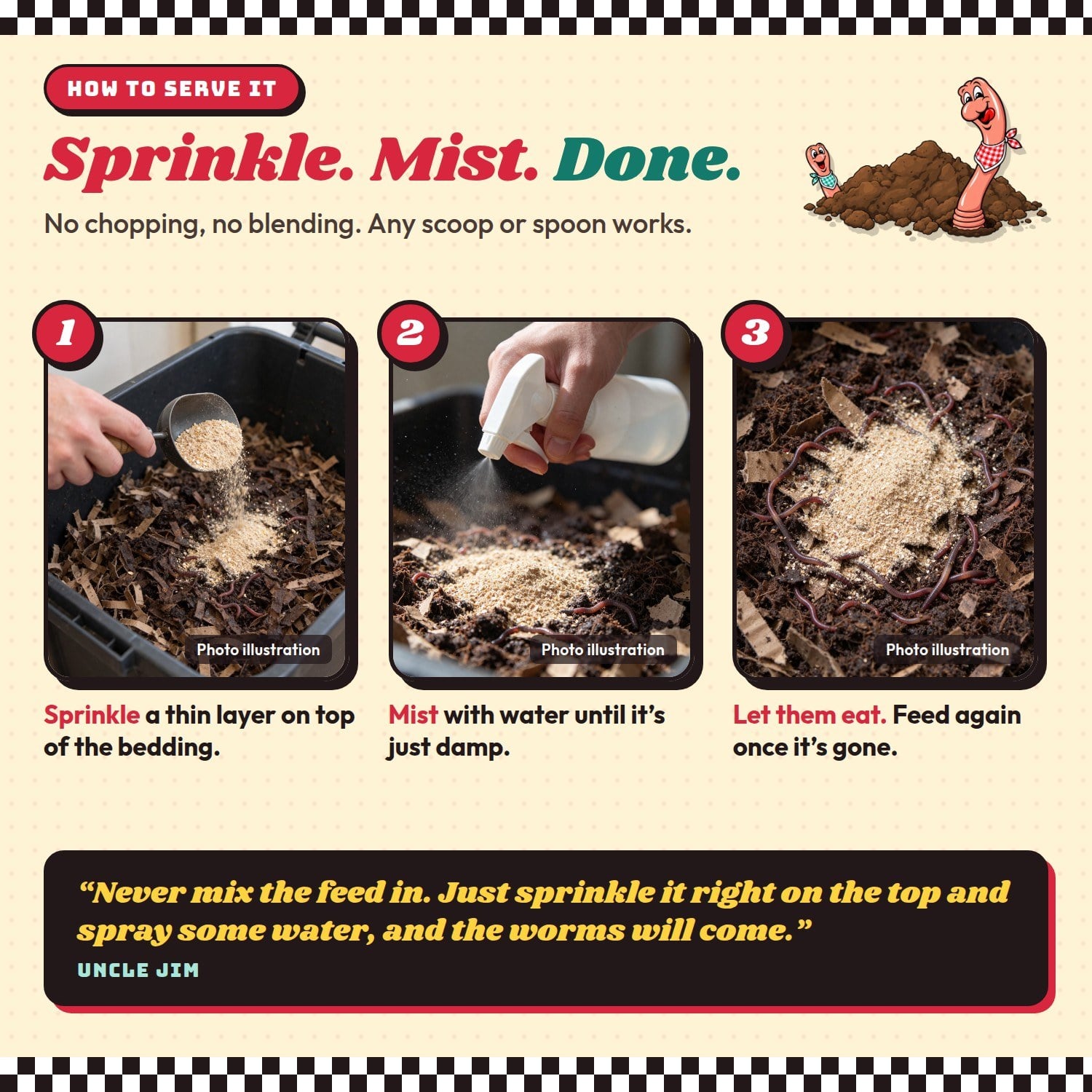
Here is the whole routine, start to finish. Any spoon or small scoop works.
Sprinkle a thin layer
Dust it over one spot on top of the bedding. Leave the rest of the bin alone so the worms can come and go.
Mist it
Spray with water until it is just damp, not soggy. Penn State Extension handles dry feed the same way: sprinkle it over the bedding and water it in.
Close the lid
Let them find it. Worms come up to eat on their own time, mostly in the dark.
Check back in a few days
Gone? Feed again. Still there? Wait. That is the whole trick.
More tips in our guide to feeding composting worms indoors.
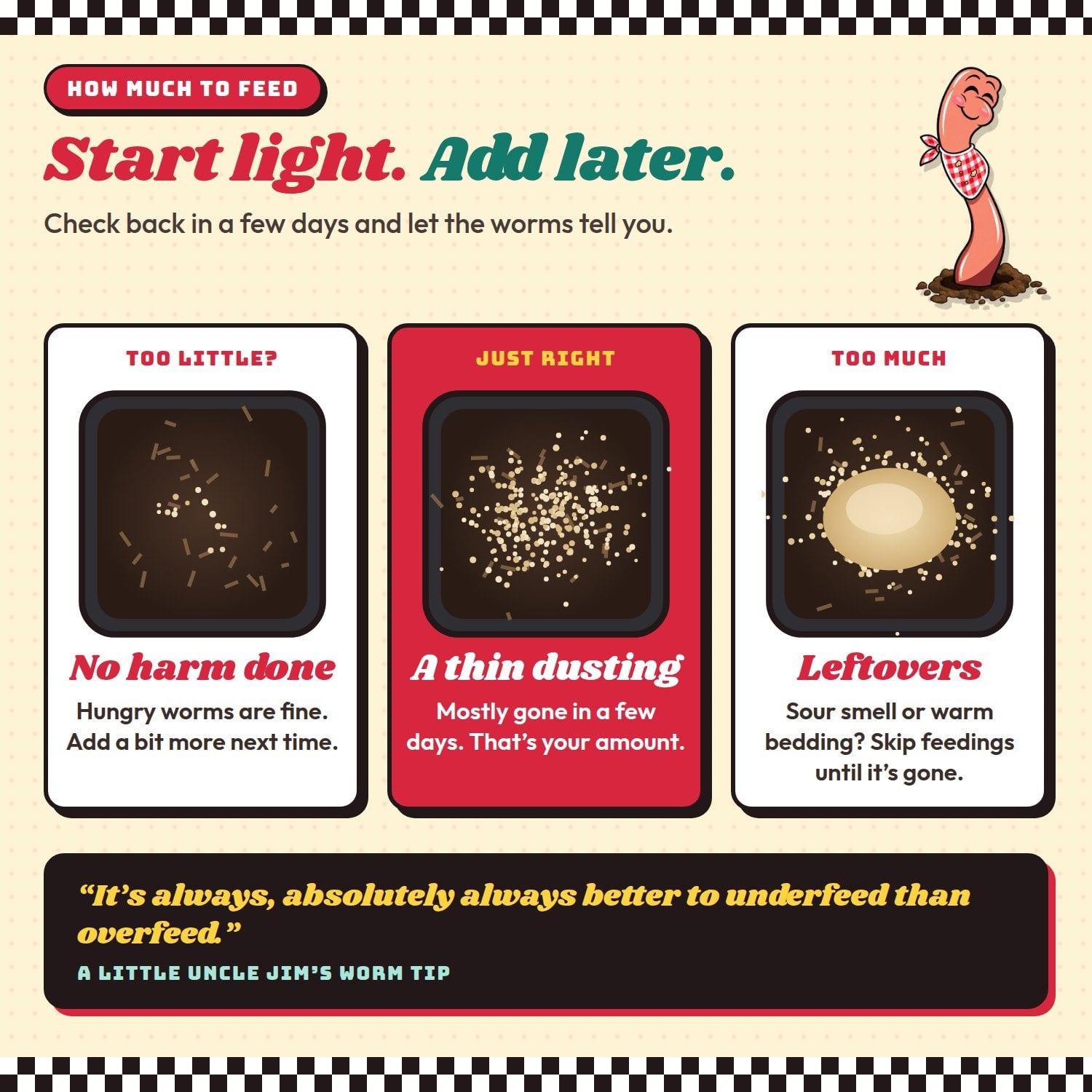
Start light. Add later.
We will not hand you a magic number, because every bin is different. A thin dusting that is mostly gone in a few days is the right amount for your bin. Here is how to read it:
“It’s always, absolutely always better to underfeed than overfeed.”
— Uncle Jim
Hungry worms are fine. Too much food is what causes trouble, like sour smells, warm bedding and extra mites. NC State Extension gives the same rule: feed again only after the last feeding is gone.
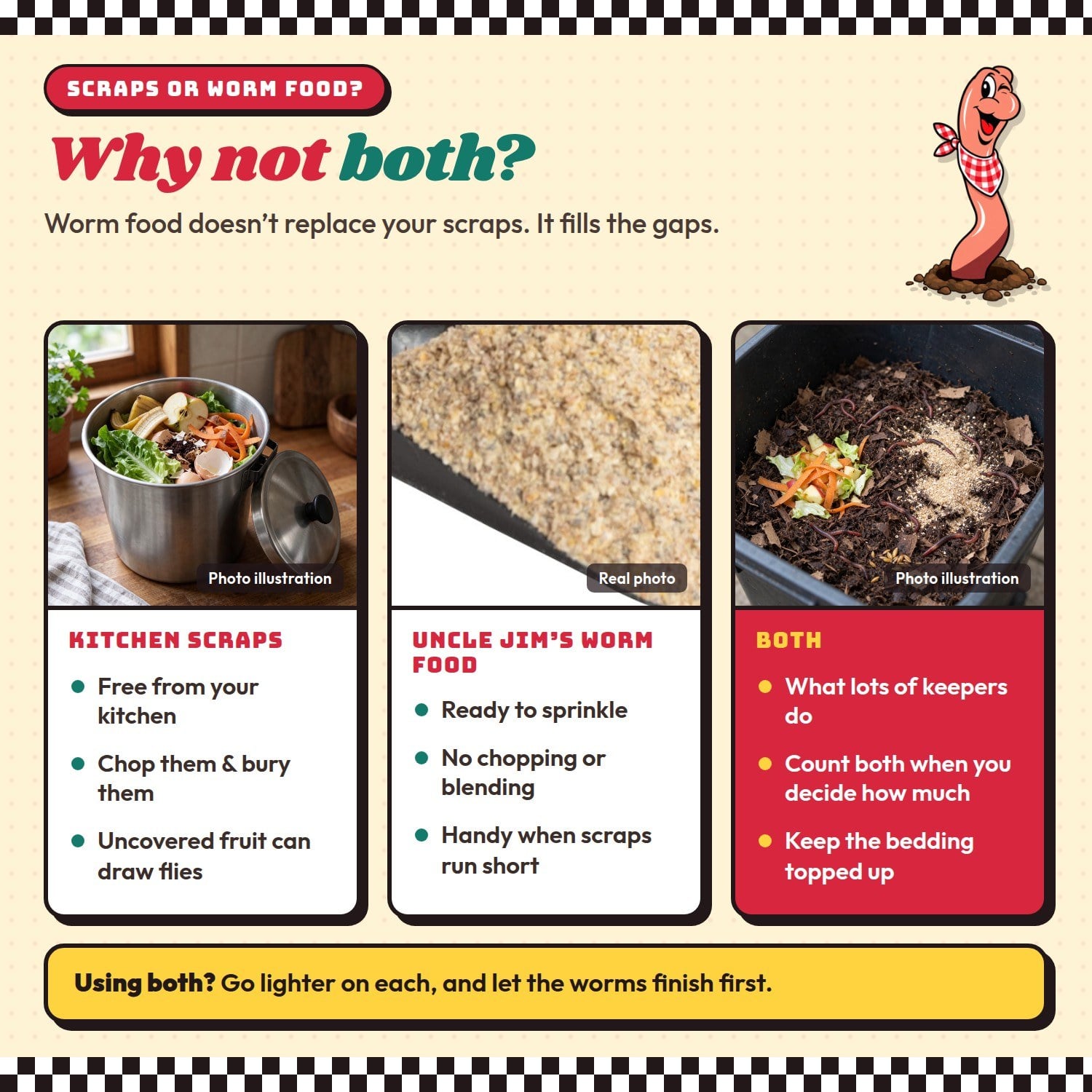
Why pay for worm food when scraps are free?
Fair question. Kitchen scraps are great worm food, and you should keep using them. But scraps come and go. Some weeks you cook a lot, some weeks you eat out, and some scraps (like citrus and onions) are best left out of the bin. Worm food fills the gaps.
- Short on scraps this week? Sprinkle a little worm food instead.
- No time to chop or blend? This is ready to go.
- Using both? Go lighter on each and let the worms finish first.
Wondering which scraps worms like? See what you can feed your worms.
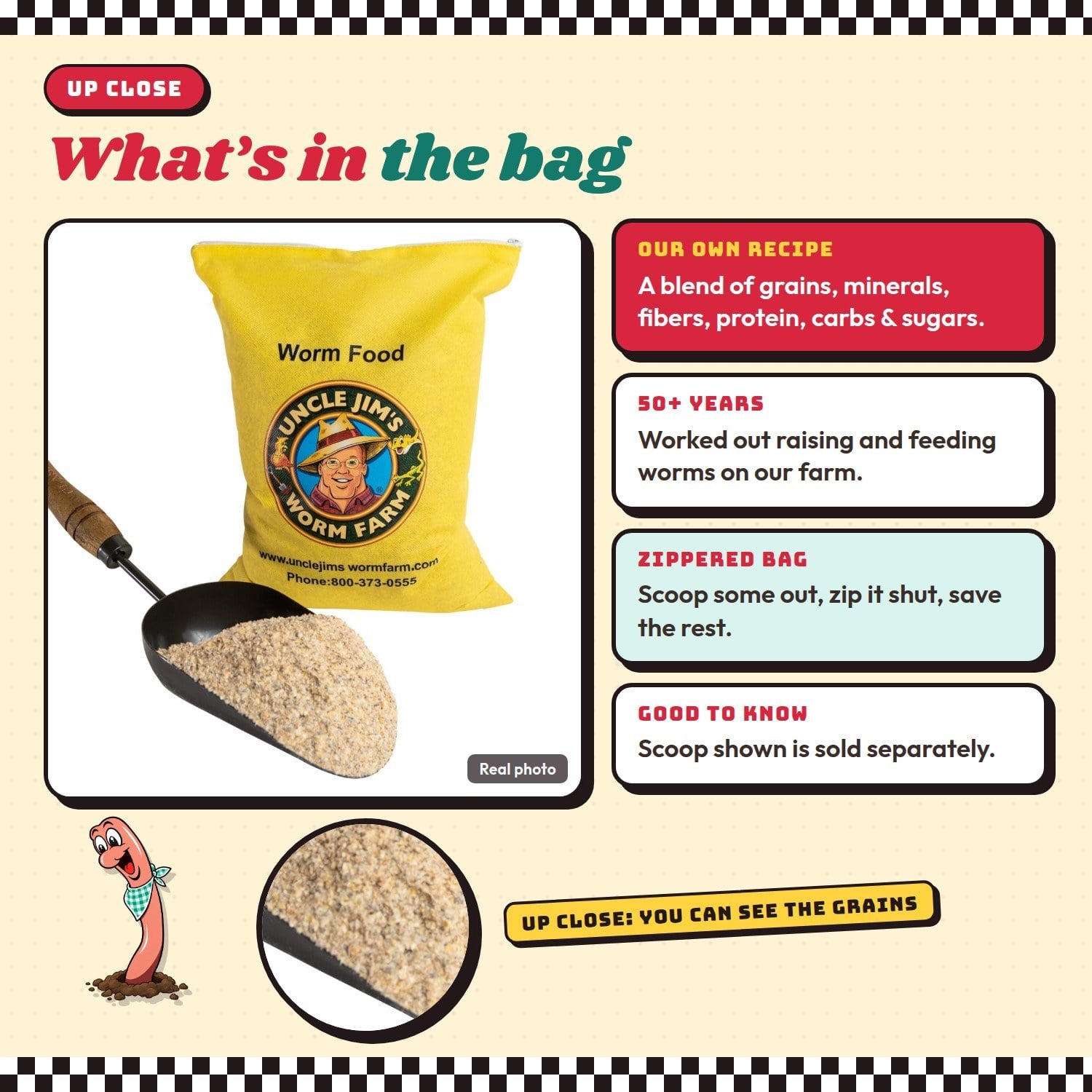
Our own recipe, 50 years in the making.
Uncle Jim’s worm food is our own blend of grains, minerals, fibers, protein, carbs and sugars. Jim worked it out over more than 50 years of raising and feeding worms. Open the zipper and you will see a light tan, coarse grain meal.
Little green sprouts? Now and then a grain piece sprouts in a damp bin. Worm bins do not stop seeds from growing, so this is normal. Pull the sprout or tuck it under the bedding, and the worms will handle the rest.
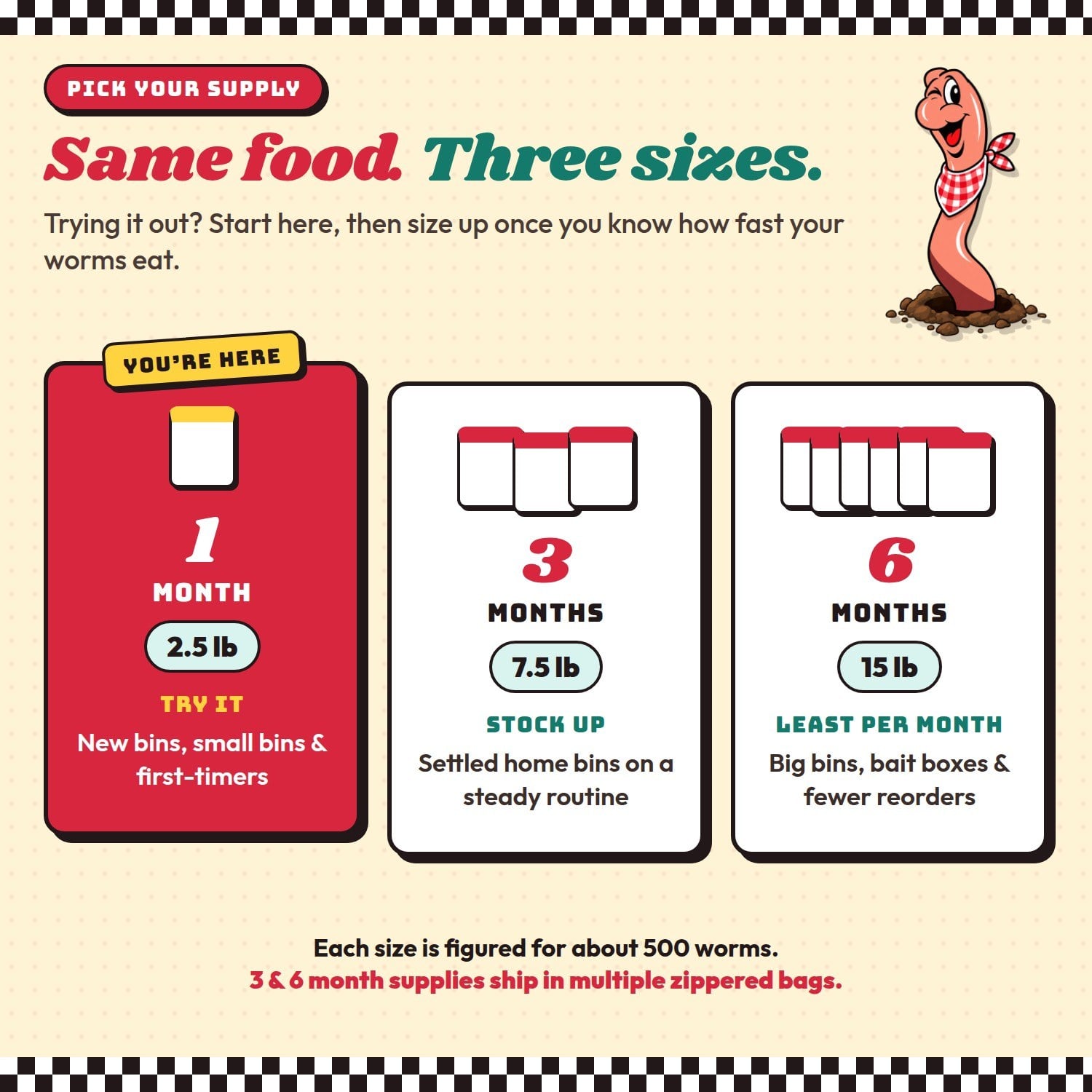
Same food. Three sizes.
Start with the 1 month supply to learn how fast your worms eat. Once you know, the bigger sizes mean fewer reorders, and you pay less per month of food.
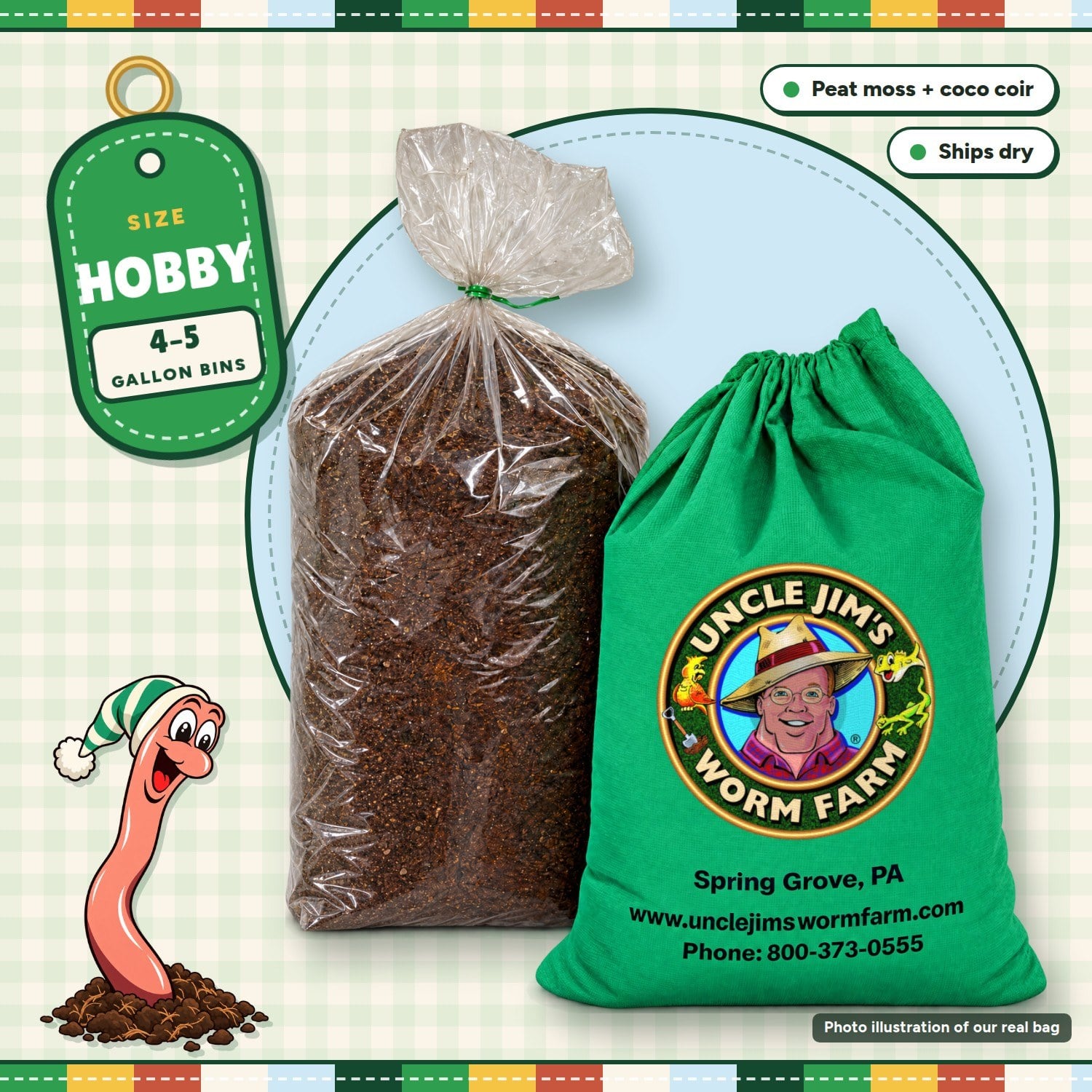
New bins, small bins and first-timers learning the routine.
Settled bins on a steady routine. Ships in multiple zippered bags. See the 3 month →
Big bins, bait boxes and fewer reorders. Ships in multiple zippered bags. See the 6 month →
Want a scoop? Choose “Add a Classic Hand Scoop” on the order form above. The scoop in our photos is sold separately.
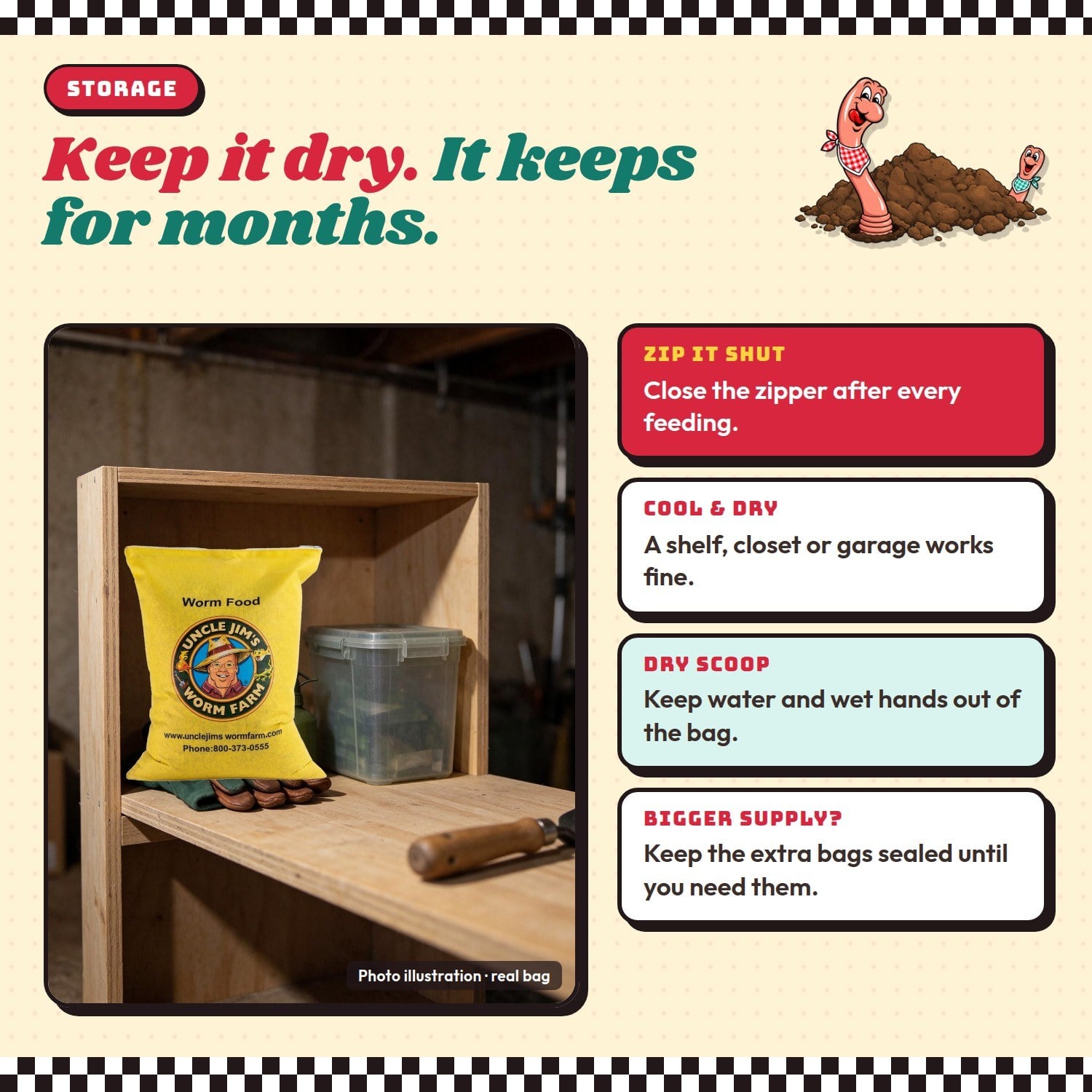
Zip it. Keep it dry.
Dry worm food keeps for months as long as it stays dry. Water is the one thing it does not like, so:
- Zip the bag shut after every feeding
- Keep it somewhere cool and dry, like a shelf, closet or garage
- Use a dry scoop or spoon, never wet hands
- Clumpy, musty or damp? Toss that part
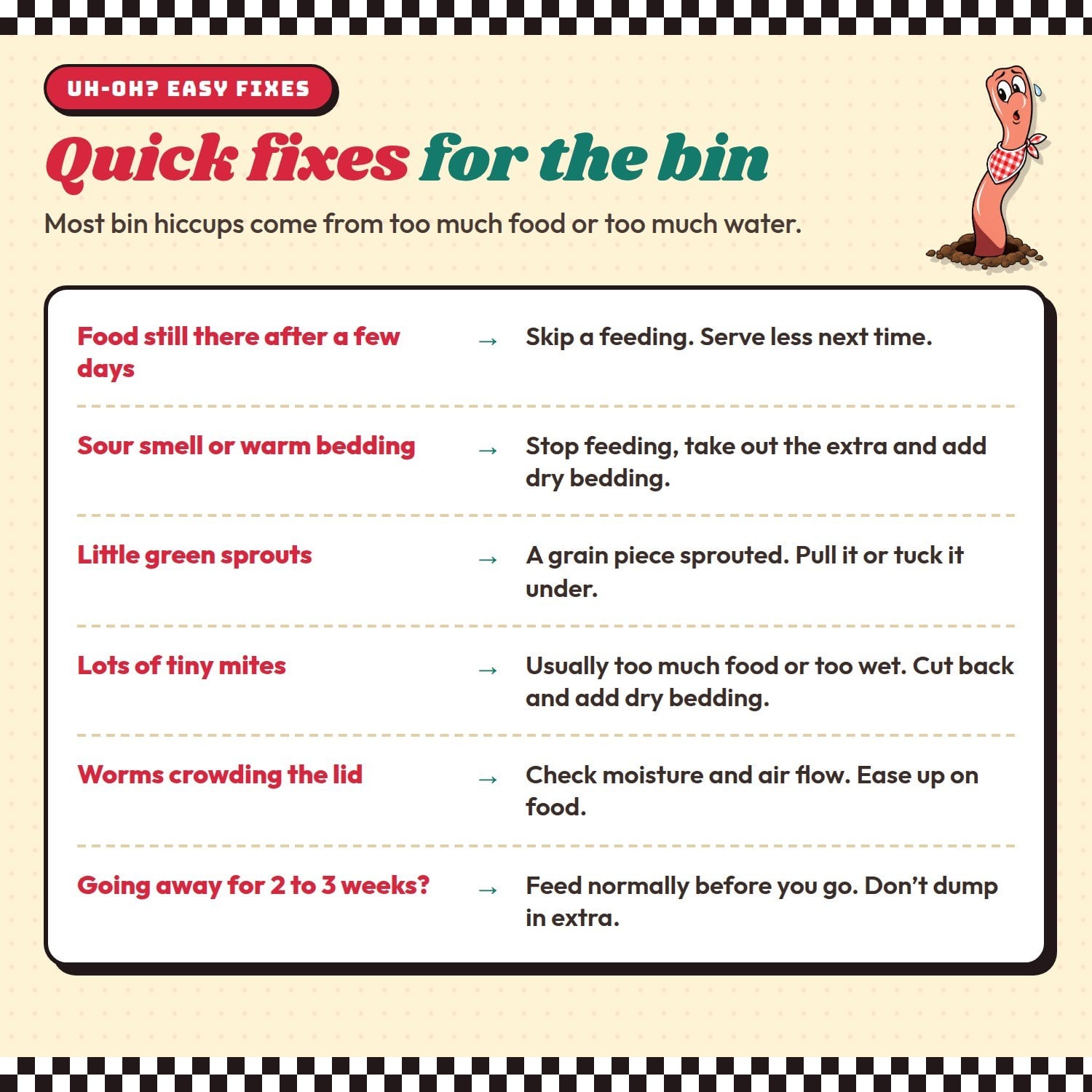
Something look off? Easy fixes.
New bins can be a little dramatic. Almost every hiccup comes from too much food or too much water, and most sort themselves out once you ease up.
- Food piling up: stop feeding, scoop out the extra and add some dry bedding.
- Lots of tiny mites: usually too much food or too much moisture. Cut back for a while.
- Worms on the lid: new worms sometimes wander for a few days. Make sure the bedding is damp, not wet, and that air can get in.
- Going away? A settled bin can go 2 to 3 weeks. Feed normally before you leave, and do not dump in extra.
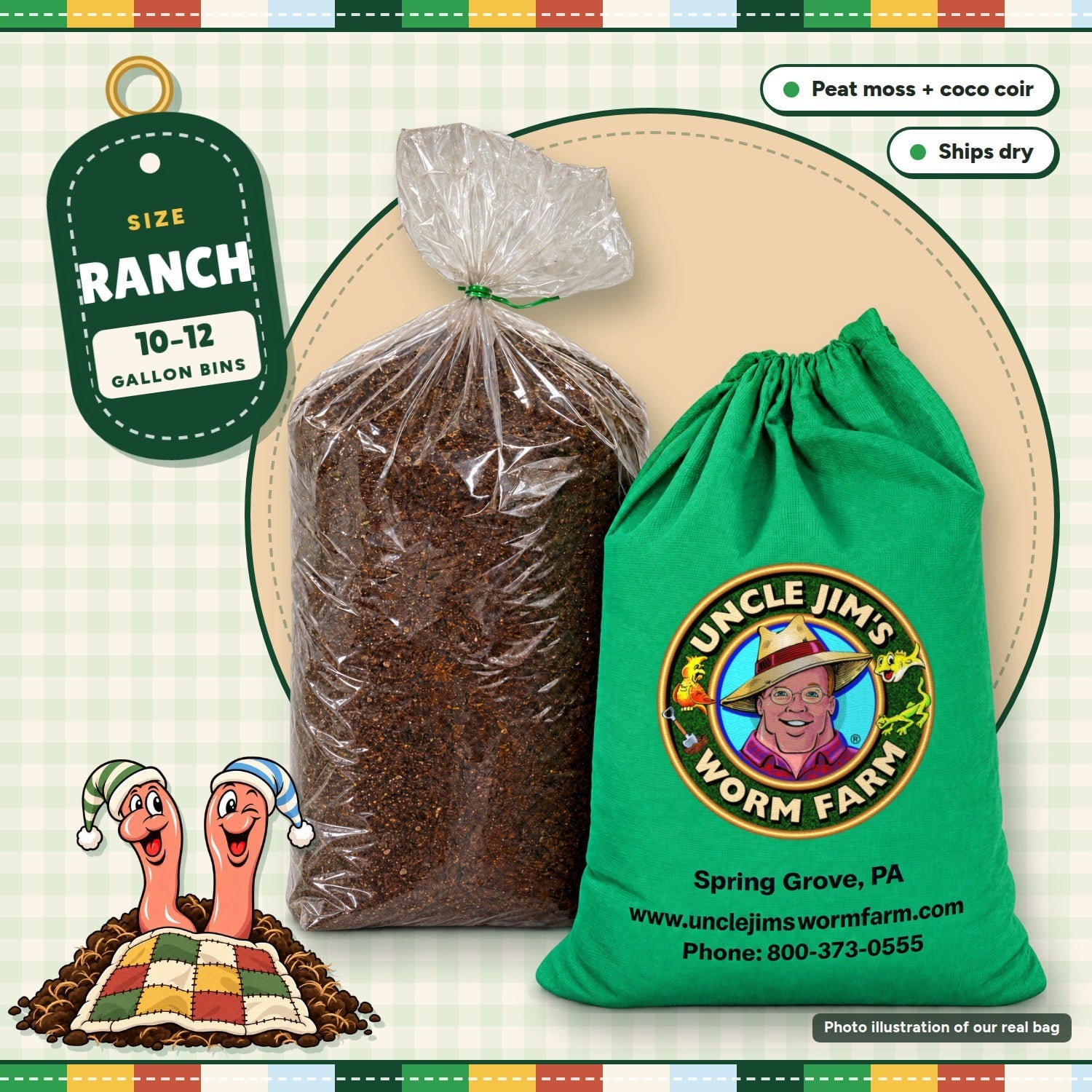
Need fresh bedding? Try our Worm Ranch Bedding or a Coconut Coir Brick.
Raising and feeding worms on our own farm.
Phone 800-373-0555 from 10 AM to 6 PM Eastern.
Ships in its zippered bag. Shipping is figured at checkout.
Send a note to sales@unclejimswormfarm.com and we will help.