


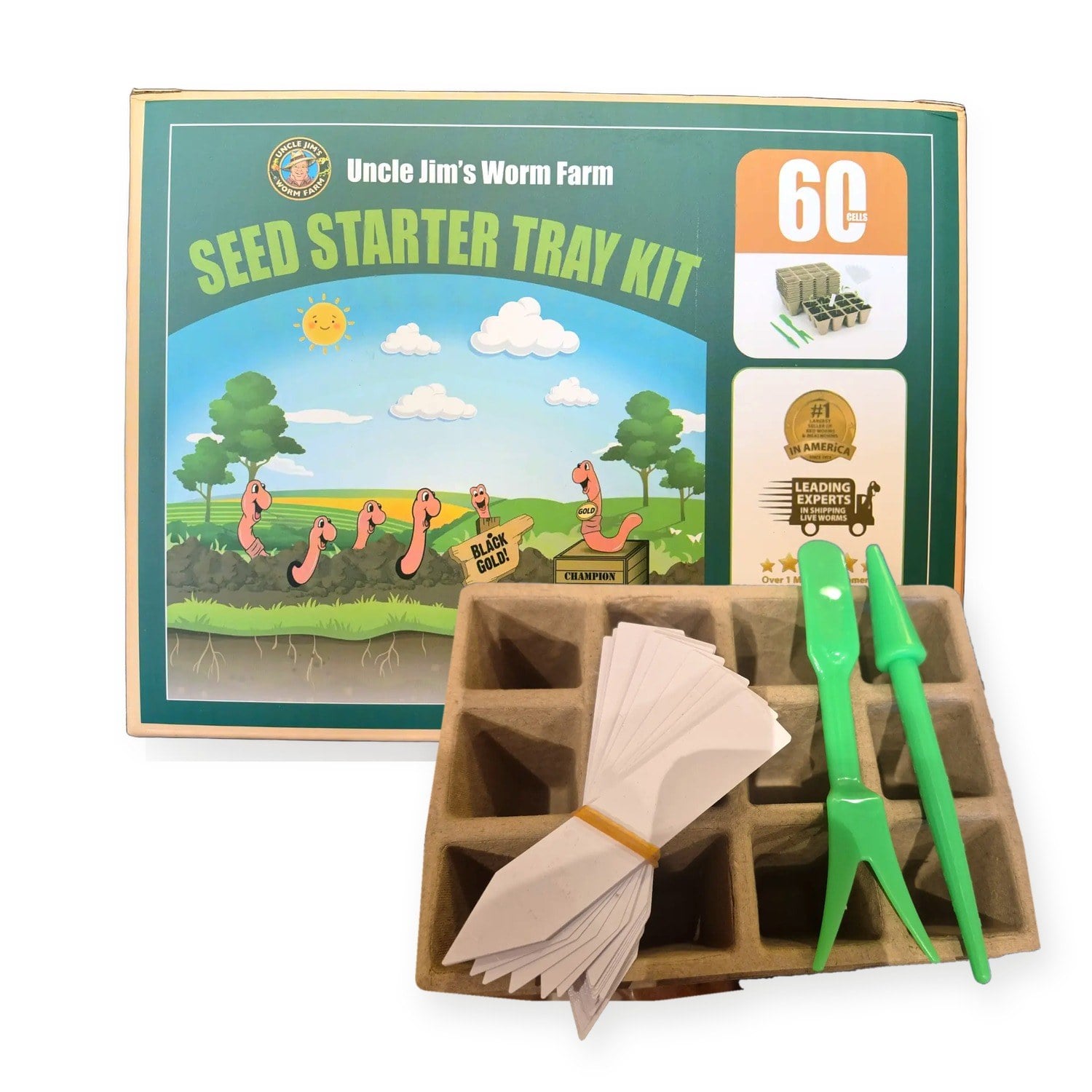
Description
Small cells. Big head start.
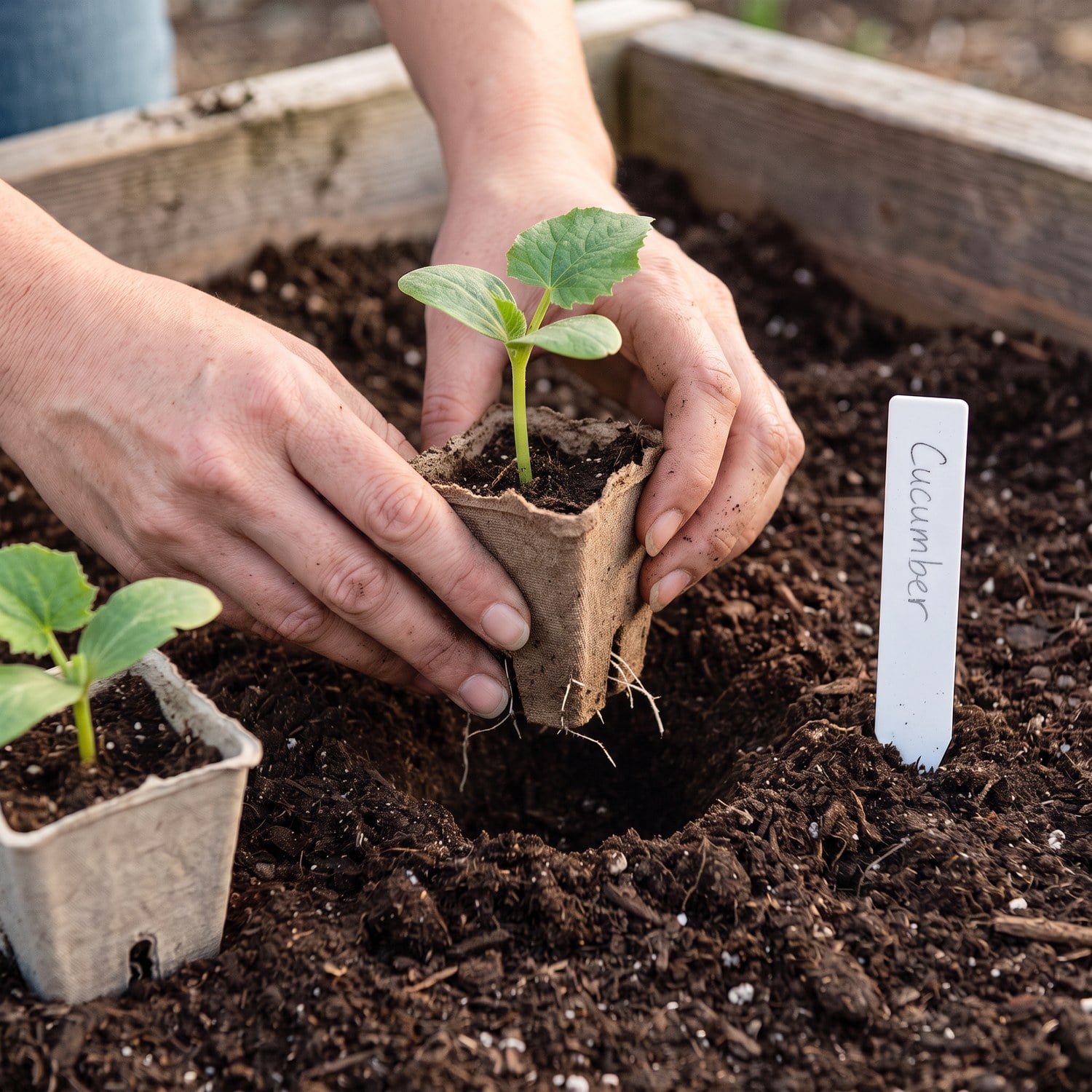
Roots stay right where they are.
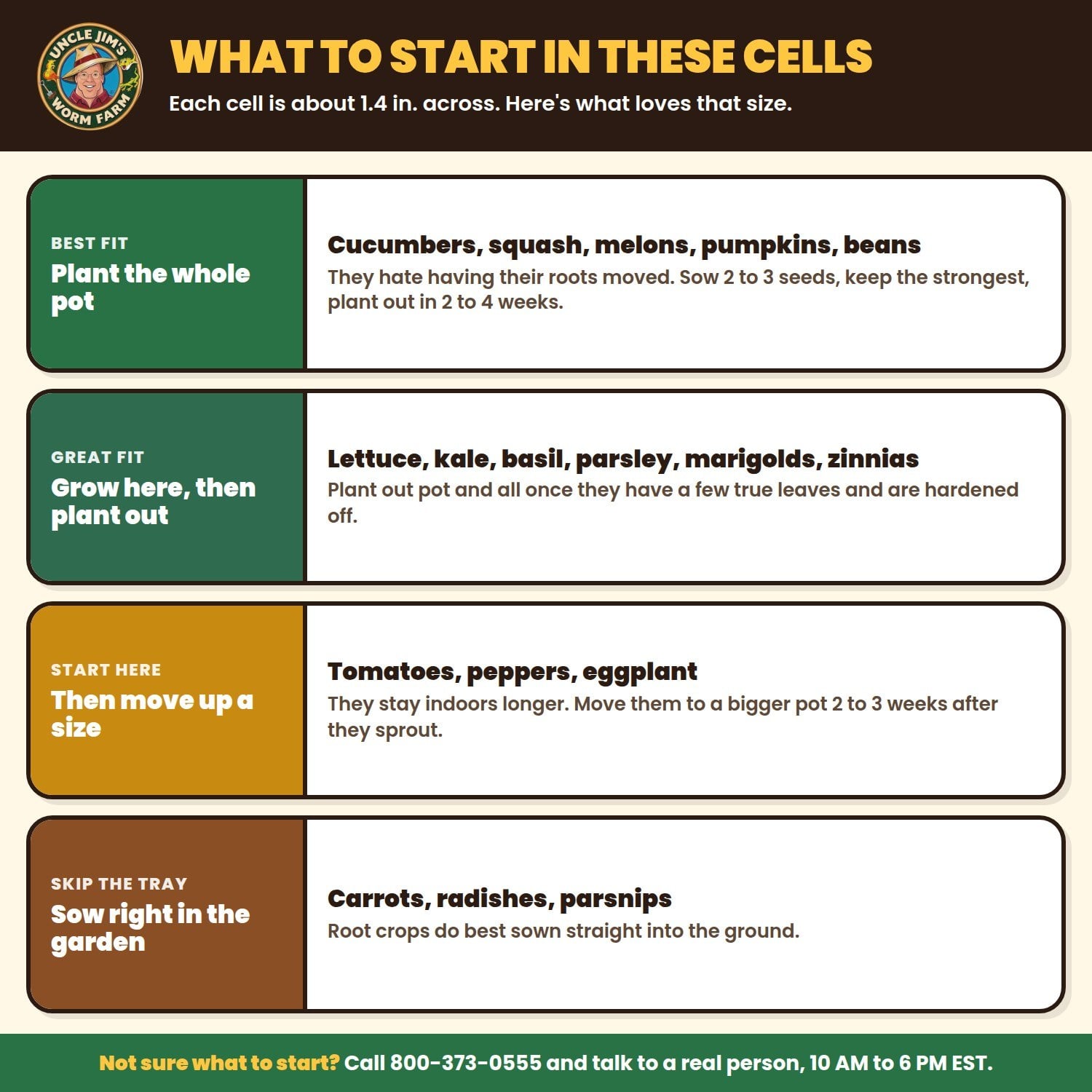
When your seedlings are ready, the plant-fiber cell goes into the ground with them. Tear off the rim, slit the sides, and bury it. University of Minnesota Extension says pots that break down are perfect for seedlings that don't transplant well, like cucumbers and squash.
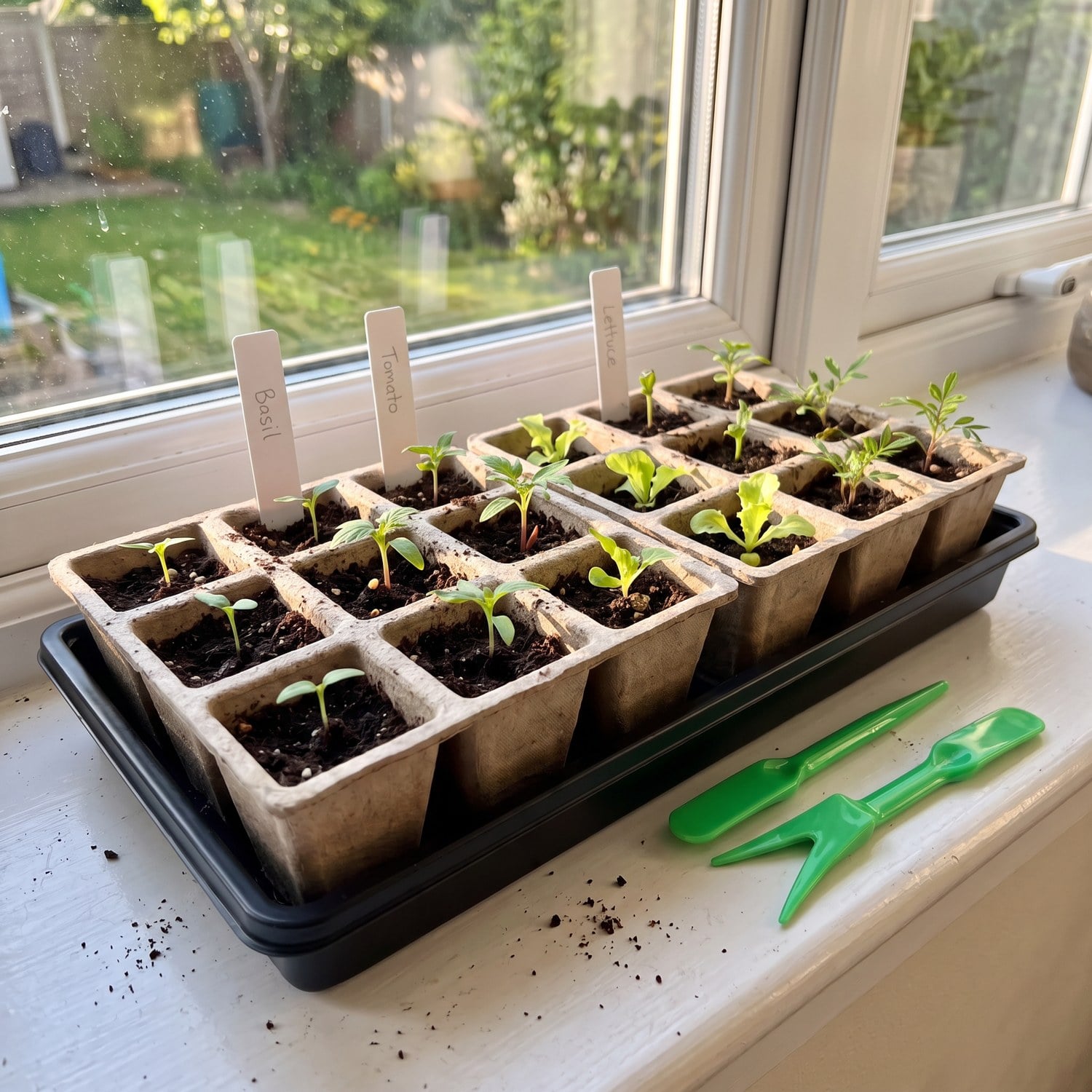
60 seedlings in a little space.
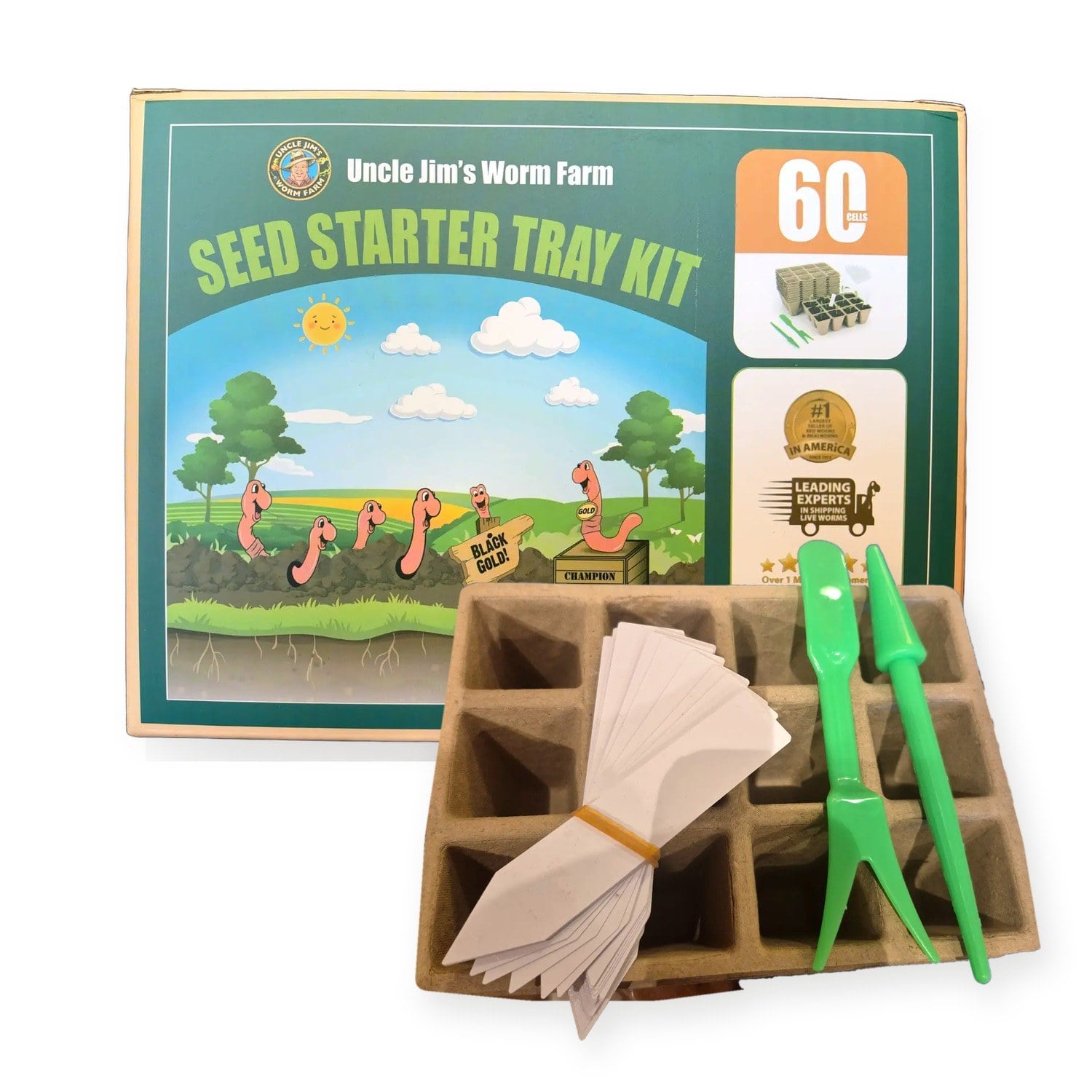
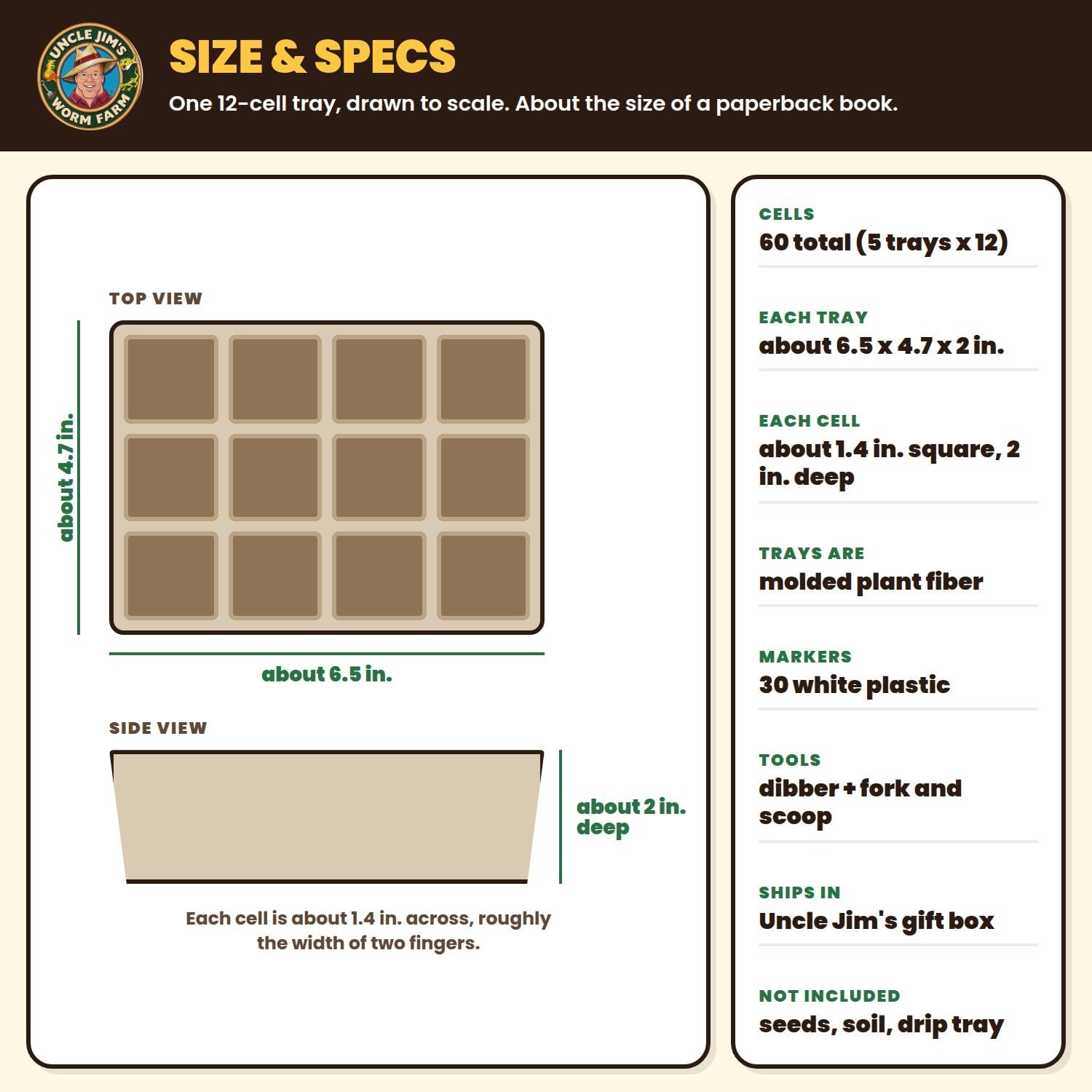
Each tray is about 6.5 x 4.7 in., about the size of a paperback book. Line them up on a sunny sill or under a grow light. Start a whole salsa garden, a row of herbs, and the cucumbers, and still have cells to spare.
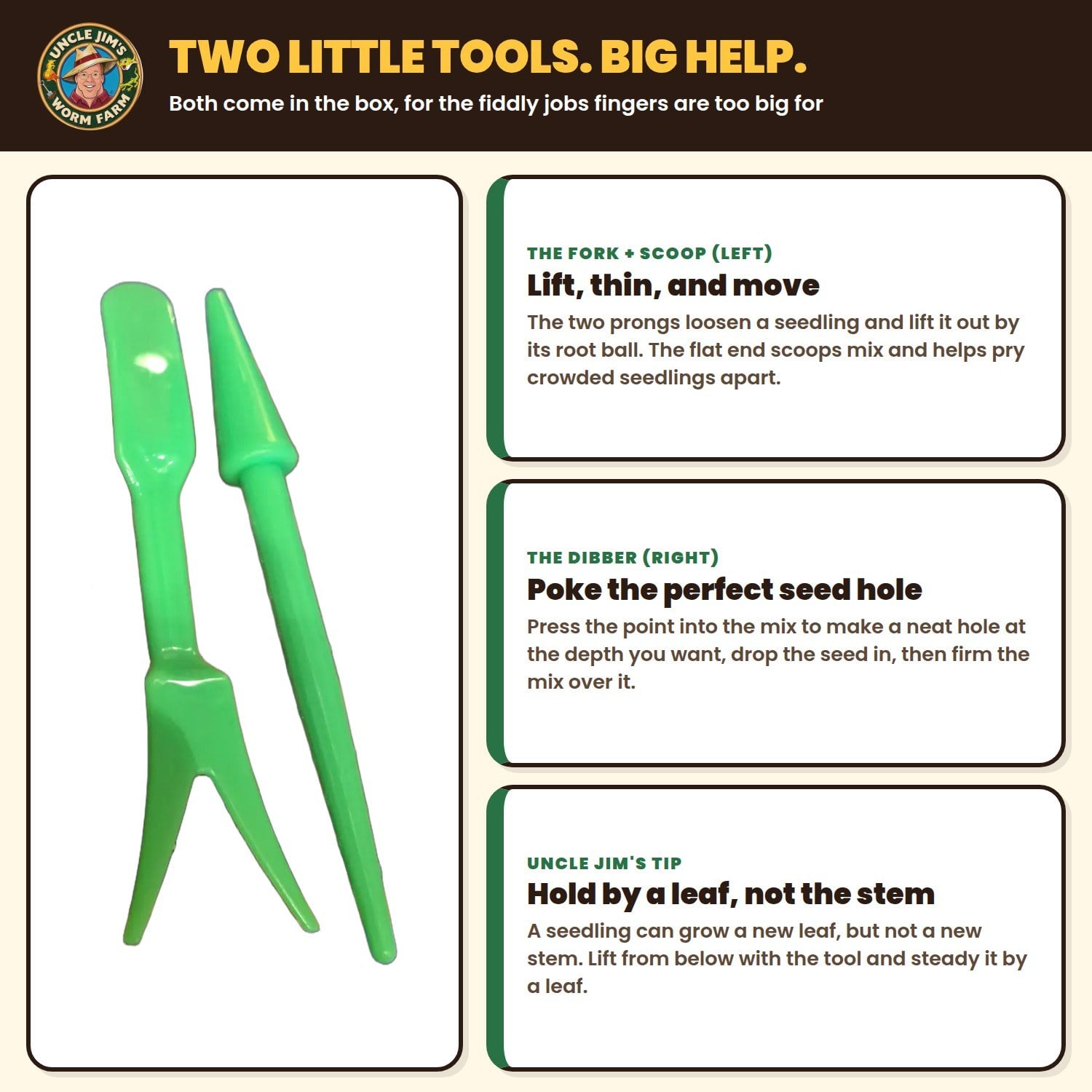
Little tools for the fiddly jobs.
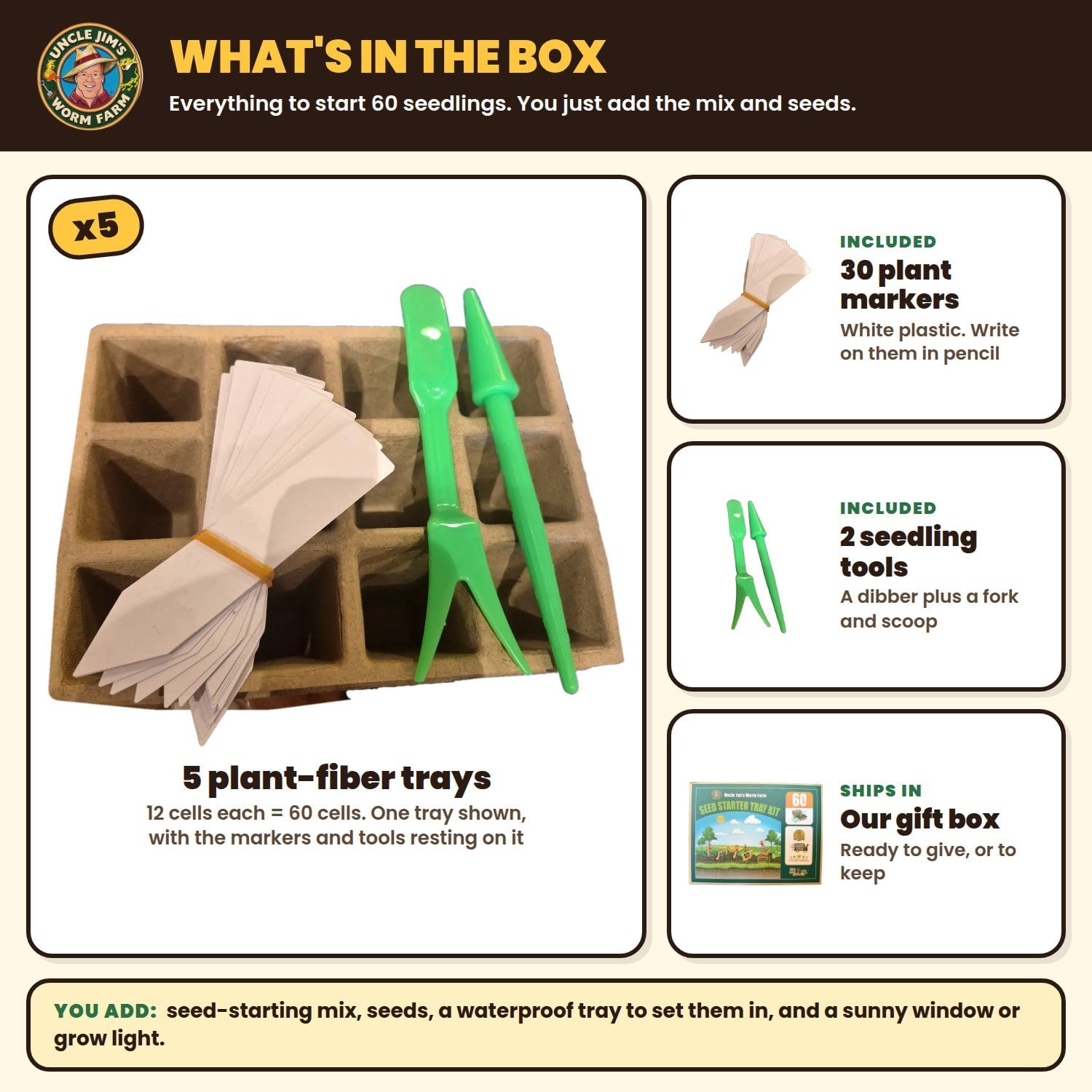
Fingers are too big for seedlings. The pointed dibber pokes a neat seed hole at just the right depth. The fork-and-scoop tool lifts and thins seedlings by the root ball and scoops mix into the cells. Uncle Jim's tip: hold a seedling by a leaf, never the stem.
30 white write-on markers. Every seedling looks the same at two weeks old, so jot the plant and the date in pencil. It holds up best in the sun.
Cut the cells apart with scissors to plant one at a time, or hand a few extra tomato starts to the neighbor.
We have been helping folks grow since 1973. Questions about starting seeds? Call 800-373-0555 and talk to a real person.
Six steps from seed to garden.
Fill
Moisten your seed-starting mix first, until it is damp like a wrung-out sponge. Fill each cell and press it down lightly.
Sow
Poke a hole with the dibber about twice as deep as the seed is wide. Drop in 2 seeds and cover them. Some tiny seeds just get pressed on top, so check the packet.
Label
Write the plant and the date on a marker. Pencil holds up best in the sun.
Water from below
Set the trays in a waterproof tray and pour in about half an inch of water. Let the fiber soak it up, then pour off what is left after 30 minutes.
Give them light
Once they sprout, hang a grow light 2 to 4 in. above the leaves for 12 to 16 hours a day, or use your sunniest window.
Plant the pot
After hardening them off, tear off the rim, slit the sides, and bury the whole pot so no fiber sticks up above the soil.
Keep your seedlings happy.
Don't drown them
Damping-off makes seedlings suddenly flop over at the soil line, and wet soil is its favorite place. Keep the mix moist, not soggy, and pour off standing water. More from UW–Madison Extension.
Two seeds is plenty
Crowded seedlings stay damp and invite trouble. Penn State Extension warns against overseeding. Two per cell, then snip the extra.
Use fresh mix, not garden soil
Fresh seed-starting mix and clean trays help keep damping-off away, says University of Minnesota Extension. Our Seed Starter Mix is made for it.
Leggy means more light
Tall, skinny seedlings leaning toward the window are reaching for light. Move a grow light down to 2 to 4 in. above the leaves.
Wait for true leaves
No fertilizer until a seedling has a few true leaves. Then go gentle, at 1/4 strength once a week. At planting time, add a handful of worm castings to the hole.
Toughen them up first
About 2 weeks before planting out, set them outside in the shade for an hour or two, a little longer each day. Fiber dries fast outdoors, so check it daily.

Fill your trays.
Seed Starter Mix
Our 12 qt. mix is made for seed trays and flats, with activated compost mixed in. Made in Wisconsin, and it ships free.
Heirloom Seeds
Roma tomatoes, California Wonder peppers, Marketmore cucumbers, zucchini, basil, marigolds, zinnias, and plenty more. Pick a few packets and fill every cell.
Worm Castings
Our natural worm castings, straight from the farm. Add a handful to each planting hole when your seedlings move outside.
A family worm farm in Spring Grove, PA, helping folks grow for over 50 years
Real people 10 AM to 6 PM EST at 800-373-0555
Tracking emailed when it ships. Shipping policy