Got Compost Bin Questions? We’ve Got Answers!
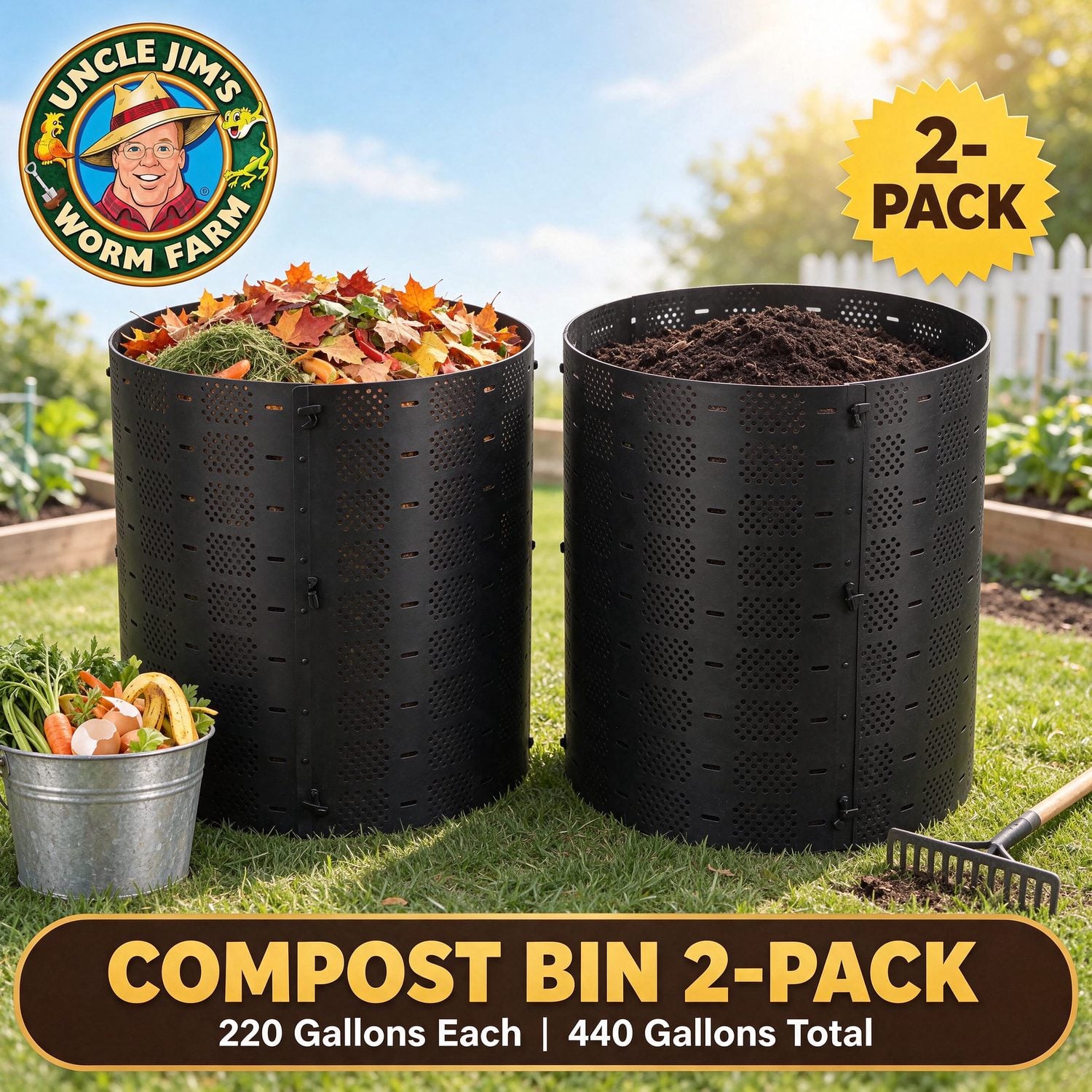
What comes in the 2‑pack?
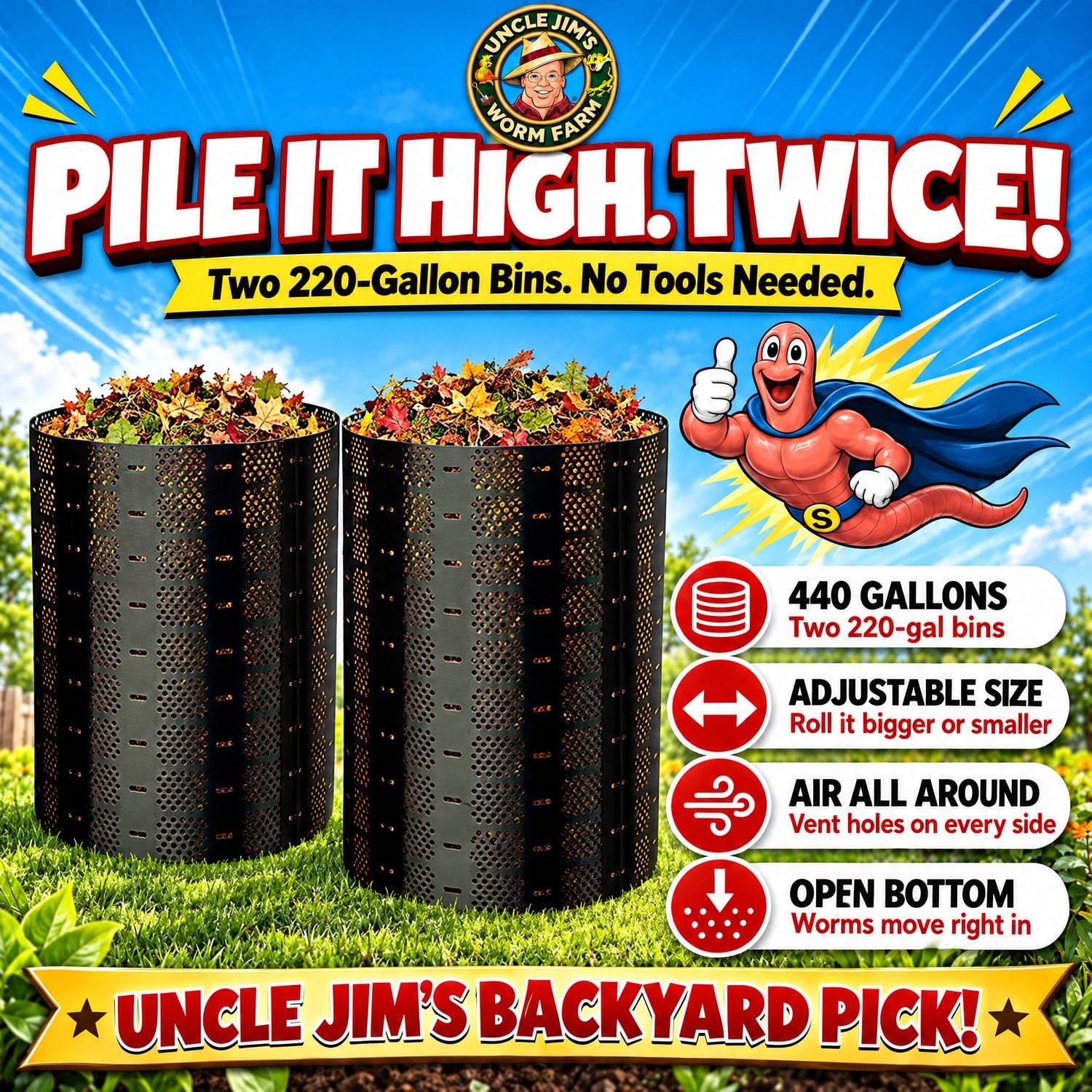
You get two complete expandable compost bins. Each bin is one black HDPE plastic sheet with vent holes all around, plus its own twist-lock keys and support rods and easy setup instructions. Everything you need to set up both bins is in the box, with no tools required.
How big is each bin?
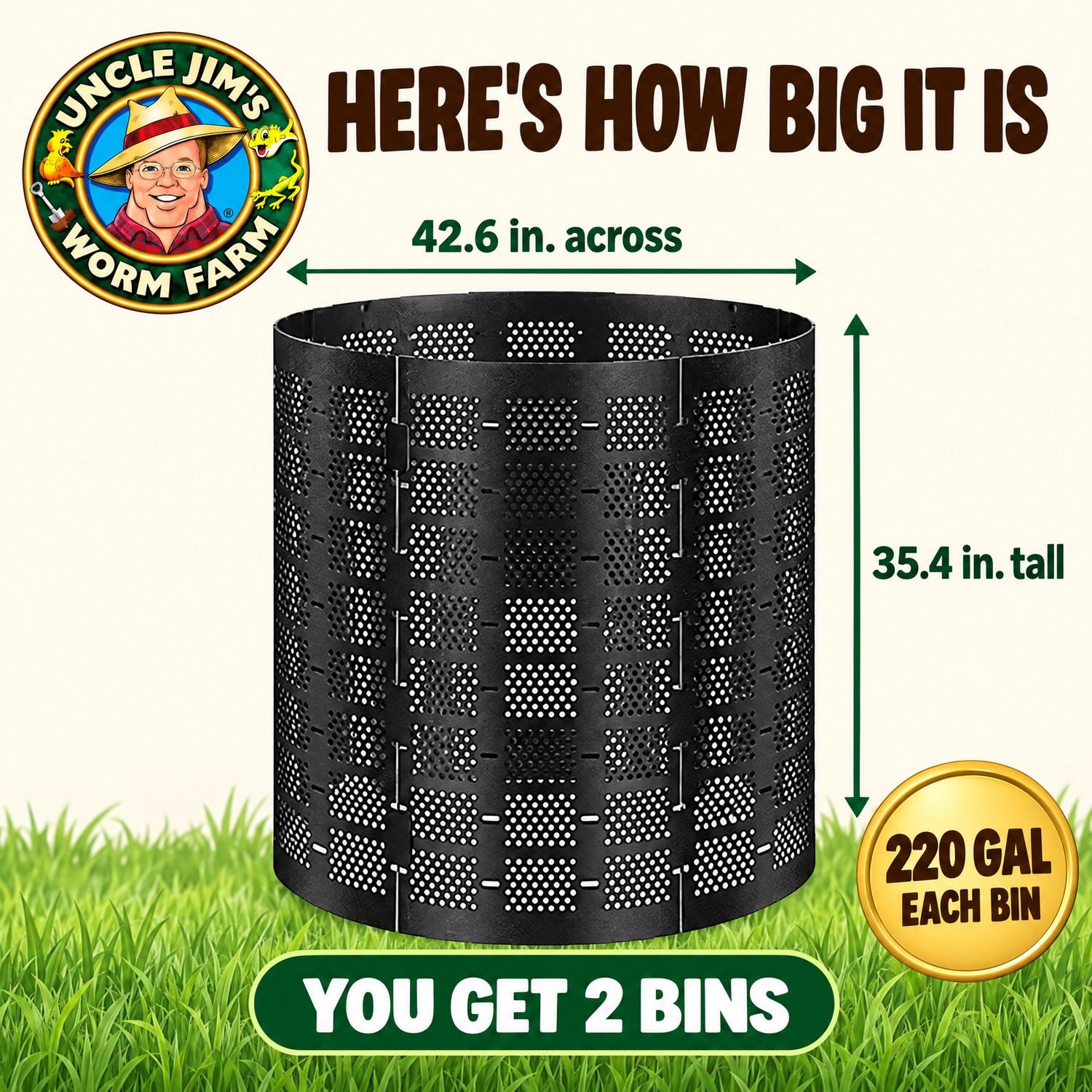
At full size, each bin is a ring about 42.6 inches across and 35.4 inches tall. That’s roughly waist-high on most adults. Want a smaller bin? Overlap the sheet more when you lock it, and the ring gets narrower.
How much will it hold?
Each bin holds up to 220 gallons at full size. That’s about 29 cubic feet, or roughly five to six 39-gallon lawn bags of loose leaves, and leaves settle as they break down, so you can keep adding more. The 2-pack gives you two separate bins and up to 440 gallons in all.
How much yard space do I need?
Each bin needs a circle about 3.5 feet wide. Set side by side with a little gap, the pair takes up a spot about 8 feet wide and 3.5 feet deep. Leave a few feet of elbow room on one side, because turning the pile is easiest when you can set the ring down right next to it.
Why buy two bins instead of one?
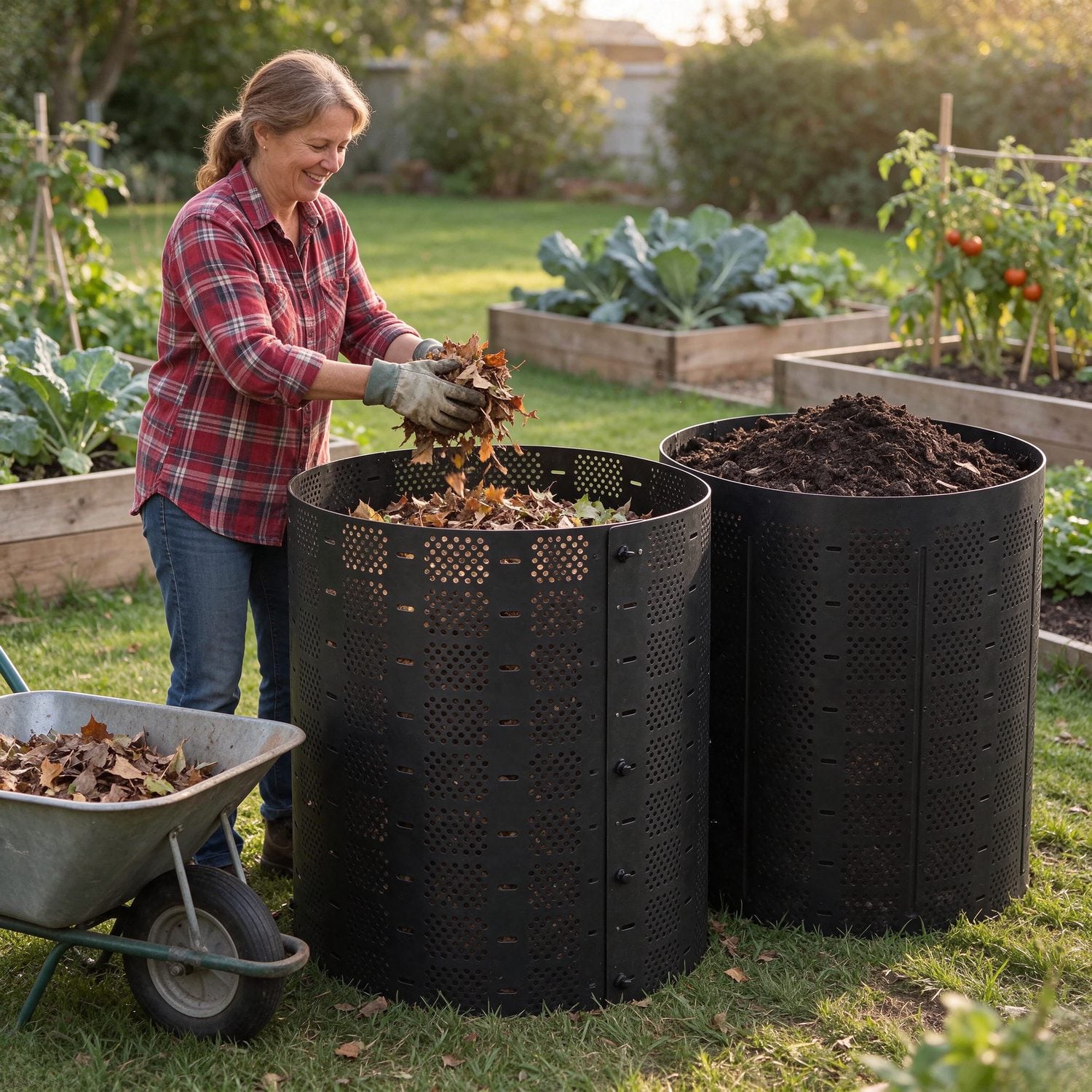
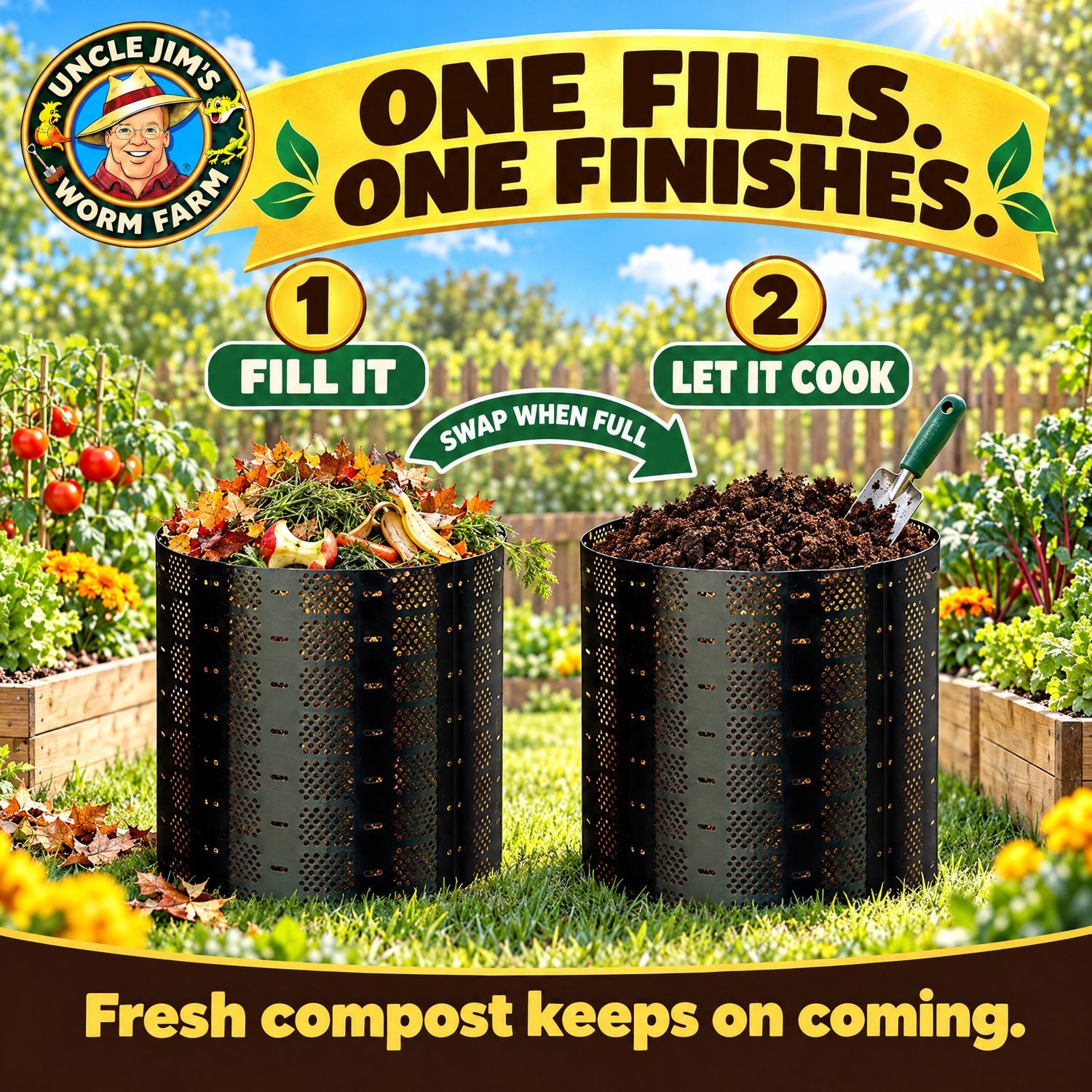
With one bin, you’re always piling fresh scraps on top of compost that is almost ready. With two, you can fill one bin while the other one finishes, then harvest, swap, and repeat. Many gardeners also use the second bin to stockpile fall leaves, since a compost pile needs plenty of dry “browns” all year long.
Is this a better fit than a compost tumbler?
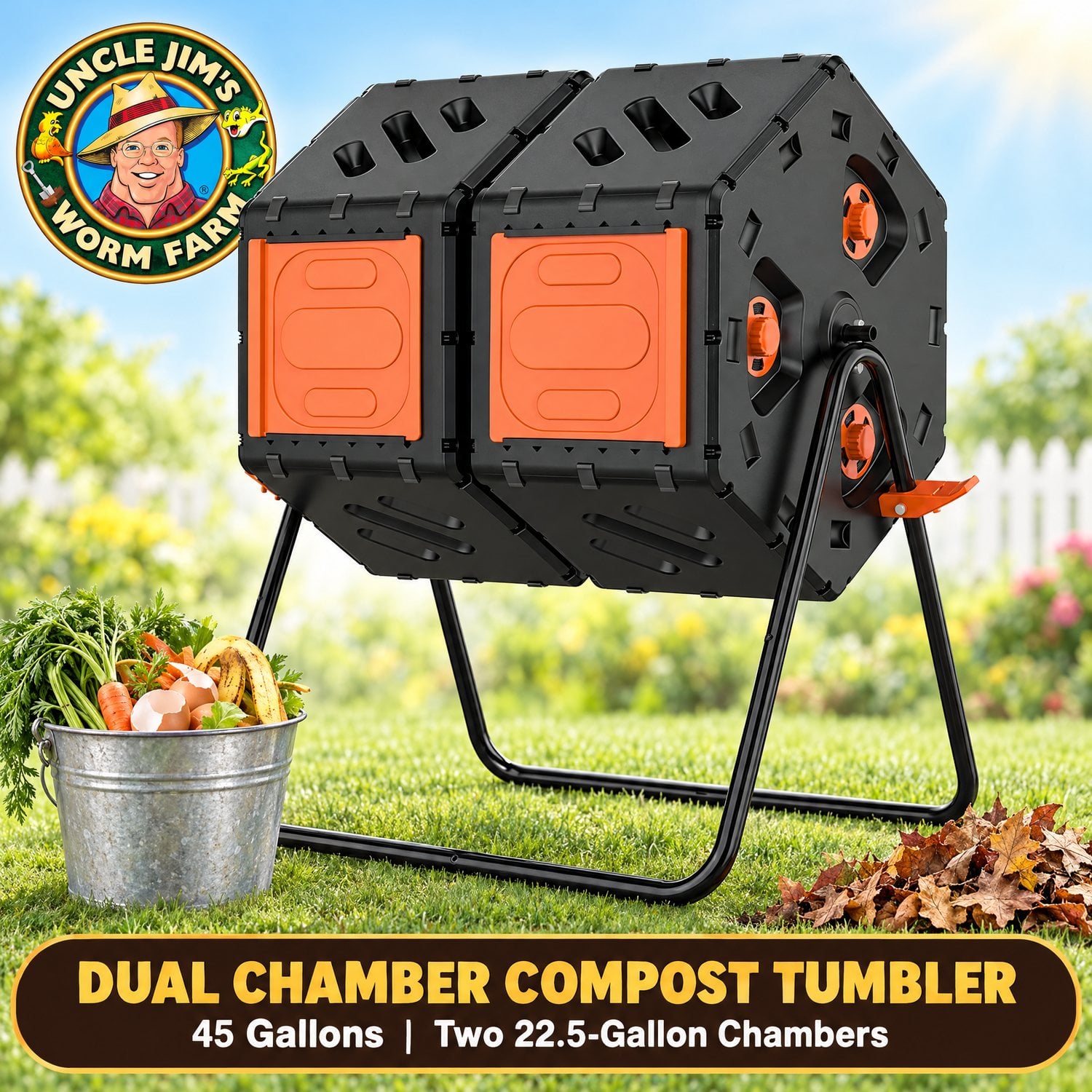
It depends on what you compost. These big open bins are made for volume: fall leaves, grass clippings, and garden cleanup, plus kitchen scraps buried in the pile. A tumbler holds less, but its closed drum is handy for mostly kitchen scraps. Lots of gardeners use both. Browse all of our outdoor compost bins to compare.
Is it hard to set up?
Not at all, and you won’t need any tools. Unroll the sheet, wrap it into a ring, push the keys through the overlapping slots, and turn them to lock. Then slide the support rods through the slots and press them into the ground. The sheet ships rolled up, so it likes to curl at first. Lay it flat in the sun with a few bricks on top for about 20 minutes, and it gets much easier to handle. A second set of hands helps with the first bin. A pair of garden gloves is a good idea too.
Will it blow over in the wind?
An empty bin is lightweight, so a strong wind can push it around. Press the support rods firmly into the ground, and on a windy site add a few extra garden stakes around the outside. Once the bin has a good load of material inside, it settles in and holds its shape much better.
Where should I put it?
Pick a level spot on bare soil or grass, in sun or part shade, close to a hose. Soil is best, because the open bottom lets extra moisture drain away and lets earthworms and soil life move up into the pile. We don’t recommend setting it on a deck or patio. Liquid from the pile can stain, and the worms can’t get in.
Does it come with a lid?
No. This is an open-top, open-bottom bin, which is what makes it so roomy and so easy to lift off for turning. Keep fresh scraps covered with a few inches of leaves or other browns. In very rainy or very dry weather, a tarp or a piece of burlap on top helps keep the moisture just right.
What can I put in it?
Mix about 2 to 3 scoops of dry browns for every scoop of greens. Browns are things like dry leaves, straw, shredded plain cardboard, newspaper, and small twigs. Greens are fruit and veggie scraps, coffee grounds, plastic-free tea bags, crushed eggshells, and fresh grass clippings in thin layers. Keep meat, fish, bones, dairy, grease, pet waste, diseased plants, weeds that have gone to seed, and treated or sprayed yard waste out of the pile. Keep everything about as damp as a wrung-out sponge.
Will it smell or attract critters?
A balanced pile smells earthy, not rotten. If you notice a bad smell, the pile usually needs more browns and a good turn. Like any open compost pile, these bins aren’t critter-proof. Bury food scraps under a thick layer of browns and skip meat, dairy, and oily foods. If raccoons or rodents are a big problem in your area, a closed bin or tumbler is a better choice for kitchen scraps.
How do I turn the pile?
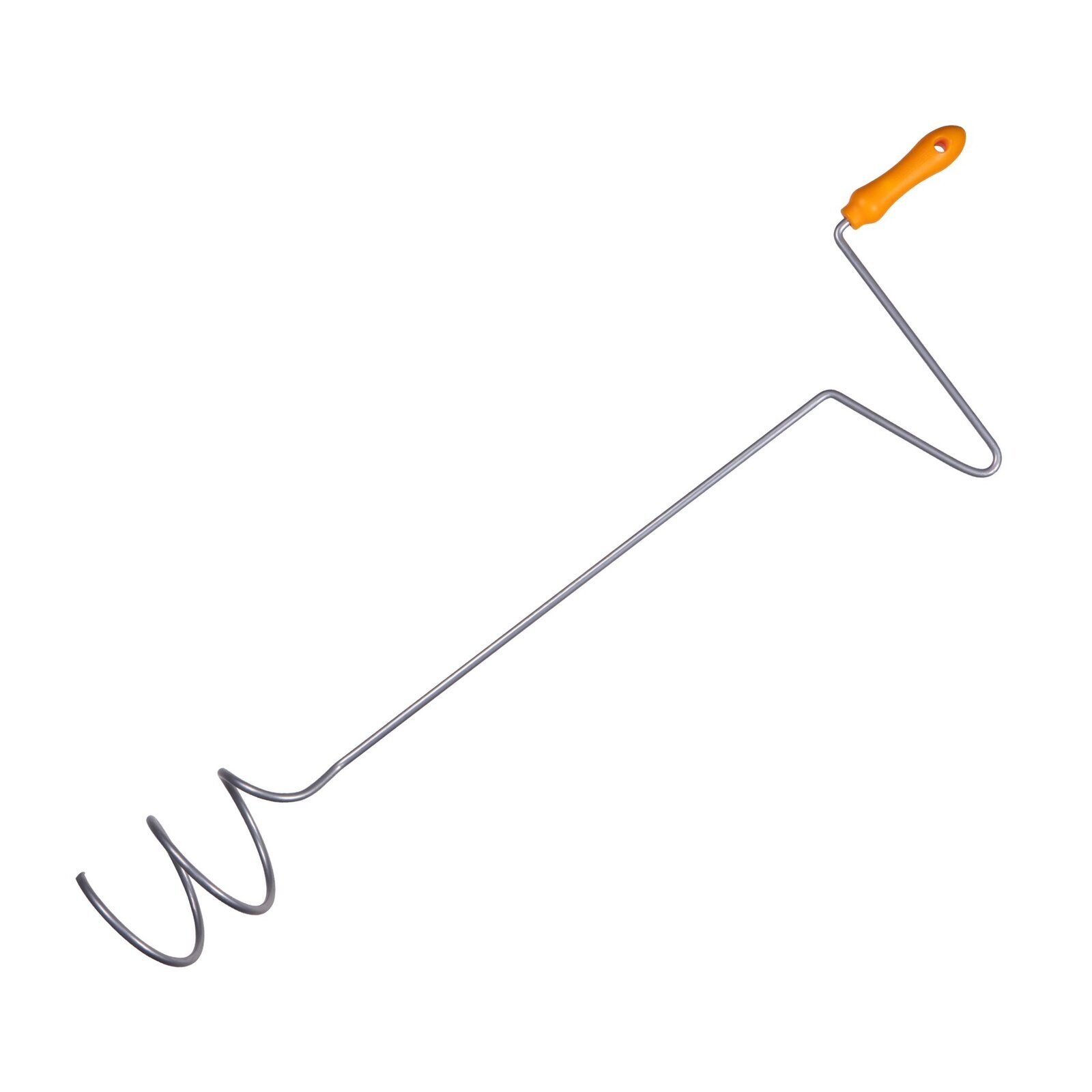
Every few weeks, pull the support rods, lift the ring straight up off the pile, and set it down right next to it. Then fork the pile back into the ring, moving the outside material to the middle. This one move mixes and fluffs the whole pile with fresh air. With the 2-pack, you can also fork one bin straight into the other.
How long until I get finished compost?
A pile that you turn, keep damp, and feed a good mix of browns and greens can be ready in a few months in warm weather. A pile you leave alone gets there too, but it may take a year or more. Finished compost is dark and crumbly and smells like the forest floor. Let it cure for a few more weeks before spreading it. A Compost Wizard thermometer shows you when your pile is heating up and when it has cooled down.
How do I get the finished compost out?
The oldest, most finished compost is at the bottom of the pile. Lift the ring off, scoop or sift the finished compost from the bottom, and toss anything that isn’t done yet into your other bin to keep cooking.
Can I add composting worms?
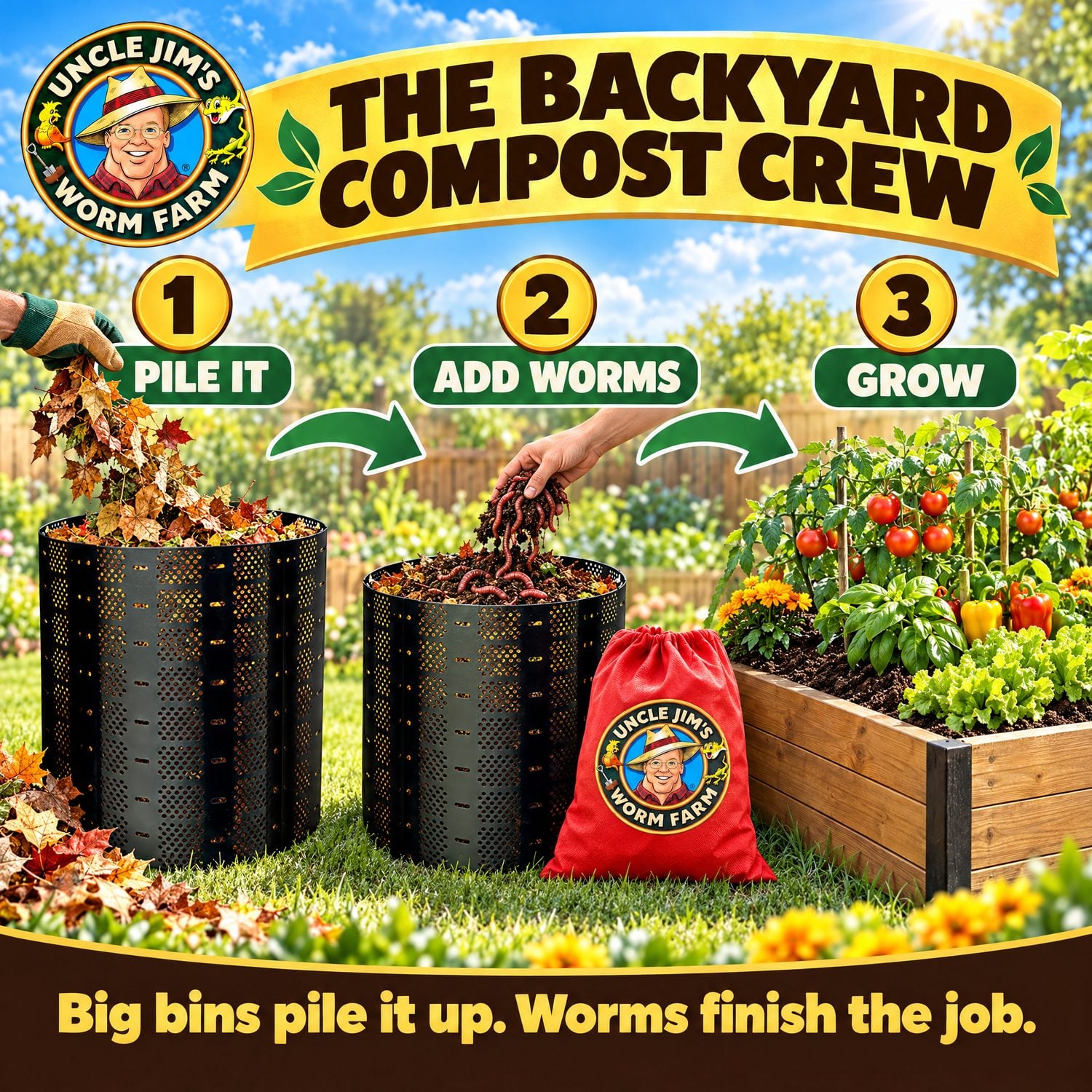
Yes, and they make a great team with these bins! A busy pile can heat up, and worms like it cool and damp, so add them to a section that has cooled down. If the pile feels hot to the touch, give it time before adding worms. The open bottom lets them move down into the soil if they need to. Our Red Composting Worm Mix and Super Red European Nightcrawlers are both great choices.
Can I compost in the winter?
Yes. Composting slows down in cold weather and picks back up in spring, so just keep adding browns and buried scraps. A thick layer of leaves on top helps hold in some warmth. If you’d rather take a break, empty the bin and roll it up until next season.
Can I join the two bins into one giant bin?
We designed these as two separate bins, and that is how we recommend using them. Some gardeners overlap two sheets of this style to make one extra-wide ring, but we haven’t tested that with this bin, and a bigger ring needs more support to stay standing. For big jobs, two side-by-side bins are easier to manage and easier to turn.
How do I store it, and how long will it last?
When you’re done for the season, empty the bin, hose it off, and roll it back up into a slim bundle for the shed or garage. The bins are made of sturdy HDPE plastic for outdoor use. Like most outdoor plastics, they last longest when stored out of the sun during the off-season and handled gently in freezing weather.
How does it ship?
Your 2-pack ships rolled up by UPS, FedEx, or USPS, and we email tracking once it is on the way. Check our shipping policy for details.
Still have a question?
Give us a call! Our live customer service team is here from 10 AM to 6 PM EST at 800-373-0555. Uncle Jim’s Worm Farm has been helping families compost since 1973, and we’re always happy to help.