

Seed Starter Tray Kit – 60 Cells with Markers & Tools

Original price was: $24.95.Current price is: $18.95.

  • 60 CELLS IN 5 TRAYS: 5 plant-fiber seed trays with 12 cells each, enough to start 60 seedlings on a sunny windowsill or under a grow light
  • PLANT THE WHOLE POT: tear off the rim, slit the sides, and bury it. The plant-fiber pot breaks down in the soil over time, so the roots stay put
  • 30 PLANT MARKERS AND 2 SEEDLING TOOLS: white write-on markers, plus a pointed dibber and a fork-and-scoop tool for sowing, thinning, and lifting seedlings
  • GREAT FOR CUCUMBERS, SQUASH, AND MORE: made for plants that hate being moved, plus lettuce, herbs, and flowers. Each cell is about 1.4″ across, and our how-to guide below walks you through it
  • SNIP APART AND SHARE: cut the cells apart with scissors to plant one at a time, or pass a few extra starts to a friend
  • GIFT-READY, FROM A FAMILY WORM FARM: ships in an Uncle Jim’s gift box. Just add seed-starting mix and seeds (not included). Helping folks grow since 1973

SKU: 74814 Category:

Description

60 cells • plantable fiber pots

Start 60 seedlings. Plant the whole pot.

A 60-cell seed starter kit with plant-fiber trays, 30 plant markers, and 2 seedling tools, in an Uncle Jim's gift box.

Sow your seeds in the little fiber cells and grow them on a sunny windowsill. When it is time to plant out, tear off the rim and plant the whole pot, roots and all. No wrestling seedlings out of plastic, and less root disturbance for plants that hate being moved, like cucumbers and squash.

60
cells (5 trays of 12)
30
plant markers
2
seedling tools
Since 1973
family worm farm
  • ✓Plantable plant-fiber pots that break down in the soil over time
  • ✓Snip the cells apart with scissors and plant one at a time
  • ✓30 markers, so you never mix up the Roma and the Golden Jubilee
  • ✓A dibber and a fork-and-scoop tool for the fiddly jobs

Add the kit to cart

You add the seed-starting mix and seeds. We carry both, below. Questions? Our live customer service team is here 10 AM to 6 PM EST at 800-373-0555.

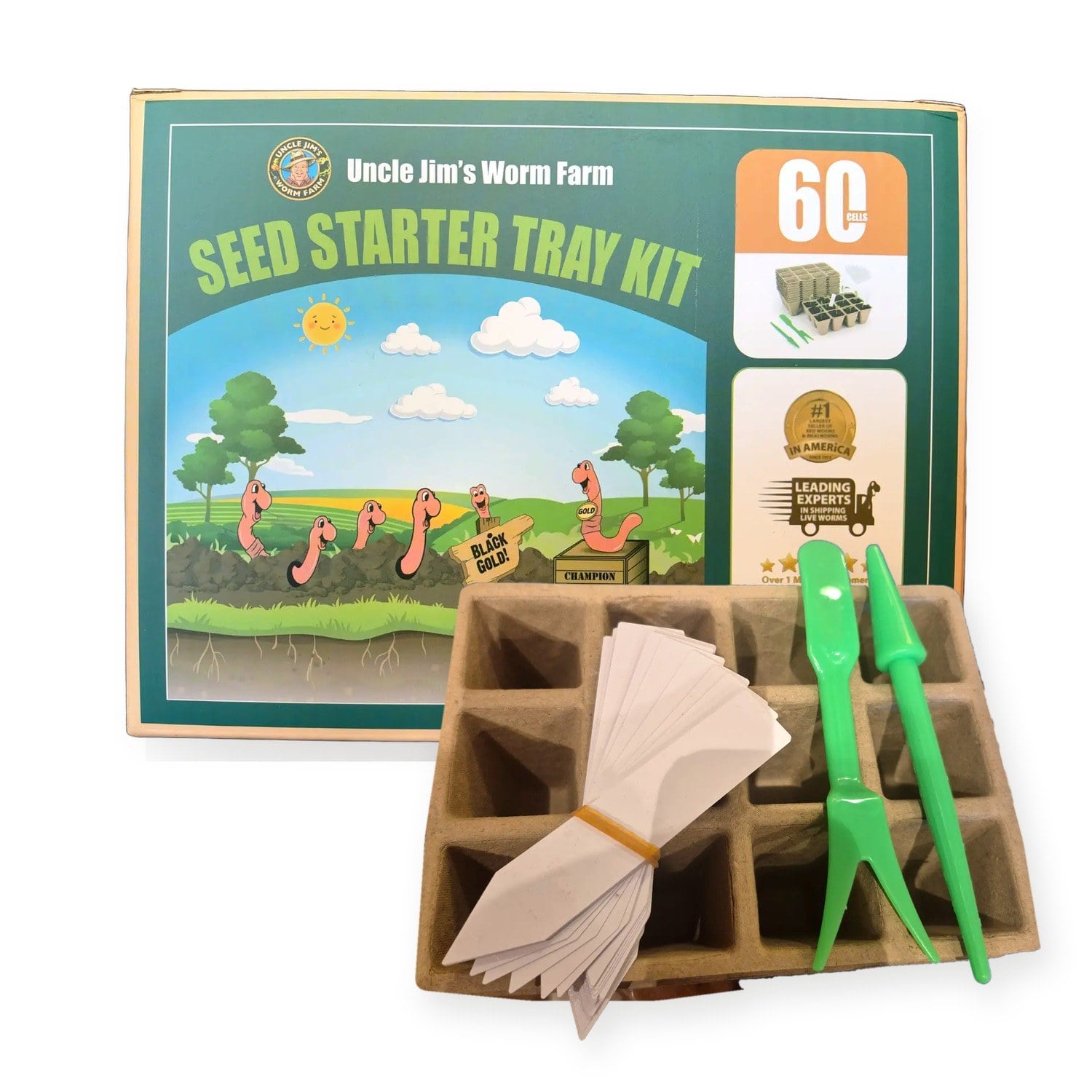
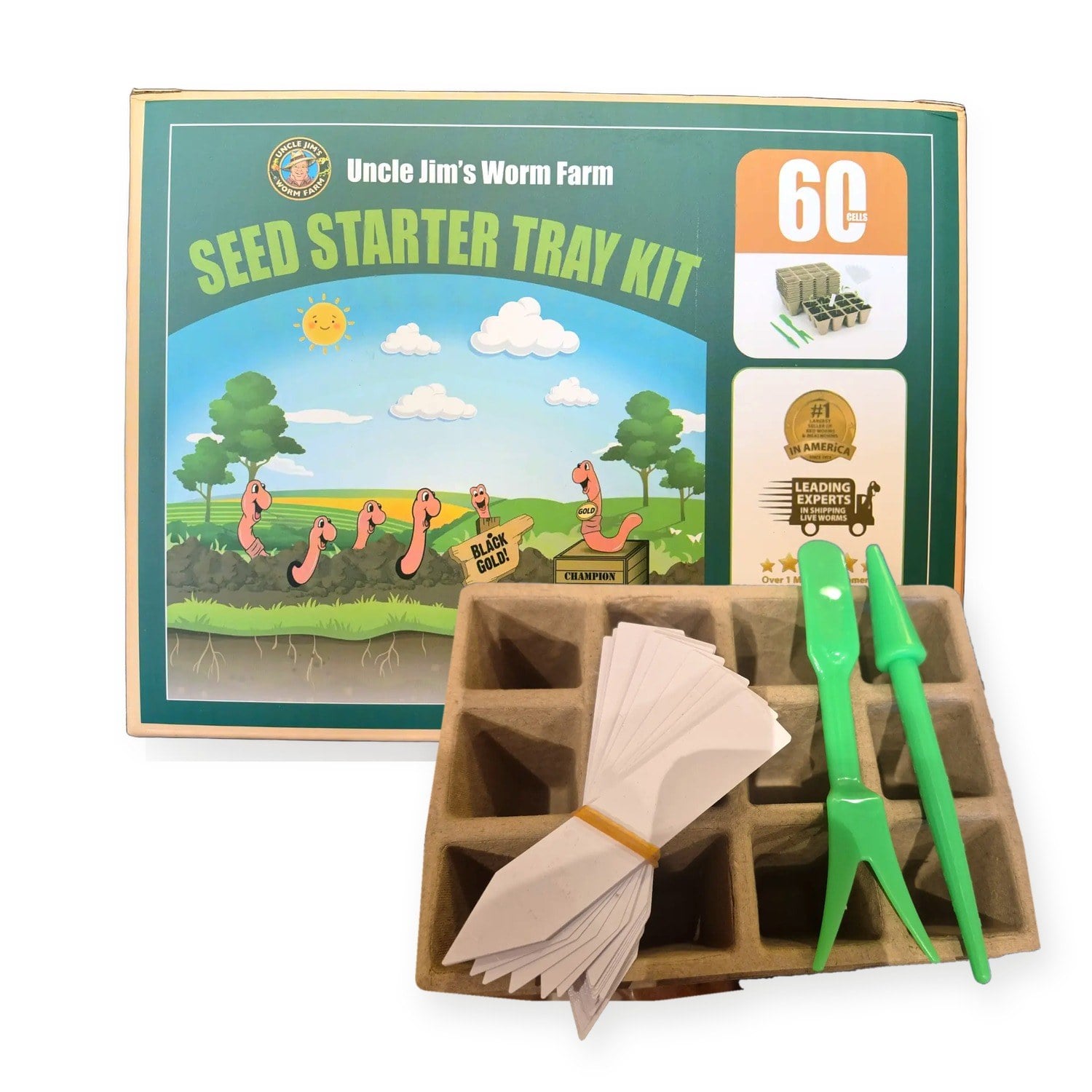
Uncle Jim's Seed Starter Tray Kit: the green 60-cell gift box behind a 12-cell plant-fiber seed tray, a rubber-banded bundle of white plant markers, and two green seedling tools, on a white background
Why growers like it

Small cells. Big head start.

Starting seeds indoors gives your garden weeks of head start. These trays make the moving-day part easy.
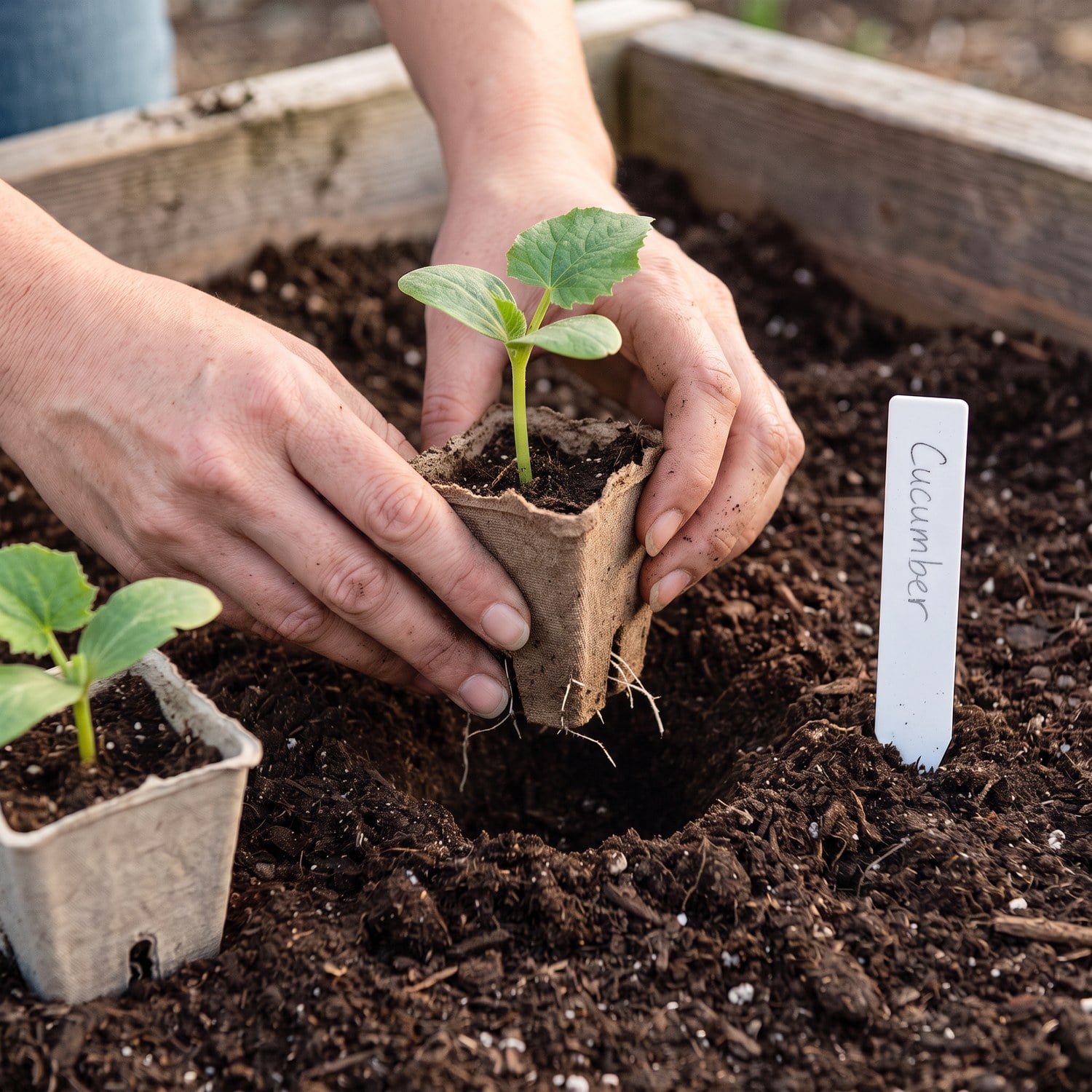
Two hands setting a plant-fiber seed cell with a young cucumber seedling into a hole in dark garden soil, the torn rim and roots poking through the fiber, next to a plant marker labeled Cucumber
Photo illustration. Each cell is about 1.4 in. across.
Plant the whole pot

Roots stay right where they are.

When your seedlings are ready, the plant-fiber cell goes into the ground with them. Tear off the rim, slit the sides, and bury it. University of Minnesota Extension says pots that break down are perfect for seedlings that don't transplant well, like cucumbers and squash.
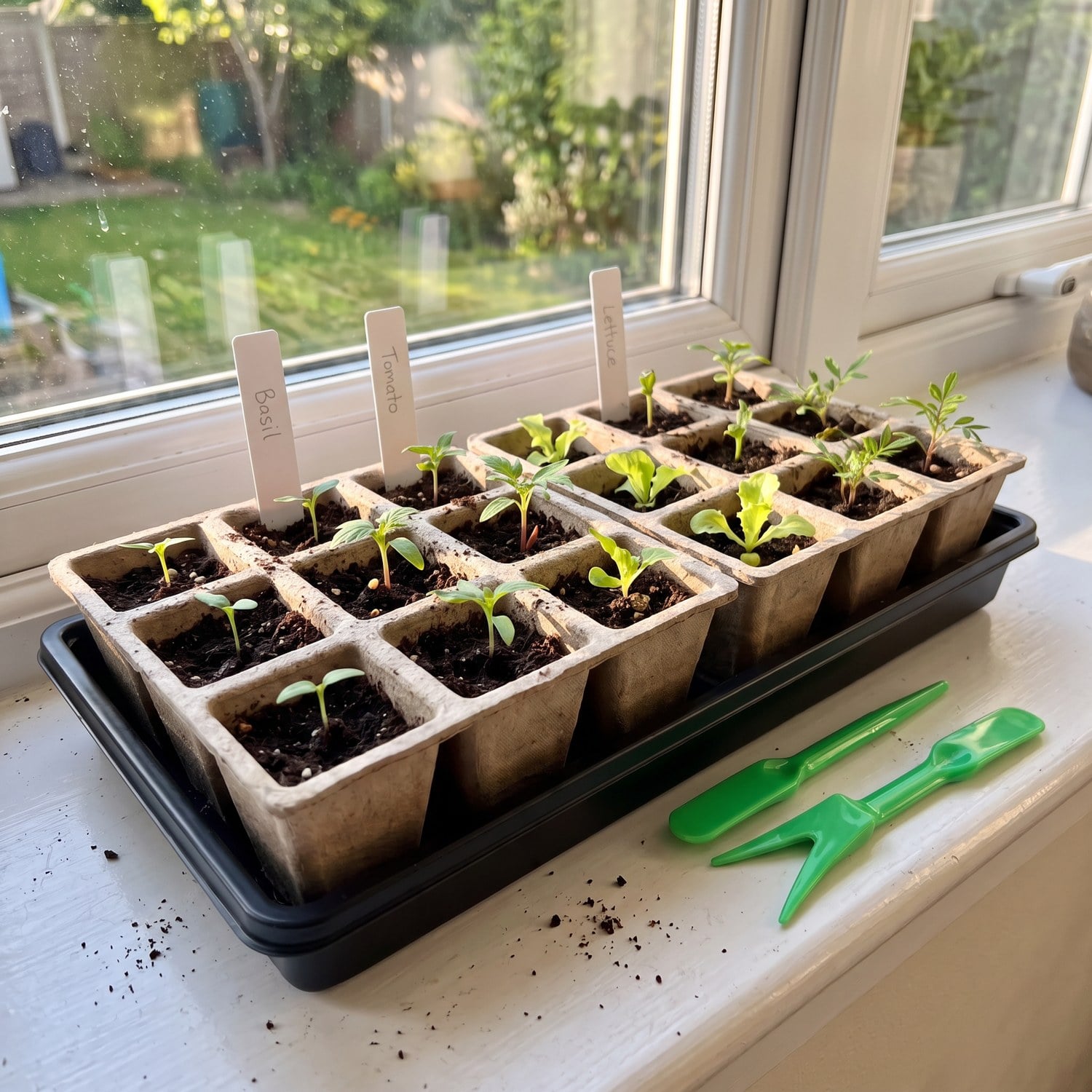
Plant-fiber seed trays full of young basil, tomato, and lettuce seedlings with white plant markers, set in a black drip tray on a sunny kitchen windowsill, with the green seedling tools beside them
Photo illustration. Seedlings grown by you. Seeds, soil, and drip tray not included.
5 trays, one windowsill

60 seedlings in a little space.

Each tray is about 6.5 x 4.7 in., about the size of a paperback book. Line them up on a sunny sill or under a grow light. Start a whole salsa garden, a row of herbs, and the cucumbers, and still have cells to spare.
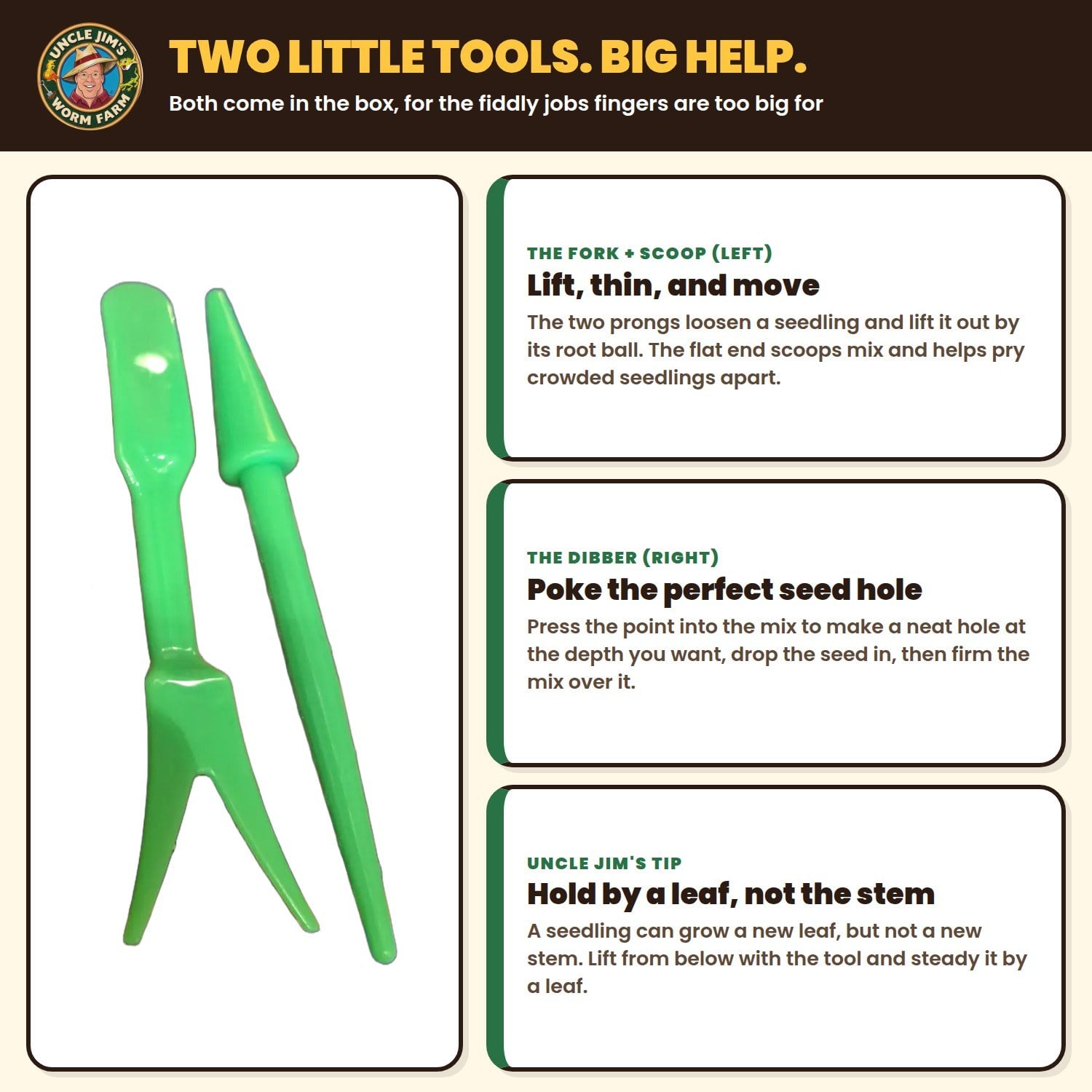
The two green seedling tools in the kit: a fork-and-scoop tool with two prongs on one end and a flat scoop on the other, and a pointed dibber, with tips on how to use each one
Two seedling tools

Little tools for the fiddly jobs.

Fingers are too big for seedlings. The pointed dibber pokes a neat seed hole at just the right depth. The fork-and-scoop tool lifts and thins seedlings by the root ball and scoops mix into the cells. Uncle Jim's tip: hold a seedling by a leaf, never the stem.

Label it, or lose it

30 white write-on markers. Every seedling looks the same at two weeks old, so jot the plant and the date in pencil. It holds up best in the sun.

Snip apart and share

Cut the cells apart with scissors to plant one at a time, or hand a few extra tomato starts to the neighbor.

From a family worm farm

We have been helping folks grow since 1973. Questions about starting seeds? Call 800-373-0555 and talk to a real person.

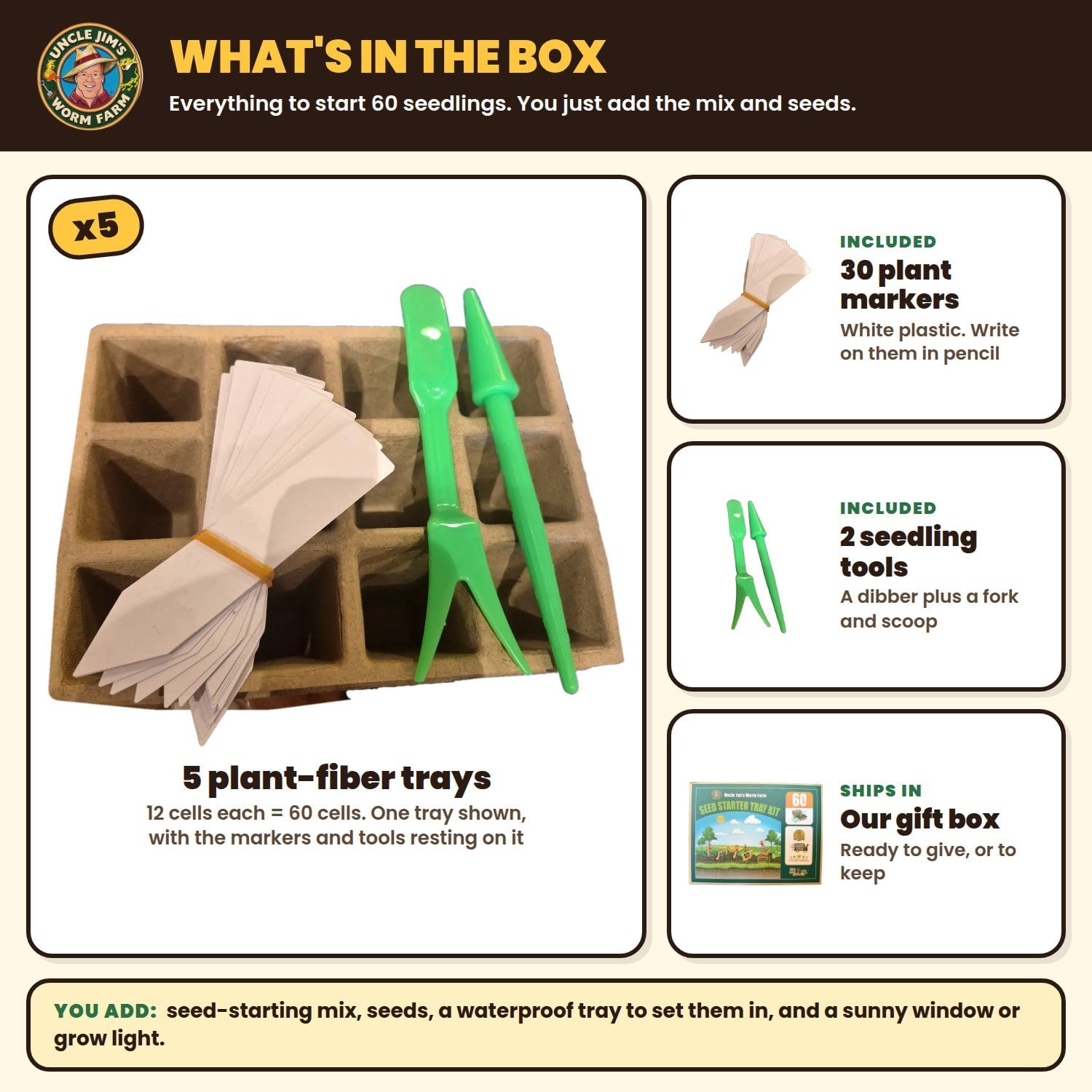
What is in the box: 5 plant-fiber trays with 12 cells each for 60 cells, 30 white plastic plant markers, 2 green seedling tools (a dibber plus a fork and scoop), and the Uncle Jim's gift box. You add seed-starting mix, seeds, a waterproof tray, and a sunny window or grow light
What’s in the box

Everything but the dirt.

x5
Plant-fiber trays
12 cells each, 60 cells in all
x30
Plant markers
White plastic. Write on them in pencil
x2
Seedling tools
A pointed dibber, plus a fork-and-scoop tool
x1
Uncle Jim's gift box
Ready to give, or to keep

You add: Seed Starter Mix, seeds, a waterproof tray to set the trays in, and a sunny window or grow light.

How to use it

Six steps from seed to garden.

No green thumb required. Here is the whole process, start to finish.
1

Fill

Moisten your seed-starting mix first, until it is damp like a wrung-out sponge. Fill each cell and press it down lightly.

2

Sow

Poke a hole with the dibber about twice as deep as the seed is wide. Drop in 2 seeds and cover them. Some tiny seeds just get pressed on top, so check the packet.

3

Label

Write the plant and the date on a marker. Pencil holds up best in the sun.

4

Water from below

Set the trays in a waterproof tray and pour in about half an inch of water. Let the fiber soak it up, then pour off what is left after 30 minutes.

5

Give them light

Once they sprout, hang a grow light 2 to 4 in. above the leaves for 12 to 16 hours a day, or use your sunniest window.

6

Plant the pot

After hardening them off, tear off the rim, slit the sides, and bury the whole pot so no fiber sticks up above the soil.

Two came up in one cell? Snip the weaker one at the soil line with scissors. Don't pull it, or you may tug the roots of the one you keep.
What to grow

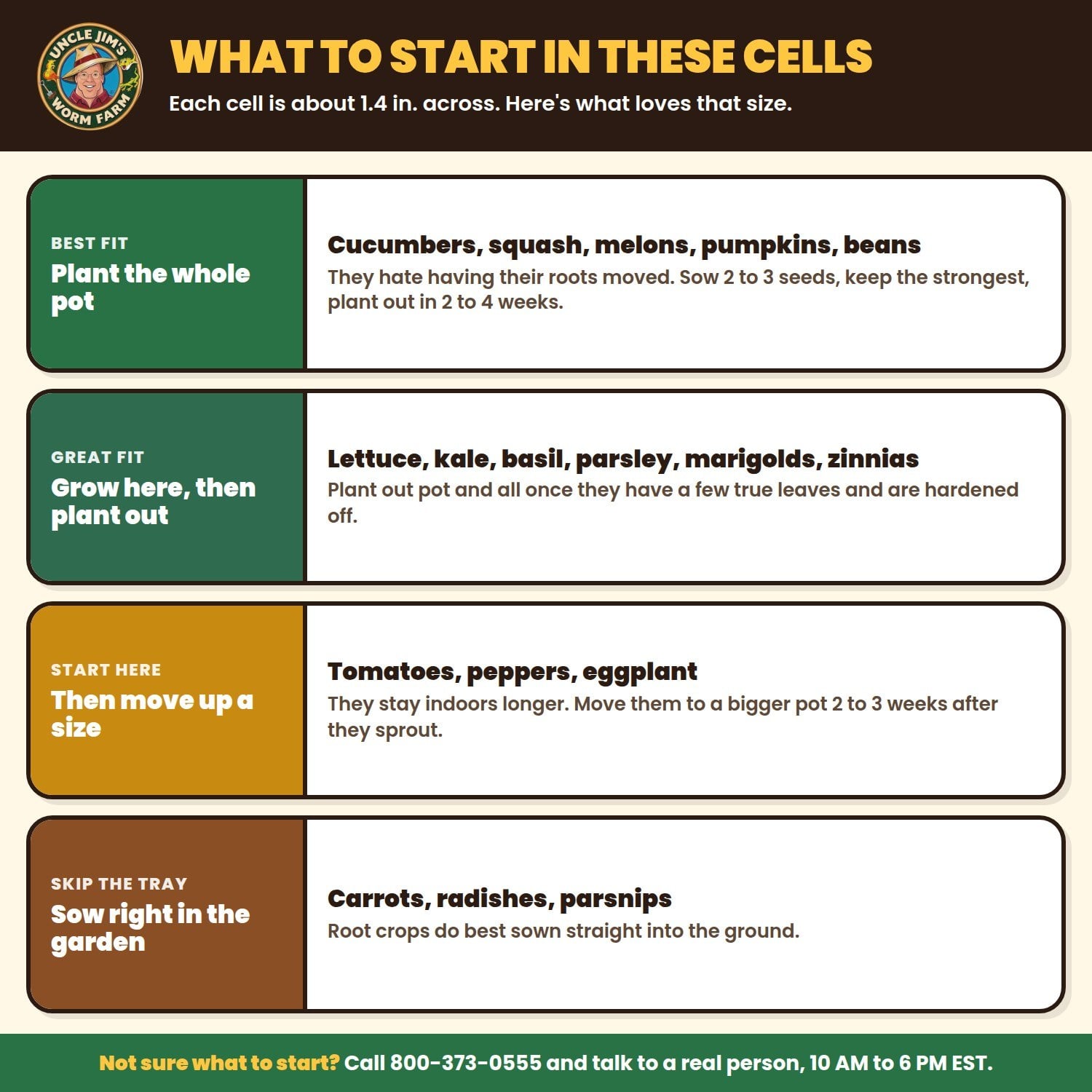
What to start in these cells.

Each cell is about 1.4 in. across. Here is what loves that size, and what doesn't.
Best fit: plant the whole pot

Cucumbers, squash, melons, pumpkins, beans

They hate having their roots moved. Sow 2 to 3 seeds, keep the strongest, and plant out in 2 to 4 weeks.

Great fit

Lettuce, kale, basil, parsley, marigolds, zinnias

Plant out pot and all once they have a few true leaves and are hardened off.

Start here, then move up

Tomatoes, peppers, eggplant

They stay indoors longer. Move them to a bigger pot 2 to 3 weeks after they sprout.

Skip the tray

Carrots, radishes, parsnips

Root crops do best sown straight into the garden.

Timing and sizes follow University of Maryland Extension. Not sure what to start? Call 800-373-0555.

Fiber vs. plastic

Why plant a pot you can plant?

Plastic cell packs are fine. Here is where plant fiber wins, and where it doesn't.
Plant-fiber cells Plastic cell packs
Planting out ✓ Tear the rim and plant the whole pot Pop each seedling out by hand
The roots ✓ Stay put in their pot Get handled at planting time
Cucumbers, squash, melons ✓ A great fit Handle with care. They sulk when moved
Splitting them up ✓ Snip apart with scissors Depends on the pack
After planting ✓ Nothing to wash or store Wash, sanitize, and store till spring

Fair is fair: where plastic wins

Plastic holds water longer and lasts for years. Plant fiber dries out faster and is made for one season, so check your trays every day and water from below. If you want to skip the transplanting and the cleanup, fiber is your friend.

Uncle Jim’s tips

Keep your seedlings happy.

The few things that make the biggest difference, straight from the university extension folks.
Most important

Don't drown them

Damping-off makes seedlings suddenly flop over at the soil line, and wet soil is its favorite place. Keep the mix moist, not soggy, and pour off standing water. More from UW–Madison Extension.

Sow light

Two seeds is plenty

Crowded seedlings stay damp and invite trouble. Penn State Extension warns against overseeding. Two per cell, then snip the extra.

Clean start

Use fresh mix, not garden soil

Fresh seed-starting mix and clean trays help keep damping-off away, says University of Minnesota Extension. Our Seed Starter Mix is made for it.

Light

Leggy means more light

Tall, skinny seedlings leaning toward the window are reaching for light. Move a grow light down to 2 to 4 in. above the leaves.

Feeding

Wait for true leaves

No fertilizer until a seedling has a few true leaves. Then go gentle, at 1/4 strength once a week. At planting time, add a handful of worm castings to the hole.

Moving day

Toughen them up first

About 2 weeks before planting out, set them outside in the shade for an hour or two, a little longer each day. Fiber dries fast outdoors, so check it daily.

The details

Size and specs

One 12-cell tray is about the size of a paperback book.
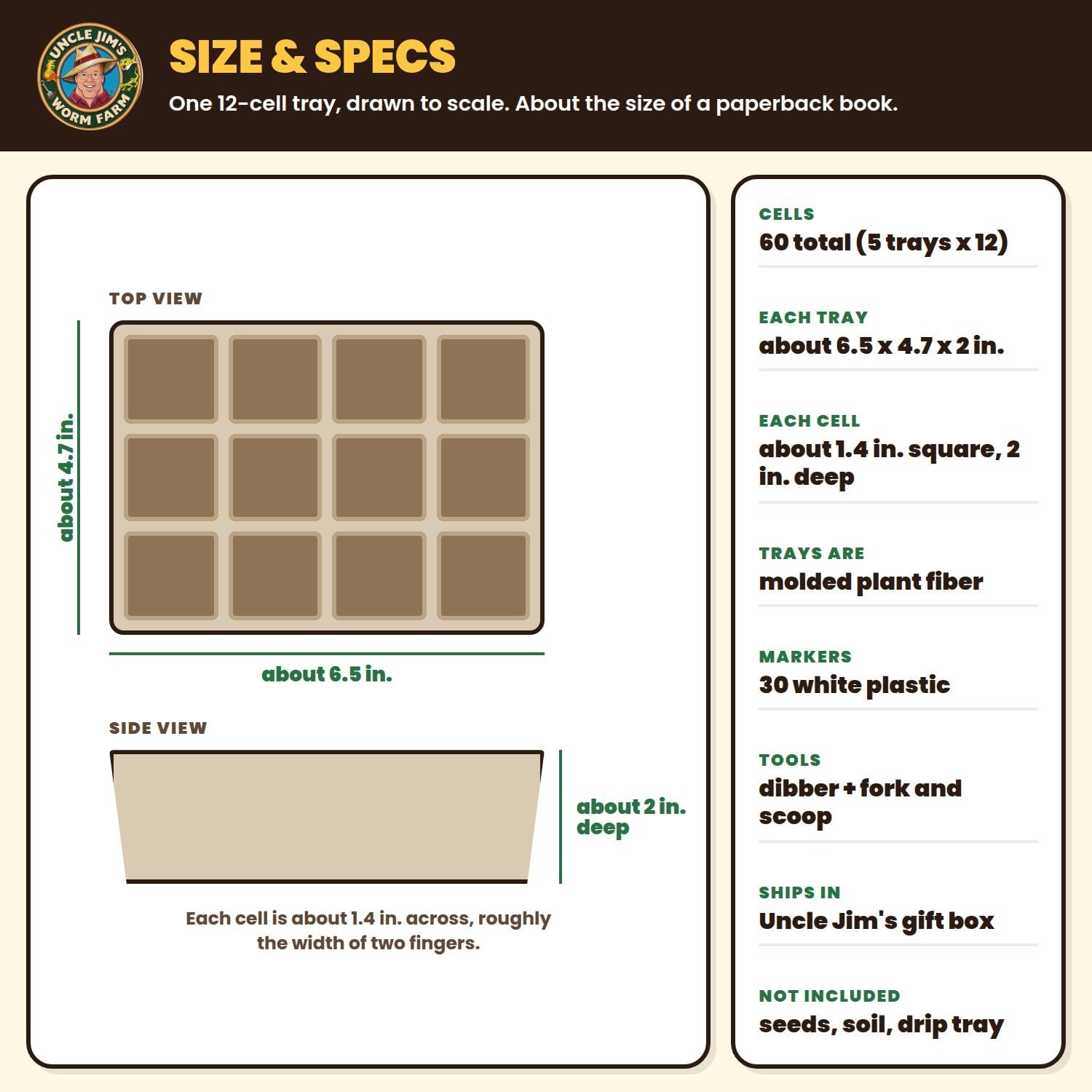
Size and specs drawn to scale: each 12-cell tray is about 6.5 by 4.7 inches and 2 inches deep, each cell about 1.4 inches across, roughly the width of two fingers. 60 cells in 5 trays, molded plant fiber, 30 white plastic markers, a dibber and a fork and scoop tool, in an Uncle Jim's gift box. Seeds, soil, and drip tray not included
Cells
60 total (5 trays x 12 cells, 3 x 4 grid)
Each tray
About 6.5 x 4.7 x 2 in.
Each cell
About 1.4 in. square at the top, about 2 in. deep
Tray material
Molded plant fiber (pressed pulp), plantable
Plant markers
30 white plastic write-on markers
Seedling tools
2 green plastic tools: a pointed dibber and a fork-and-scoop
Packaging
Uncle Jim's Worm Farm gift box
Not included
Seeds, seed-starting mix, waterproof drip tray, grow light
The Uncle Jim's Worm Farm Seed Starter Tray Kit gift box, green with cartoon worms in a garden and a big 60 cells badge, standing on a wooden table
Family worm farm since 1973

From the worm farm folks.

Uncle Jim's Worm Farm is a family business in Spring Grove, PA. We have been raising worms and helping folks grow since 1973. A healthy garden starts in healthy soil, and every great tomato starts as a seed on a windowsill.

  • ✓Real people on the phone, 10 AM to 6 PM EST
  • ✓Seeds, seed-starting mix, and worm castings, all in one place
  • ✓A gift box that is ready to wrap

Giving it as a gift? Pair it with a bag of Seed Starter Mix and a few packets of heirloom seeds for a gift that grows.

Common questions

Before you sow.

Tap a question to see the answer.
What comes in the kit?+

5 plant-fiber seed trays with 12 cells each (60 cells in all), 30 white plastic plant markers, and 2 green seedling tools: a pointed dibber and a fork-and-scoop tool. It all comes packed in an Uncle Jim’s gift box.

Are seeds and soil included?+

No. You add the seed-starting mix and the seeds. We carry both: our Seed Starter Mix and heirloom seeds. You will also want a waterproof tray to set the fiber trays in. A boot tray, a baking sheet with a lip, or any seed-starting drip tray works.

How big are the cells?+

Each cell is about 1.4 in. across at the top and about 2 in. deep. That is roughly the width of two fingers, just right for one strong seedling. Each tray is about 6.5 x 4.7 x 2 in., about the size of a paperback book.

What are the trays made of?+

Molded plant fiber (pressed pulp), a bit like a sturdy egg carton. They are plantable: when it is time, the whole pot goes into the ground with the seedling and breaks down in the soil over time.

How do I plant the whole pot?+

Water the seedling first. Then tear off the rim, slit or tear the sides so the roots can find their way out, and bury the whole pot so no fiber sticks up above the soil. University of Maryland Extension explains that a rim left above the soil can wick water away from the roots.

How long do the pots take to break down?+

It depends on your soil. Warm, moist soil breaks them down faster, and dry or cool soil slower. University of Maryland Extension notes that plantable pots may break down slowly, which is why we tear the rim and slit the sides at planting time.

Do I need a tray underneath them?+

Yes. Plant fiber soaks up water and can seep through, so set your trays in a waterproof tray. That also lets you water from below, which is the easiest way to keep the cells evenly moist.

How do I water them?+

From below. Pour about half an inch of water into the tray underneath, let the fiber and mix soak it up, and pour off any water still standing after about 30 minutes. Utah State University Extension notes that fiber pots dry out faster than plastic, so check them every day. A quick trick: lift a tray. If it feels light, it is time to water.

Can I separate the cells?+

Yes. Snip them apart with scissors to plant one at a time, or to share a few seedlings with a neighbor.

How deep do I plant the seeds, and how many per cell?+

Plant each seed about twice as deep as it is wide, says University of Minnesota Extension. Some tiny seeds just get pressed onto the surface, so check your seed packet. Sow 2 seeds per cell. If both come up, snip the weaker one at the soil line with scissors. Don’t pull it, or you may tug the roots of the one you keep.

What grows best in these cells?+

Cucumbers, squash, melons, pumpkins, and beans are the best fit. They do not like having their roots moved, so grow them 2 to 4 weeks and plant the whole pot. Lettuce, kale, basil, parsley, marigolds, and zinnias do great too. Tomatoes, peppers, and eggplant start fine here, but move them to a bigger pot 2 to 3 weeks after they sprout. Skip carrots, radishes, and parsnips. Root crops do best sown right in the garden.

When should I start my seeds?+

Count back from your area’s average last frost date. Your seed packet tells you how many weeks. As a rule of thumb, peppers and eggplant need about 8 to 9 weeks indoors, tomatoes about 5 to 6, and cucumbers and squash just 2 to 4. Not sure? Call us at 800-373-0555 and we will help you plan.

Do my seedlings need a grow light?+

A bright, sunny window can work, but seedlings on a windowsill often stretch and lean toward the glass. A simple grow light or shop light hung 2 to 4 inches above the leaves for 12 to 16 hours a day grows sturdier plants, says University of Minnesota Extension. Raise the light as they grow.

What is damping-off, and how do I prevent it?+

Damping-off is when young seedlings suddenly flop over at the soil line. It is caused by fungus-like organisms that love wet soil. Use fresh seed-starting mix (not garden soil), don’t overwater, don’t overseed, and give seedlings plenty of light. Read more from University of Minnesota Extension and Penn State Extension.

What are the two tools for?+

The pointed dibber pokes a neat seed hole at the depth you want and firms the mix back over the seed. The fork-and-scoop tool loosens and lifts seedlings by the root ball, pries crowded seedlings apart, and scoops mix into the cells. When you move a seedling, hold it by a leaf, not the stem. A seedling can grow a new leaf, but not a new stem.

What should I write on the markers with?+

A pencil. Utah State University Extension recommends pencil because it holds up in the sun better than most markers. Write the plant name and the date you sowed it. With 30 markers, you can label one cell in every two, or one row at a time.

How do I harden off my seedlings?+

About 2 weeks before planting out, set them outside in a sheltered, shady spot for an hour or two. Each day, give them a little more time and a little more sun. Fiber pots dry out fast outdoors, so check them every day.

Is this a good gift?+

We think so. It comes in our own Uncle Jim’s gift box, ready for a stocking, a birthday, or a kid’s first garden. Pair it with a bag of Seed Starter Mix and a few packets of heirloom seeds for a gift that grows.

How fast will it ship?+

Your tracking number is emailed when your order ships. See our shipping policy for details and holiday timing.

You add the good stuff

Fill your trays.

The kit has the trays, markers, and tools. Here is what goes in them.
Fill the cells

Seed Starter Mix

Our 12 qt. mix is made for seed trays and flats, with activated compost mixed in. Made in Wisconsin, and it ships free.

Shop Seed Starter Mix →

Sow the cells

Heirloom Seeds

Roma tomatoes, California Wonder peppers, Marketmore cucumbers, zucchini, basil, marigolds, zinnias, and plenty more. Pick a few packets and fill every cell.

Browse heirloom seeds →

Black gold

Worm Castings

Our natural worm castings, straight from the farm. Add a handful to each planting hole when your seedlings move outside.

Shop worm castings →

Since 1973

A family worm farm in Spring Grove, PA, helping folks grow for over 50 years

Live help

Real people 10 AM to 6 PM EST at 800-373-0555

Tracked shipping

Tracking emailed when it ships. Shipping policy

60 cells • 30 markers • 2 tools

Your garden starts on the windowsill.

Sixty little cells, a pencil, and a sunny window. Start your tomatoes, peppers, cucumbers, and herbs this season, and plant the whole pot when they are ready.

Add the kit to cart

Need the mix? Grab a bag of Seed Starter Mix. Uncle Jim’s Worm Farm has been helping families grow since 1973. Questions? Call 800-373-0555.

Young basil, tomato, and lettuce seedlings growing in plant-fiber seed trays on a sunny windowsill

Additional information

Weight 1 lbs

Got Seed Starting Questions? We’ve Got Answers!

What comes in the kit?

5 plant-fiber seed trays with 12 cells each (60 cells in all), 30 white plastic plant markers, and 2 green seedling tools: a pointed dibber and a fork-and-scoop tool. It all comes packed in an Uncle Jim’s gift box.

Are seeds and soil included?

No. You add the seed-starting mix and the seeds. We carry both: our Seed Starter Mix and heirloom seeds. You will also want a waterproof tray to set the fiber trays in. A boot tray, a baking sheet with a lip, or any seed-starting drip tray works.

How big are the cells?

Each cell is about 1.4 in. across at the top and about 2 in. deep. That is roughly the width of two fingers, just right for one strong seedling. Each tray is about 6.5 x 4.7 x 2 in., about the size of a paperback book.

What are the trays made of?

Molded plant fiber (pressed pulp), a bit like a sturdy egg carton. They are plantable: when it is time, the whole pot goes into the ground with the seedling and breaks down in the soil over time.

How do I plant the whole pot?

Water the seedling first. Then tear off the rim, slit or tear the sides so the roots can find their way out, and bury the whole pot so no fiber sticks up above the soil. University of Maryland Extension explains that a rim left above the soil can wick water away from the roots.

How long do the pots take to break down?

It depends on your soil. Warm, moist soil breaks them down faster, and dry or cool soil slower. University of Maryland Extension notes that plantable pots may break down slowly, which is why we tear the rim and slit the sides at planting time.

Do I need a tray underneath them?

Yes. Plant fiber soaks up water and can seep through, so set your trays in a waterproof tray. That also lets you water from below, which is the easiest way to keep the cells evenly moist.

How do I water them?

From below. Pour about half an inch of water into the tray underneath, let the fiber and mix soak it up, and pour off any water still standing after about 30 minutes. Utah State University Extension notes that fiber pots dry out faster than plastic, so check them every day. A quick trick: lift a tray. If it feels light, it is time to water.

Can I separate the cells?

Yes. Snip them apart with scissors to plant one at a time, or to share a few seedlings with a neighbor.

How deep do I plant the seeds, and how many per cell?

Plant each seed about twice as deep as it is wide, says University of Minnesota Extension. Some tiny seeds just get pressed onto the surface, so check your seed packet. Sow 2 seeds per cell. If both come up, snip the weaker one at the soil line with scissors. Don’t pull it, or you may tug the roots of the one you keep.

What grows best in these cells?

Cucumbers, squash, melons, pumpkins, and beans are the best fit. They do not like having their roots moved, so grow them 2 to 4 weeks and plant the whole pot. Lettuce, kale, basil, parsley, marigolds, and zinnias do great too. Tomatoes, peppers, and eggplant start fine here, but move them to a bigger pot 2 to 3 weeks after they sprout. Skip carrots, radishes, and parsnips. Root crops do best sown right in the garden.

When should I start my seeds?

Count back from your area’s average last frost date. Your seed packet tells you how many weeks. As a rule of thumb, peppers and eggplant need about 8 to 9 weeks indoors, tomatoes about 5 to 6, and cucumbers and squash just 2 to 4. Not sure? Call us at 800-373-0555 and we will help you plan.

Do my seedlings need a grow light?

A bright, sunny window can work, but seedlings on a windowsill often stretch and lean toward the glass. A simple grow light or shop light hung 2 to 4 inches above the leaves for 12 to 16 hours a day grows sturdier plants, says University of Minnesota Extension. Raise the light as they grow.

What temperature do seeds need to sprout?

Most vegetable seeds sprout best at 65 to 75°F, according to University of Maryland Extension. Once they are up, get them into good light right away.

What is damping-off, and how do I prevent it?

Damping-off is when young seedlings suddenly flop over at the soil line. It is caused by fungus-like organisms that love wet soil. Use fresh seed-starting mix (not garden soil), don’t overwater, don’t overseed, and give seedlings plenty of light. Read more from University of Minnesota Extension and Penn State Extension.

I see white fuzz on the outside of the fiber. What now?

That usually means the pots are staying wet with too little air moving around them. Pour off standing water, let the trays dry a little between waterings, and give them more space and fresh air. If the seedlings themselves start to flop over at the soil line, see the damping-off tips above.

When should I feed my seedlings?

Not right away. Wait until a seedling has a few true leaves (the leaves that come after the first pair), then University of Minnesota Extension suggests a liquid fertilizer at 1/4 strength once a week. At planting time, mix a handful of our worm castings into the planting hole.

What are the two tools for?

The pointed dibber pokes a neat seed hole at the depth you want and firms the mix back over the seed. The fork-and-scoop tool loosens and lifts seedlings by the root ball, pries crowded seedlings apart, and scoops mix into the cells. When you move a seedling, hold it by a leaf, not the stem. A seedling can grow a new leaf, but not a new stem.

What should I write on the markers with?

A pencil. Utah State University Extension recommends pencil because it holds up in the sun better than most markers. Write the plant name and the date you sowed it. With 30 markers, you can label one cell in every two, or one row at a time.

How do I harden off my seedlings?

About 2 weeks before planting out, set them outside in a sheltered, shady spot for an hour or two. Each day, give them a little more time and a little more sun. Fiber pots dry out fast outdoors, so check them every day.

Can I reuse the trays?

The fiber trays are made to be planted, so they are good for one season. The plastic markers and tools wash up and can be reused year after year.

Is this a good gift?

We think so. It comes in our own Uncle Jim’s gift box, ready for a stocking, a birthday, or a kid’s first garden. Pair it with a bag of Seed Starter Mix and a few packets of heirloom seeds for a gift that grows.

How fast will it ship?

Your tracking number is emailed when your order ships. See our shipping policy for details and holiday timing.

I still have a question. Can I talk to someone?

Of course. Our live customer service team is here 10 AM to 6 PM EST at 800-373-0555. We are happy to help you plan your seed starting.