
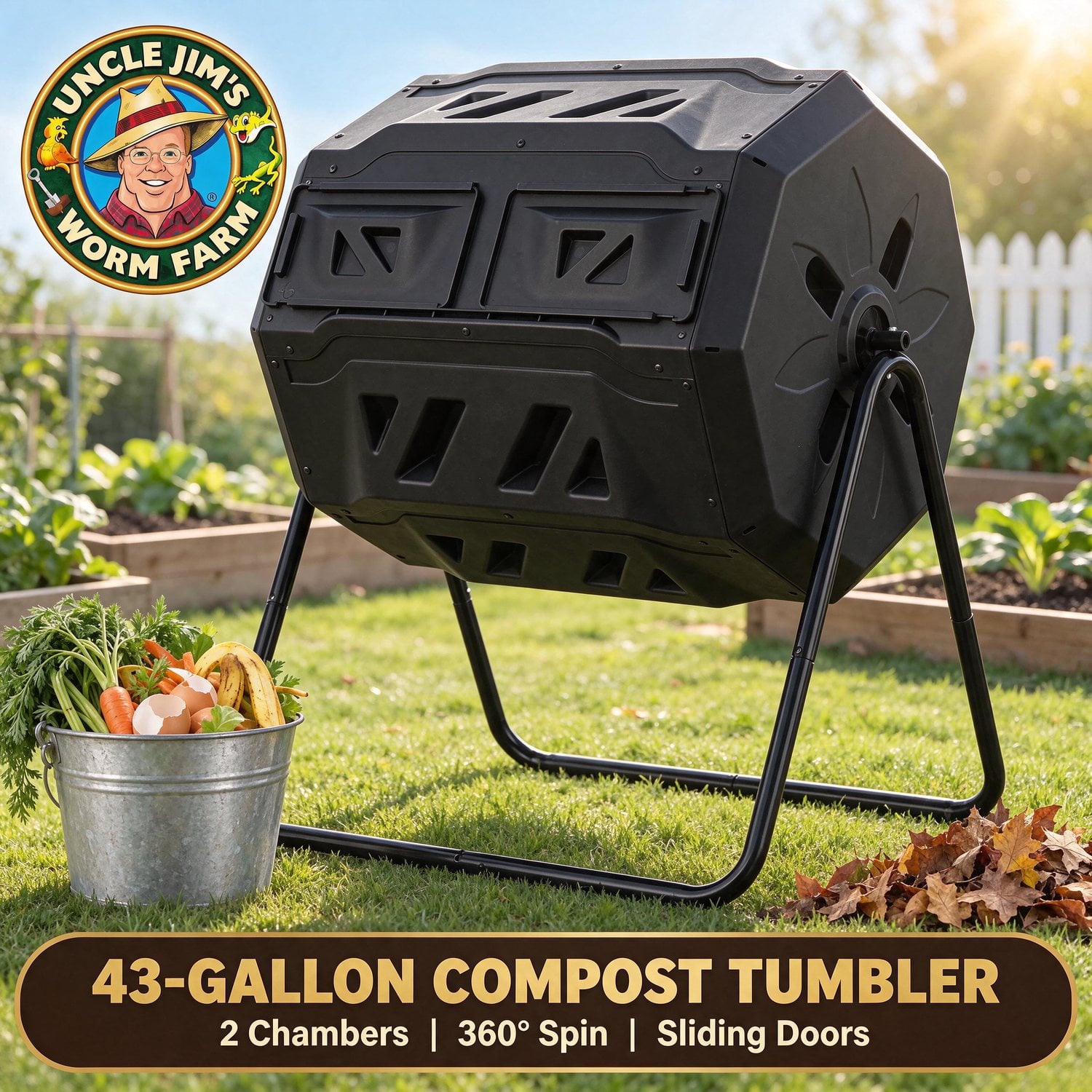
NEW! 43-Gallon Dual Chamber Compost Tumbler, All Black Rotating Composter. Free Shipping.

Original price was: $109.95.Current price is: $84.95.

  • NEW at Uncle Jim’s! One 43-gallon tumbler with two chambers inside
  • Fill one side while the other side finishes, for nonstop batch composting
  • Spin the barrel to mix and add air, with no pitchfork or shoveling
  • Two sliding doors, air vents, and a raised steel stand
  • About 27.6 in. wide x 36.6 in. tall, made for small and medium yards
  • Live help 10 AM to 6 PM EST at 800-373-0555

100 in stock

SKU: 55158 Category:

Description

New! 1 tumbler, 2 chambers

Give it a spin. Skip the pitchfork.

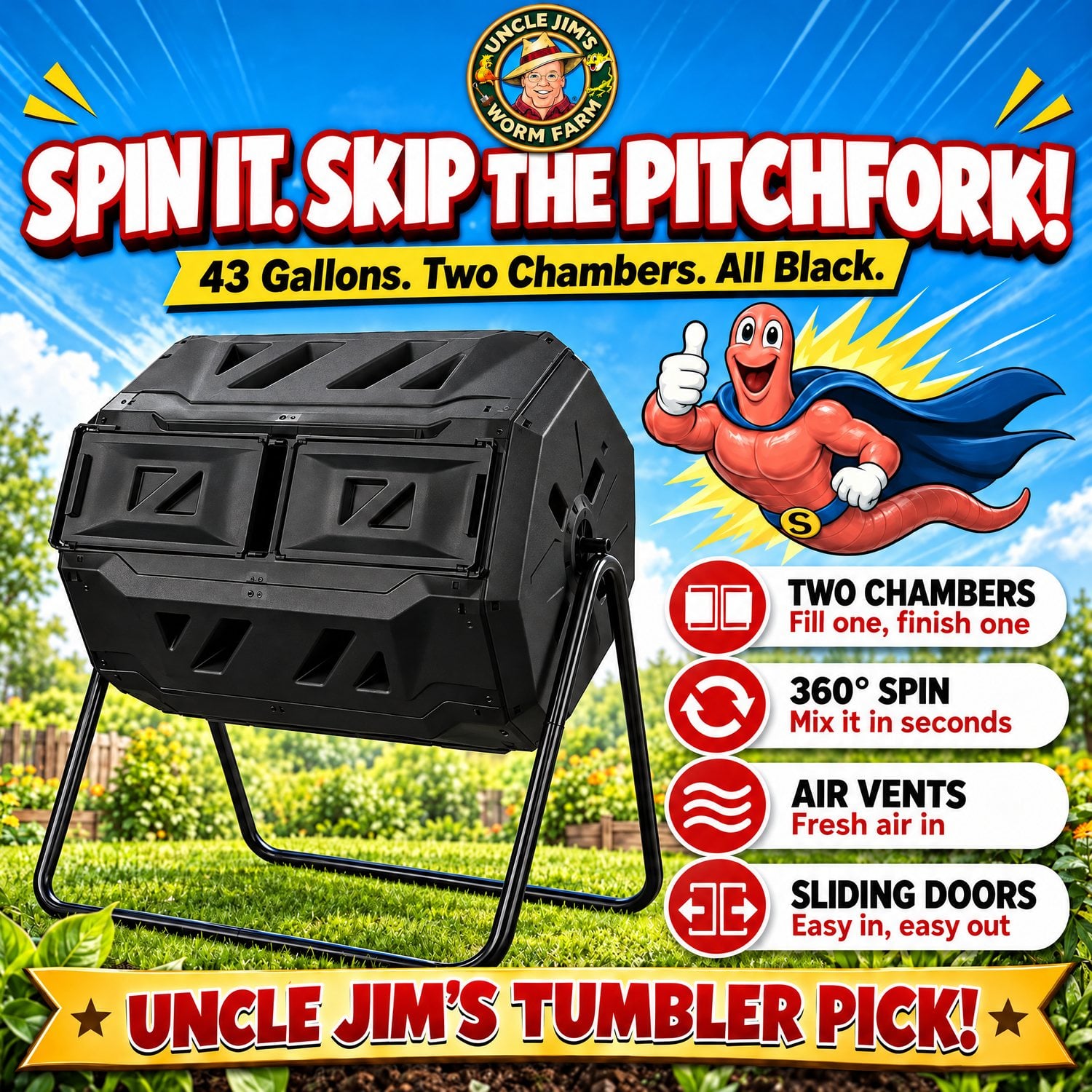
One 43-gallon tumbler with two chambers inside: fill one side while the other side finishes, so a batch is always on the way.

Drop kitchen scraps and garden trimmings through the sliding door, close it up, and give the barrel a few turns every few days. No digging, no forking, and no heavy pile to wrestle. When one side is full, let it cook and start filling the other.

43 galtotal, split into 2 sides
360°full spin on a steel stand
2 doorsone for each chamber
36.6 intall, small-yard friendly
  • ✓Two side-by-side chambers in one barrel for easy batch composting
  • ✓Turn the barrel to mix and add air, instead of shoveling a pile
  • ✓Air vents let your batch breathe
  • ✓Raised stand keeps scraps off the ground, and you can set a bucket right under the door

Add the tumbler to cart

Real people, real help: our live customer service team is here 10 AM to 6 PM EST at 800-373-0555.

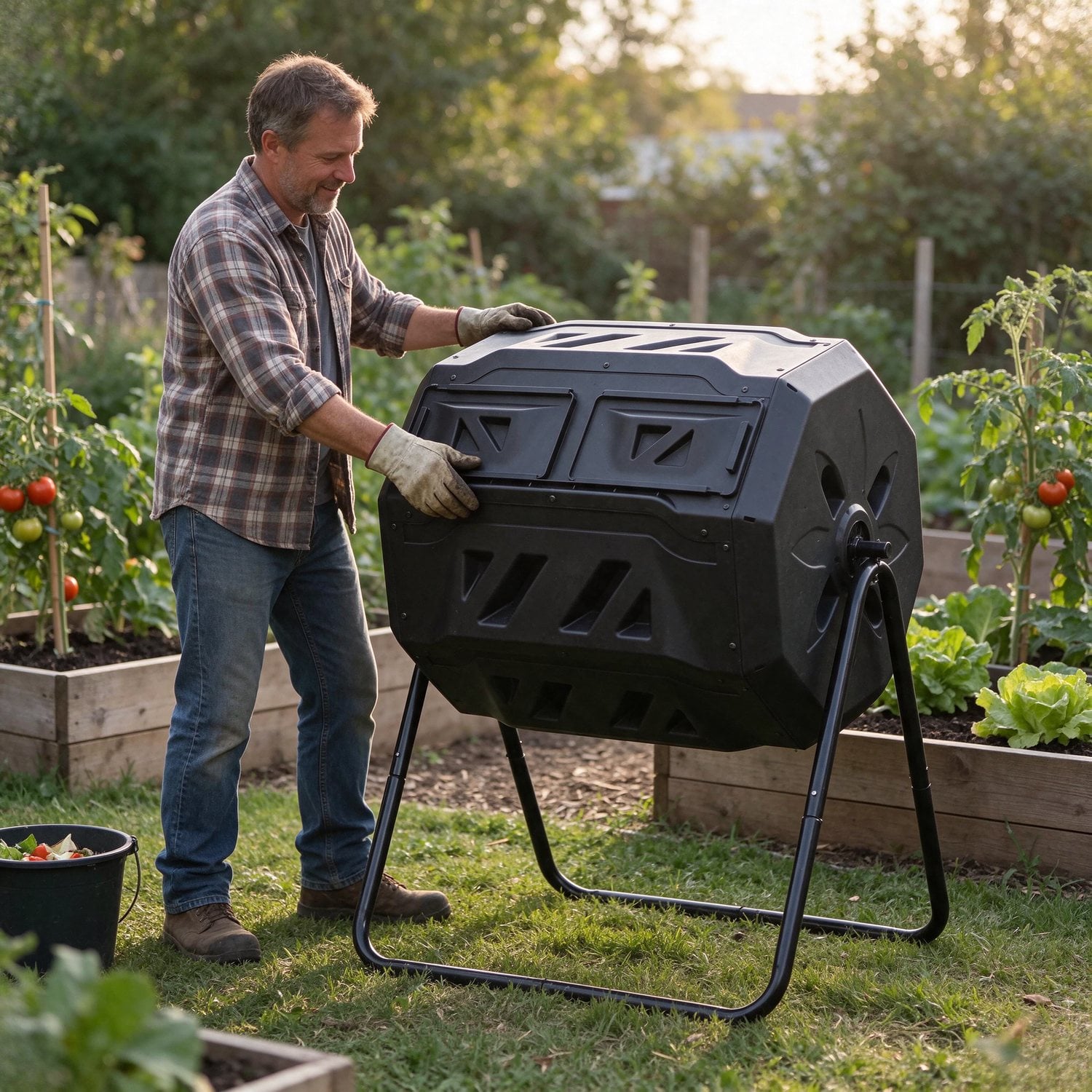
Gardener turning a black 43-gallon dual chamber compost tumbler beside raised vegetable beds

Grab the barrel and turn. A few spins mixes the whole batch.

How it works

One tumbler. Two chambers.

A divider splits the barrel into two sides, each with its own sliding door. That is the secret to batch composting: you never have to pile fresh scraps on top of compost that is almost done.

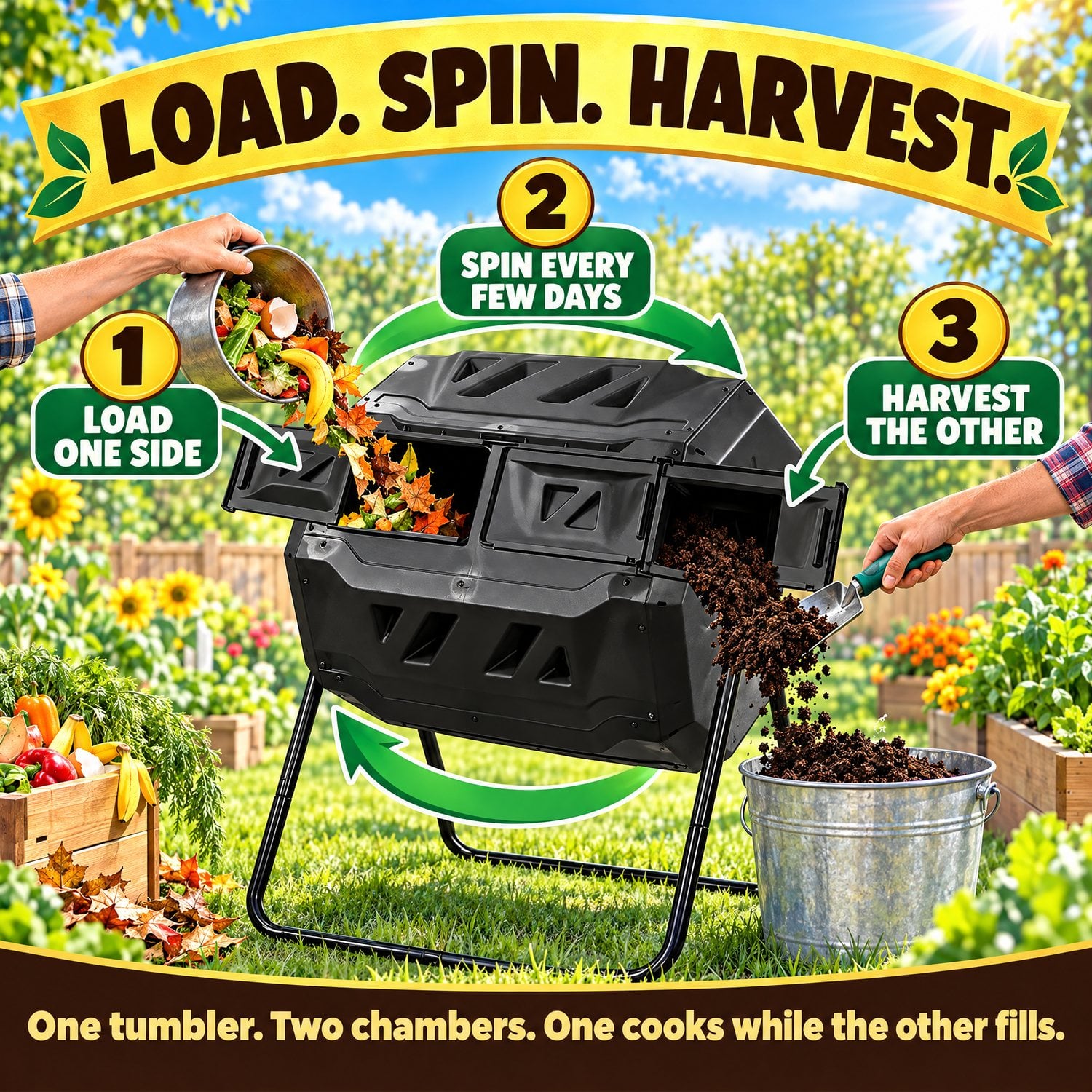
Load one side of the compost tumbler, spin it every few days, and harvest finished compost from the other side
1

Load side one

Add kitchen scraps with plenty of dry browns like leaves or shredded cardboard. Close the door and slide it shut.

2

Spin every few days

Give the barrel a few full turns every few days. Each spin tumbles the mix and brings in fresh air.

3

Let it finish

When side one is about two-thirds full, stop adding to it. Keep spinning while it cooks, and start filling side two.

4

Harvest and swap

When side one is dark and crumbly, empty it into a bucket or wheelbarrow, let it cure, and start your next batch there. Repeat.

Built for easy batches

Less digging. More compost.

Compost tumbler benefits: two chambers, 360 degree spin, air vents, and sliding doors
↺

360° spin

The whole barrel turns on its stand. Grab it, give it a few rotations, and everything inside gets mixed and fluffed with fresh air.

◫

Two sliding doors

Each chamber has its own door, so you can feed one side and harvest the other without disturbing the batch that is still cooking.

○

Air vents

Vents let fresh air in and moisture out. Air is what keeps a batch working and smelling earthy instead of sour.

▲

Raised steel stand

The barrel sits up off the ground on a steel A-frame stand. Slide a bucket or wheelbarrow under the door at harvest time.

▣

Small-yard size

About 27.6 inches wide and 36.6 inches tall. It fits beside a garage, a patio, or the end of a garden bed.

●

Sleek all-black look

Black barrel, black doors, black stand. It looks tidy next to the garden and blends right into the yard.

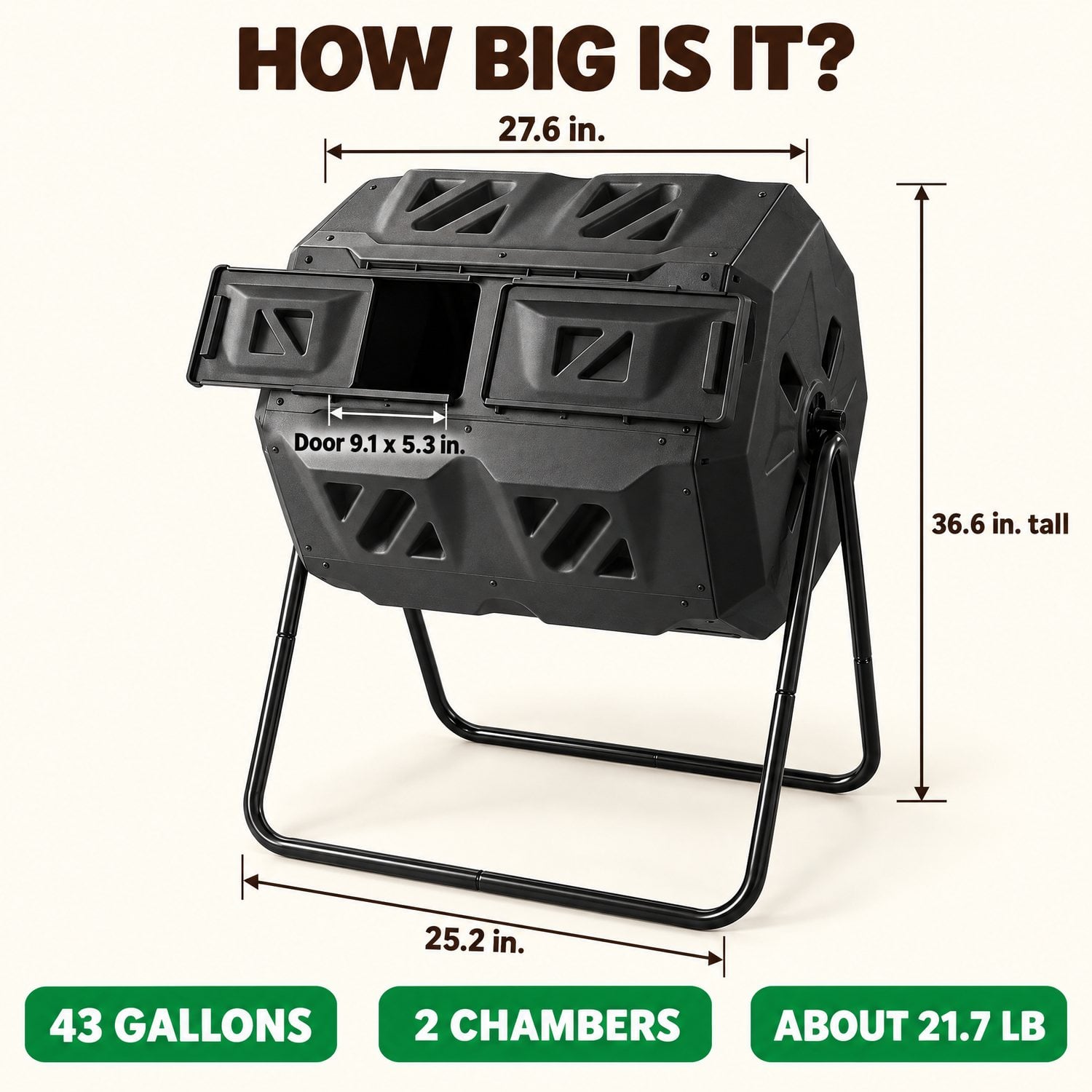
Compost tumbler dimensions: 27.6 inches wide, 36.6 inches tall, 25.2-inch stand, door 9.1 by 5.3 inches
Size check

Here is exactly how big it is.

Fully assembled, the tumbler stands about 36.6 inches tall and 27.6 inches wide, on a stand about 25.2 inches across. The barrel holds about 43 gallons in all, split into two chambers of roughly 21.5 gallons each. It weighs about 21.7 pounds empty.

Each door opening is about 9.1 by 5.3 inches. That is plenty for kitchen scraps, coffee grounds, and leaves. Chop bigger garden trimmings into small pieces first. They go in easier and break down faster.

What is in the box

  • ✓1 dual chamber compost tumbler (barrel panels, end caps, and center divider)
  • ✓2 sliding doors
  • ✓Steel A-frame stand
  • ✓Assembly hardware and instructions
Straight talk on setup

Plan an hour. Grab a helper.

Your tumbler ships flat in one box and goes together with screws. It is not hard, but there are a lot of screws, so take your time, follow the pictures, and an extra set of hands makes it easier.

Step 1

Build the stand

Put the steel A-frame stand together first, on a flat, roomy spot like a garage floor or a lawn with a tarp down.

Step 2

Build the barrel

Screw the curved panels to the end caps one at a time. Start every screw on a panel before you tighten any of them, so the holes line up.

Step 3

Add the divider and doors

Slide in the center divider, then fit the two sliding doors with their fronts facing out. Doors that are upside down will stick.

Step 4

Mount and spin

Set the barrel on the stand, fit the axle and hardware, and give it a test spin with both doors closed.

Uncle Jim’s tip: keep a Phillips screwdriver handy and snug the screws by hand. Over-tightening can strip the plastic. Stuck? Give us a call at 800-373-0555 and we will walk you through it.

Uncle Jim’s tumbler recipe

What goes in, and what stays out.

Tumblers love a good mix. Aim for about 2 to 3 scoops of dry browns for every scoop of juicy greens, and keep it as damp as a wrung-out sponge.

Browns: add plenty

Dry, crumbled leaves
Shredded plain cardboard
Shredded newspaper
Straw or dried plants
Small twigs and wood chips
Paper egg cartons, torn up

Greens: mix these in

Fruit and veggie scraps
Coffee grounds and filters
Plastic-free tea bags
Crushed eggshells
Fresh grass clippings, a little at a time
Chopped spent garden plants

Keep these out

Meat, fish, and bones
Dairy, grease, and oils
Pet waste
Diseased or buggy plants
Weeds that have gone to seed
Compostable plastics

Fill about two-thirds

Leave room for the mix to tumble. A packed barrel is heavy and hard to turn.

Too wet or smelly?

Add a few handfuls of shredded cardboard or dry leaves and give it a spin.

Seeing compost balls?

Wet clumps mean too many greens. Add browns, break the balls up, and keep spinning.

How long does it take? In warm weather, a well-balanced batch that you spin every few days can turn dark and crumbly in about 6 to 8 weeks after you stop adding to it. Cool weather slows things down. Once it looks done, let it cure in a bucket or pile for a few more weeks before it goes on your beds. A compost thermometer shows you when a batch is heating up and when it has cooled down.

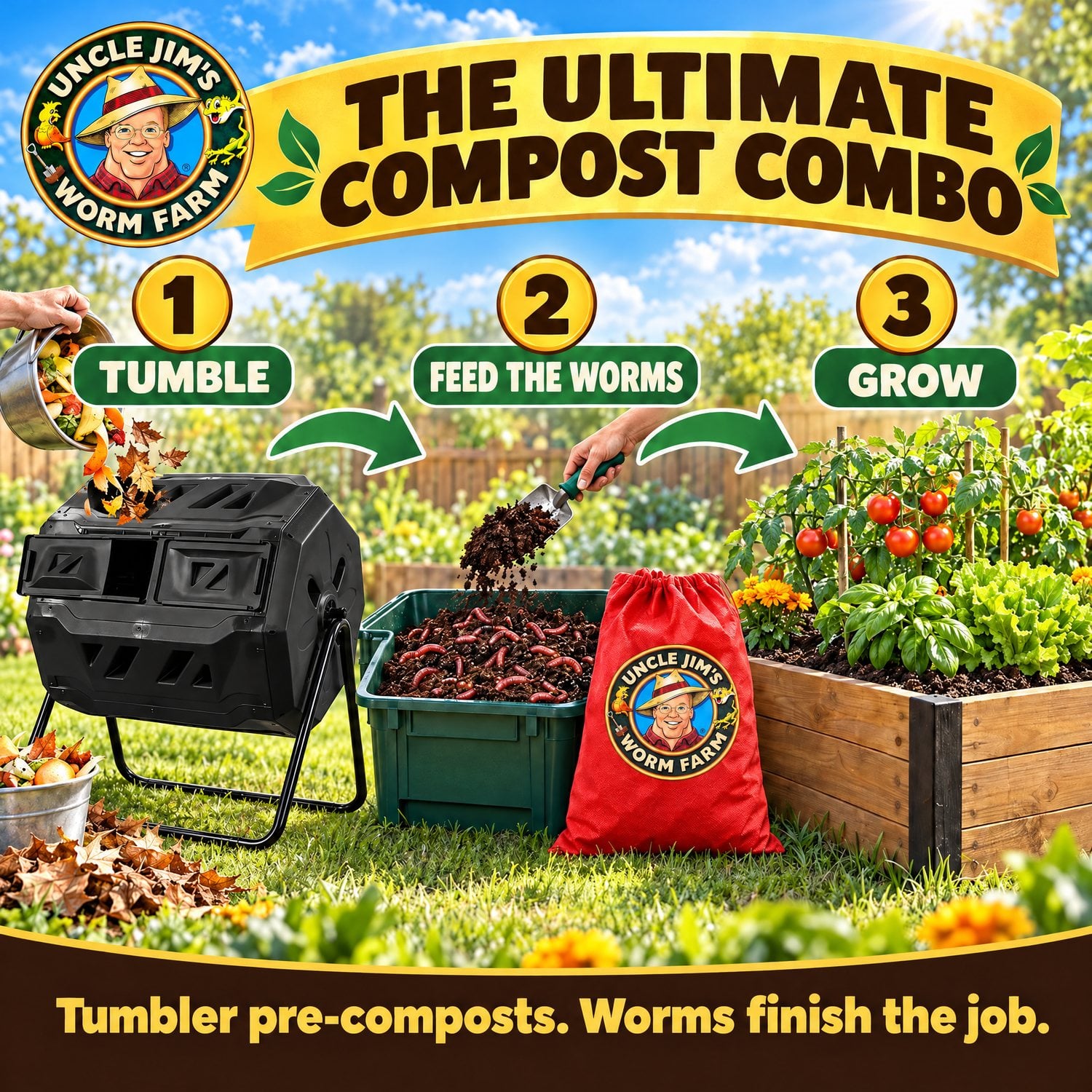
The ultimate compost combo

The tumbler starts it. Worms finish it.

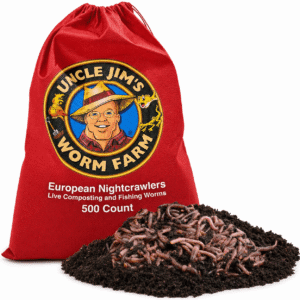
We have been raising composting worms since 1973, so here is our favorite trick: let the tumbler break your scraps down, then feed that cooled pre-compost to a worm bin. The worms turn it into rich, crumbly castings for your garden.

Keep the worms out of the tumbler. Spinning and heat are too rough on them. Give them their own home, like our 3-Tray Mini Composter, and start with our Red Composting Worm Mix.

Meet the worm crew →

Three steps: tumble kitchen scraps, feed the pre-compost to Uncle Jim's composting worms, grow a vegetable garden
Straight talk from Uncle Jim

Good to know before you order.

!

It gets heavy when full

Wet compost is heavy. Fill each side only about two-thirds, and it will keep turning smoothly.

◫

Treat the doors gently

Brush compost off the door tracks before you close them, and slide the doors straight. They glide much better when the tracks are clean.

▼

A little drip is normal

Extra moisture can drip from the vents. Set the tumbler on soil, grass, or gravel instead of your nicest patio.

❄

Winter slows it down

A small tumbler cools off in cold weather, so composting slows or pauses until spring. It picks right back up when it warms.

The details

Specs at a glance

You get
1 dual chamber compost tumbler
Capacity
About 43 gallons total (160 L), split into two chambers of about 21.5 gallons each
Assembled size
About 27.6 in. wide x 23.6 in. deep x 36.6 in. tall (70 x 60 x 93 cm)
Stand
Steel A-frame stand, about 25.2 in. across at the base
Door openings
2 sliding doors, about 9.1 x 5.3 in. each
Weight
About 21.7 lb empty
Material
Black PP plastic barrel with air vents, black steel stand
Rotation
360° turn by hand
Assembly
Required. Hardware included. Plan about an hour, and a helper makes it easier
Best for
Kitchen scraps and small-batch yard waste, in small and medium yards
Gardeners often add these too

Round out your compost setup.

Pairs with your tumbler

Composting worms

Live red wigglers and European nightcrawlers, raised right here at Uncle Jim’s since 1973.

Shop composting worms →

Pairs with your tumbler

3-Tray Mini Composter

A compact worm bin that turns your tumbler’s pre-compost into rich worm castings.

See the mini composter →

Pairs with your tumbler

Stainless steel compost thermometer

See when a batch is heating up, and when it has cooled down enough to cure or feed to worms.

Shop the thermometer →

Need more room?

Outdoor compost bins

Lots of fall leaves and yard waste? Compare our bigger outdoor bins and composters.

See outdoor bins →

Common questions

Before you start spinning.

Tap a question to see the answer.

Is this one tumbler or two?+

One tumbler. It is a single barrel on one stand, with a divider inside that splits it into two chambers. Each chamber has its own sliding door, so you can run two batches at once.

How much does it hold?+

About 43 gallons in all, or roughly 21.5 gallons per side. For easy turning, fill each side only about two-thirds of the way.

How hard is it to put together?+

It takes some patience, because there are a lot of screws. Plan about an hour, follow the pictures, and grab a helper for the barrel. Start every screw on a panel before you tighten any of them. Stuck? Call us at 800-373-0555.

Do the two chambers spin separately?+

No. Both chambers are in the same barrel, so they turn together. The divider keeps your new batch and your finishing batch apart while they both get mixed.

How often should I spin it?+

A few full turns every few days is plenty. Always close and latch both doors before you spin.

How long until I get compost?+

In warm weather, a well-balanced batch can turn dark and crumbly in about 6 to 8 weeks after you stop adding to it. Cold weather slows it down. Let finished compost cure for a few more weeks before you use it.

Will it smell?+

A balanced batch smells earthy. A sour or rotten smell means it is too wet or needs more air, so add shredded cardboard or dry leaves and give it a spin.

Can I put worms in the tumbler?+

We do not recommend it. Spinning and heat are hard on worms. Instead, feed the tumbler’s cooled pre-compost to a separate worm bin and let the worms finish the job.

Where should I put it?+

Pick a level spot on soil, grass, or gravel, with room to turn the barrel and reach both doors. A little liquid can drip out, so skip your nicest patio or deck.

How does it ship?+

Your tumbler ships in one box for you to assemble, and we email tracking once it is on the way. See our shipping policy for details, or call us at 800-373-0555.

Since 1973

A family worm farm helping gardeners compost for over 50 years

Live help

Real people 10 AM to 6 PM EST at 800-373-0555

Tracked shipping

Tracking emailed when it ships. Shipping policy
1 tumbler • 2 chambers • 43 gallons

Ready to start spinning?

Fill one side, spin it every few days, and harvest the other. Homemade compost, no pitchfork required.

Add the tumbler to cart

Want the full combo? Add a worm crew too. Uncle Jim’s Worm Farm has been helping families compost since 1973.

Uncle Jim's 43-gallon all-black dual chamber compost tumbler on a steel stand in a backyard garden

Additional information

Weight 1 lbs

Got Compost Tumbler Questions? We’ve Got Answers!

Is this one tumbler or two?

One tumbler. You get a single barrel on one steel stand, with a divider inside that splits it into two chambers. Each chamber has its own sliding door, so you can run two batches at the same time.

What comes in the box?

Everything you need to build one tumbler: the barrel panels, two end caps, the center divider, two sliding doors, the steel A-frame stand, the axle, the assembly hardware, and instructions. It all ships flat in one box.

How much does it hold?

About 43 gallons in all (160 liters), or roughly 21.5 gallons per side. That’s a little under 6 cubic feet. For easy turning, fill each side only about two-thirds of the way so the mix has room to tumble.

How big is it once it’s built?

About 27.6 inches wide, 23.6 inches deep, and 36.6 inches tall, on a stand about 25.2 inches across at the base. It needs a spot about 2.5 feet by 2.5 feet, plus a little elbow room so you can reach both doors and turn the barrel.

How much does it weigh?

About 21.7 pounds empty, so one person can move it around the yard before it’s loaded. Once it’s full of wet compost it gets a lot heavier, so pick its spot before you start filling.

How hard is it to put together?

Honestly, it takes some patience. There are a lot of small screws, so plan about an hour and grab a helper for the barrel. Work on a flat, roomy surface, start every screw on a panel before you tighten any of them, and snug them by hand so you don’t strip the plastic. Fit the doors with their fronts facing out, because upside-down doors stick. Stuck? Call us at 800-373-0555 and we’ll walk you through it.

What tools do I need?

A Phillips screwdriver is the main one. A second set of hands helps a lot when you’re holding the barrel panels in place.

Do the two chambers spin separately?

No. Both chambers are inside the same barrel, so they turn together. The divider keeps your new batch and your finishing batch apart while they both get mixed.

How do I use the two chambers?

Fill side one with scraps and browns. When it’s about two-thirds full, stop adding to it and let it finish while you start filling side two. By the time side two is full, side one should be close to ready. Harvest it, start a fresh batch there, and keep the rotation going.

How often should I spin it?

A few full turns every few days is plenty. More isn’t always better, because a batch needs some quiet time to heat up. Always close both doors before you spin.

Is it hard to turn when it’s full?

The more you load in, the heavier it gets, and wet compost is heavy. That’s why we suggest filling each side only about two-thirds. If it gets hard to turn, it’s usually too full or too wet, so add some dry browns and don’t add more to that side.

How long until I get compost?

In warm weather, a well-balanced batch that you spin every few days can turn dark and crumbly in about 6 to 8 weeks after you stop adding to it. Cool weather slows it down. Once it looks done, let it cure in a bucket or pile for a few more weeks before you put it on your garden.

How do I know it’s finished?

Finished compost is dark brown, crumbly, and smells like the forest floor. You shouldn’t be able to pick out the food scraps anymore, and it won’t warm back up after you mix it. A compost thermometer makes it easy to tell when a batch has cooled down.

What can I put in it?

Fruit and veggie scraps, coffee grounds and filters, plastic-free tea bags, crushed eggshells, and a little fresh grass, mixed with plenty of browns like dry leaves, shredded plain cardboard, shredded newspaper, and straw. Aim for about 2 to 3 scoops of browns for every scoop of greens.

What should I keep out?

Skip meat, fish, bones, dairy, grease and oils, pet waste, diseased or buggy plants, weeds that have gone to seed, and compostable plastics. Chop bigger garden trimmings into small pieces so they fit through the door and break down faster.

Will it smell?

A balanced batch smells earthy. A sour or rotten smell means it’s too wet or needs more air. Add a few handfuls of shredded cardboard or dry leaves and give it a spin.

Why is my compost rolling into balls?

Clumps or “compost balls” mean the mix is too wet or has too many greens or too much grass at once. Add dry browns, break the balls up with a garden tool, and keep spinning. Add grass clippings in thinner batches next time.

Will it drip?

A little liquid can drip from the vents, especially when the mix is wet. Set the tumbler on soil, grass, or gravel instead of your nicest patio or deck. If it’s dripping a lot, the batch is too wet, so add more browns.

Where should I put it?

Pick a firm, level spot with room to turn the barrel and reach both doors. Close to the kitchen door makes it easier to keep feeding. Partial shade is a good choice in hot climates, and it helps the tumbler last longer.

Can I put worms in the tumbler?

We don’t recommend it. The spinning and the heat are too rough on worms. Instead, feed the tumbler’s cooled pre-compost to a separate worm bin, like our 3-Tray Mini Composter, and let the worms turn it into rich castings.

Can I use it in winter?

Yes, but expect it to slow down. A small tumbler cools off in cold weather, so composting slows way down or pauses when it freezes. Keep adding scraps and browns, and it will pick right back up in spring.

Does it keep critters out?

The closed barrel and doors make it much harder for critters to get to your scraps than an open pile. Keep the doors closed, keep the area around it tidy, and leave meat and dairy out.

How does it ship?

Your tumbler ships flat in one box for you to assemble, by UPS, FedEx, or USPS. We email tracking once it’s on the way. See our shipping policy for details.

Still have a question?

Call our live customer service team at 800-373-0555, 10 AM to 6 PM EST, or email sales@unclejimswormfarm.com. Real people, real help, from a family worm farm that’s been helping gardeners compost since 1973.